
Last updated November 2, 2026
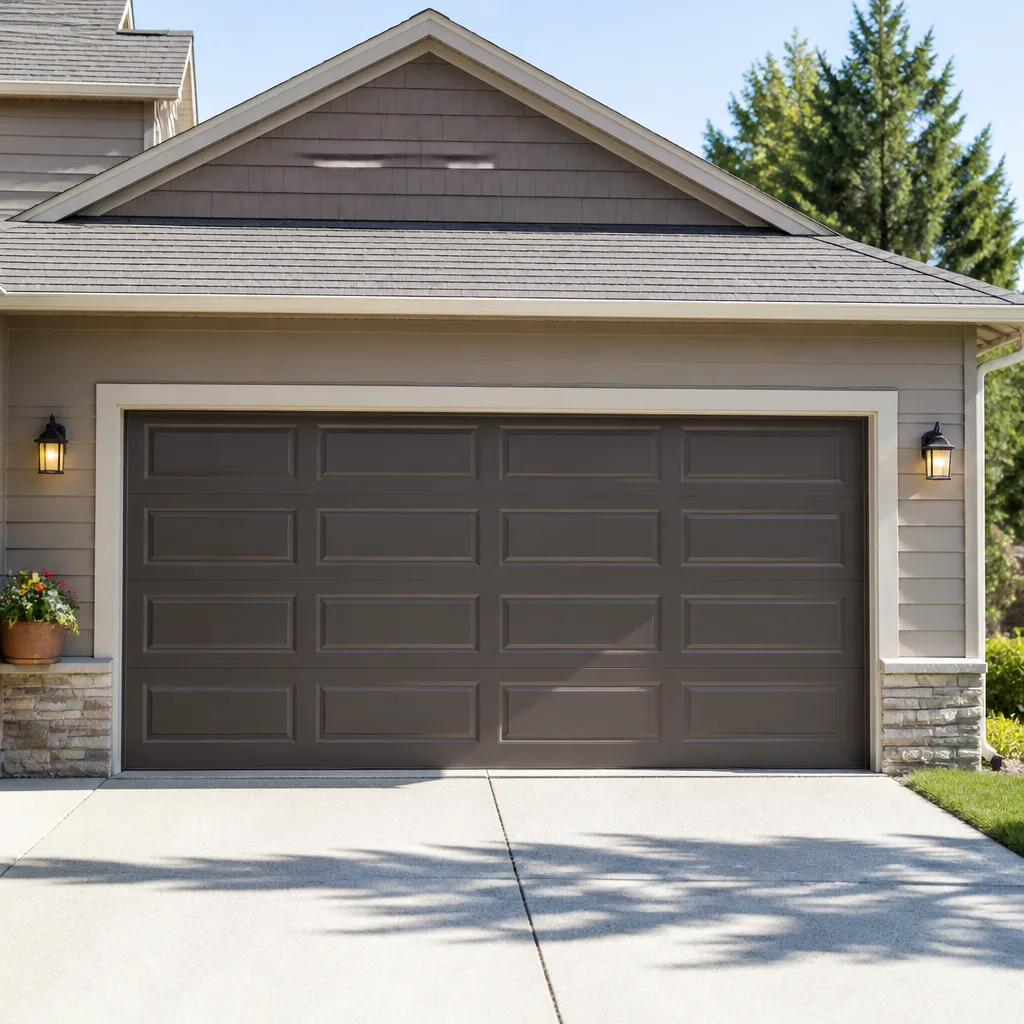 Raised-panel steel
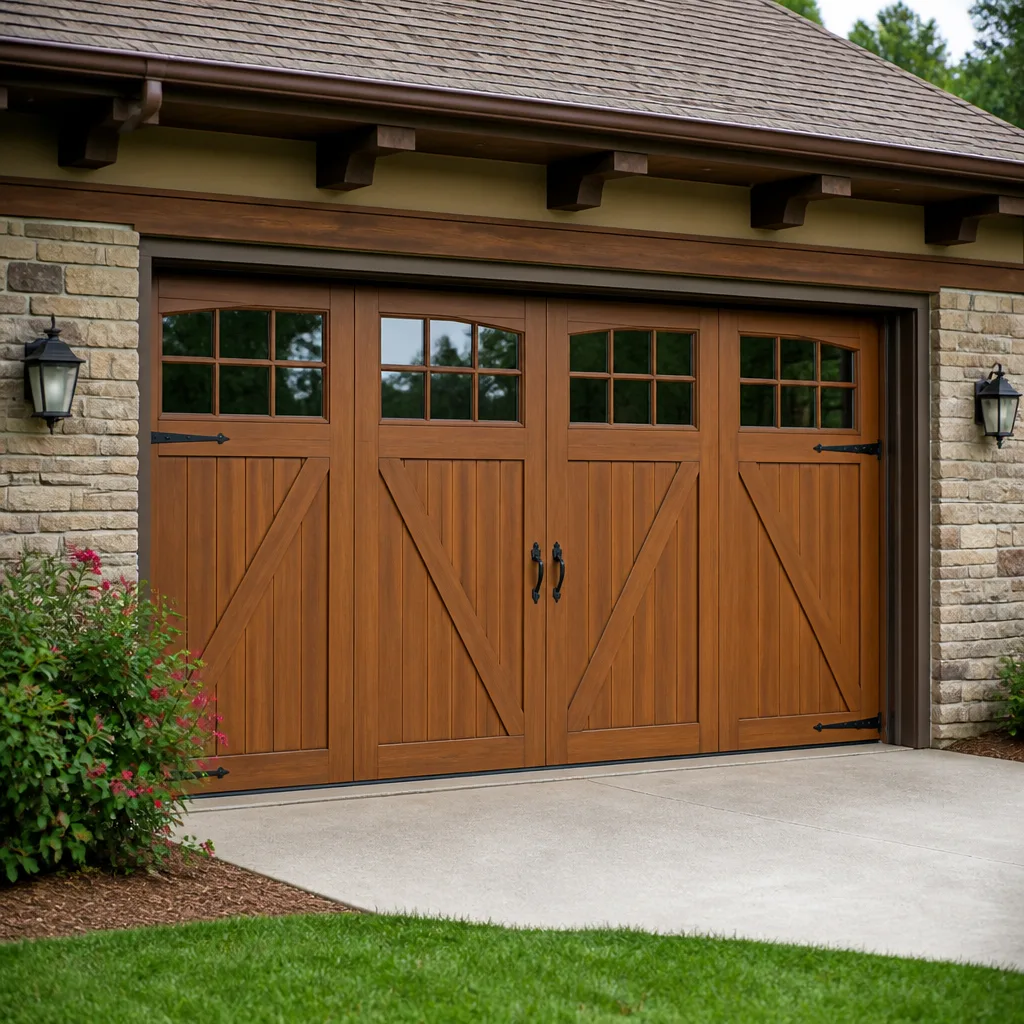 Carriage house
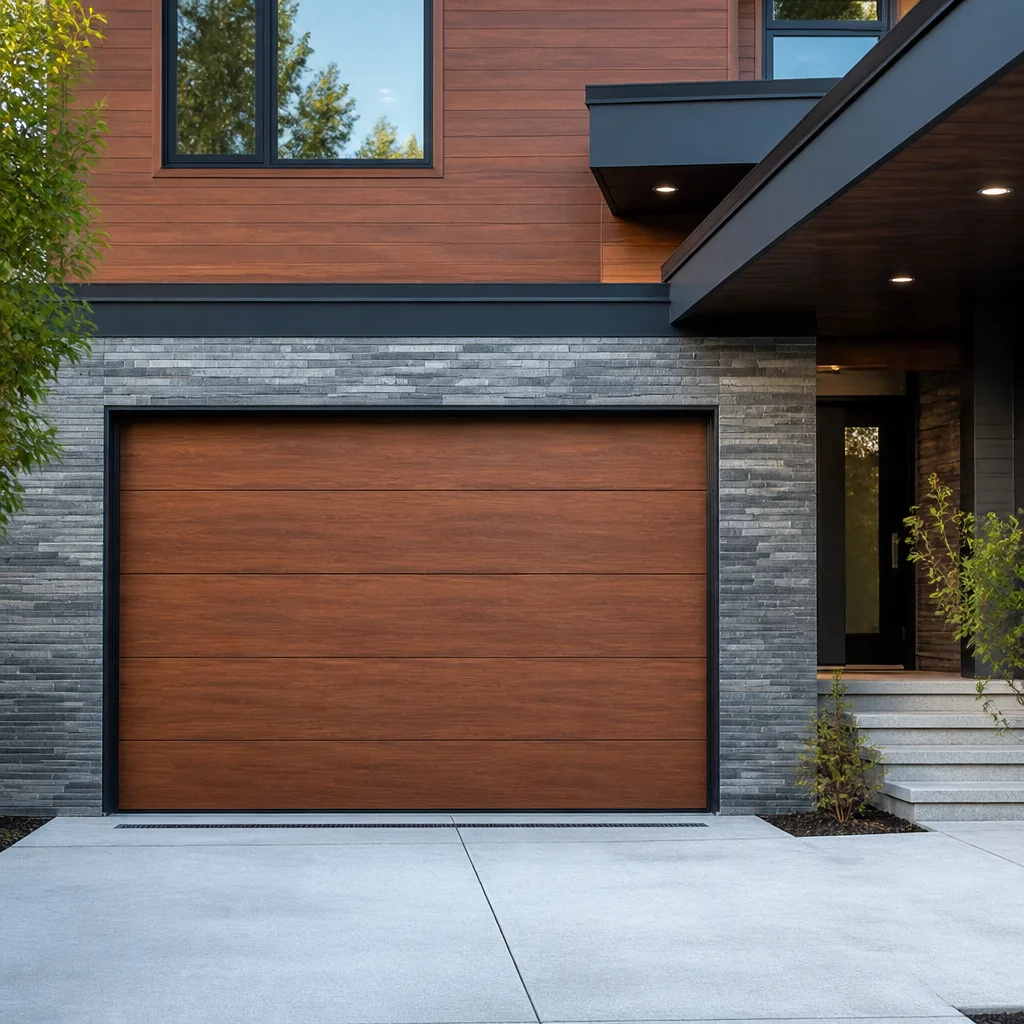 Modern flush
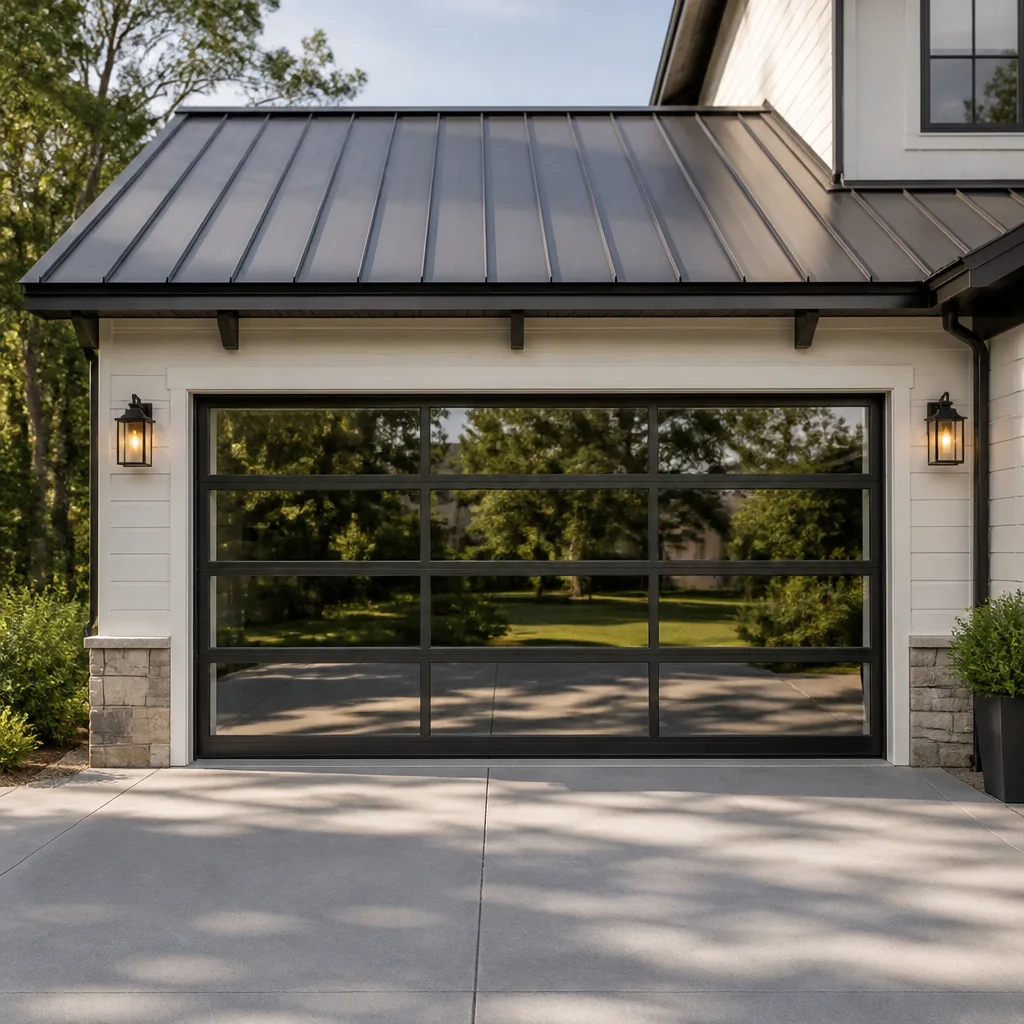 Full-view glass
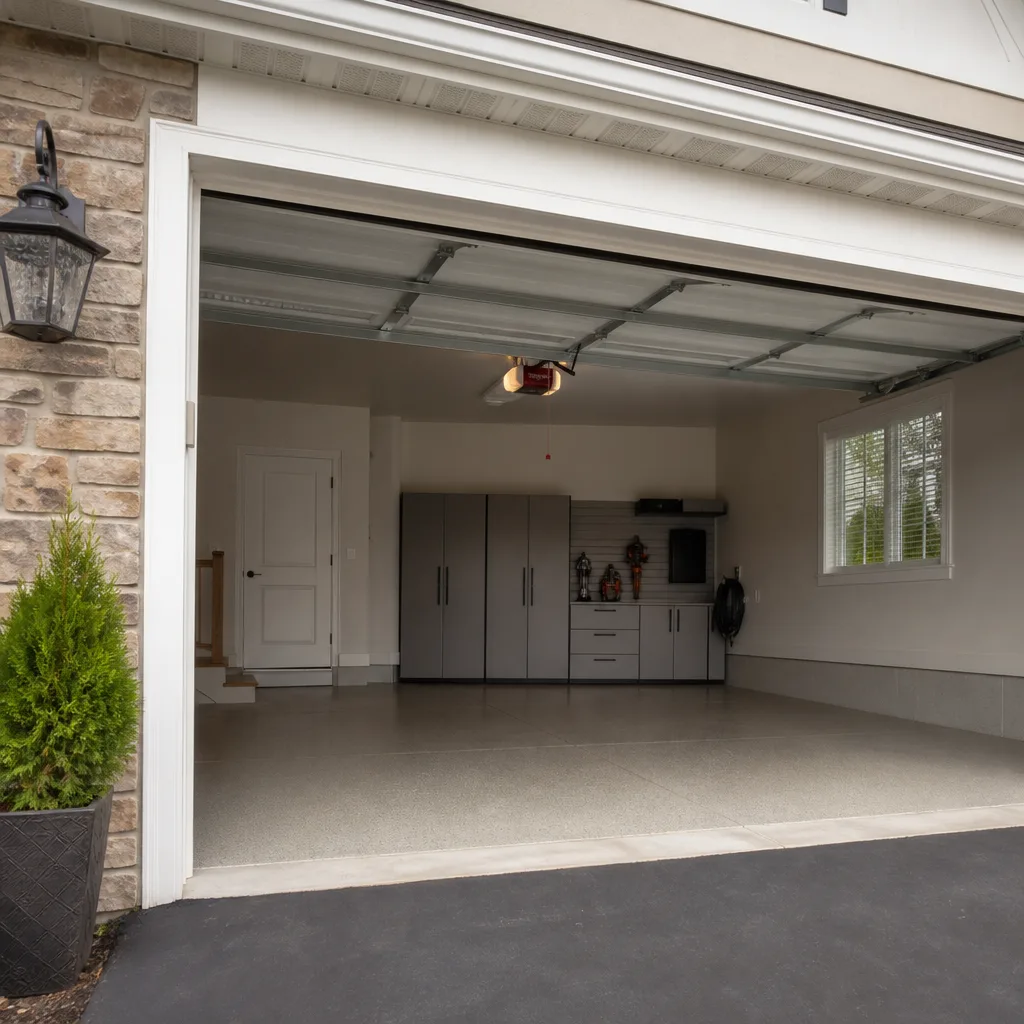 LiftMaster openers
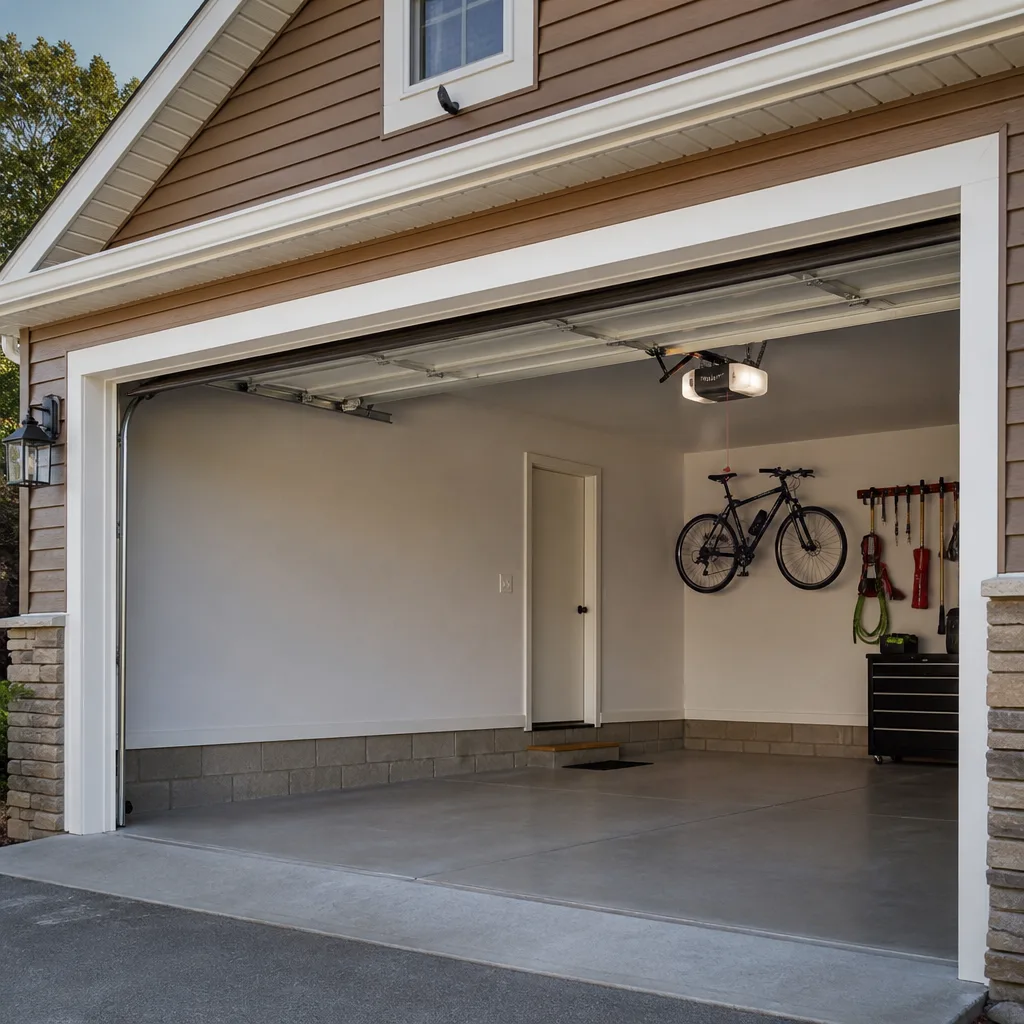 Chamberlain openers
Full 25-point door and opener safety check with every visit - springs, cables, rollers, tracks, and your LiftMaster or Chamberlain opener included
You get a price before we start. It does not change when the truck arrives.
Get your free estimateGarage Door Emergency Preparedness Guide for Hesperia Homes
Most Hesperia homeowners don’t think about their garage door until the moment it refuses to move. That’s a problem, because the High Desert doesn’t do subtle failures. A Santa Ana windstorm hits, the power drops, and suddenly the door that’s worked fine for years is stuck halfway up with your car trapped inside. Or a spring snaps at 6 AM on a Tuesday and you’re standing in the driveway wondering how you’re going to get to work in Victorville by 7. This guide walks through the emergencies we’ve seen in Hesperia garages over the years: what fails, why it fails here specifically, and exactly what to do in the first ten minutes after it happens. For more on keeping your door running smoothly, see our Garage Door Repair Maintenance Checklist for Hesperia Homeowners. You’ll learn the manual release procedure, how to handle a door with a broken spring, and what to tell a technician so the fix happens in one visit instead of two.
Quick Answer
A garage door emergency in Hesperia typically falls into four categories: a broken spring that traps your car, a power outage that leaves the opener dead, a door that won’t close and leaves your home exposed, or a cable that snaps mid-cycle. In all cases, the first step is pulling the manual release cord to disengage the opener, then either lifting the door manually or securing it in place. Know your opener brand and door weight before an emergency happens, and keep the phone number for a Hesperia garage door specialist saved in your phone, not your search history. You can also review our Garage Door Repair Troubleshooting: Common Problems and How to Fix Them to prepare ahead of time.
Styles & brands we work with
- Raised-panel steel
- Carriage house
- Modern flush
- Full-view glass
- LiftMaster openers
- Chamberlain openers
Table of Contents
- When a Spring Breaks: The 6 AM Scenario
- How to Manually Release Your Garage Door Opener
- Lifting a Door with a Broken Spring: The Safe Procedure
- Power Outage Protocol for Hesperia Homes
- Door Won’t Close and You’re Leaving: Emergency Securing
- What to Tell the Technician So It’s Fixed in One Visit
- Building a Garage Door Emergency Kit
- Why Hesperia’s Climate Creates Specific Garage Door Failures
When a Spring Breaks: The 6 AM Scenario
A torsion spring breaking sounds like a gunshot in an enclosed garage. We’ve had Hesperia homeowners describe it as a car backfiring inside the house, a shelf collapsing, or “something hitting the wall.” The spring is under extreme tension, and when it fails, the stored energy releases all at once. The door immediately becomes dead weight, which matters because most garage doors in Hesperia homes weigh between 150 and 250 pounds depending on size, material, and insulation. The opener motor was not designed to lift that weight alone, which is why the spring does the heavy lifting. A garage door with a broken spring will not open, even if the motor is running perfectly.
Here’s what a broken spring looks like before you even see it. The door lifts six inches and stops. You hear the motor strain, then the opener’s built-in force sensor reverses it back down. If you look up at the spring assembly above the door, you’ll see a visible gap in the coil where the spring has split into two pieces. On a torsion spring system, the break is usually in the middle. On an extension spring system, one spring may have snapped and be hanging loose. Both types are dangerous to touch, and neither can be repaired by a homeowner.
If you’re standing in the driveway at 6 AM with a car trapped in the garage, the first priority is getting the car out. That means releasing the opener and lifting the door manually, which we cover in the next two sections. The spring itself needs a professional replacement, but the immediate emergency is about access, not repair.
One thing worth knowing: springs have a rated cycle life, typically 10,000 cycles for standard springs and up to 30,000 for high-cycle springs. A “cycle” is one full open and close. If you open and close your garage door four times a day, 365 days a year, you’re putting roughly 1,460 cycles a year on the spring. In a household with multiple cars and frequent in-and-out traffic, a 10,000-cycle spring lasts about seven years. Hesperia’s extreme temperature swings accelerate metal fatigue, which we cover in the climate section below.
How to Manually Release Your Garage Door Opener
Every automatic garage door opener has a manual release mechanism, usually a red cord hanging from the trolley on the overhead rail. Pulling this cord disconnects the door from the motor carriage so you can move the door by hand. The procedure is the same whether you have a LiftMaster, Chamberlain, Genie, or Craftsman opener, though the exact location of the cord varies slightly by model.
Here’s the step-by-step process. Practice this once before you need it:
- Make sure the door is fully closed. If the door is stuck open, skip to the securing section below. Releasing an opener while the door is partially open causes the door to slam down, which can cause injury or damage.
- Locate the red release cord. It hangs from the trolley on the garage door opener rail, usually near the center of the garage ceiling. If you have a LiftMaster or Chamberlain, the cord is red with a plastic handle. Genie uses a red or orange cord. Craftsman openers have a red cord with a T-shaped handle.
- Pull the cord down and back toward the door. You’ll feel a click as the trolley disengages. Let go of the cord. The door is now in manual mode.
- Test the door. Lift the handle slowly. The door should move freely, though it will feel heavy if a spring is broken.
- To re-engage the opener (once the door is closed and the opener is running), pull the cord again or press the wall button. The trolley will reconnect on the next cycle. On LiftMaster and Chamberlain models, the opener re-engages automatically the next time it runs if you pull the cord straight down.
What to Do When the Release Cord Is Stuck
Sometimes the release cord won’t pull. This happens when the door is under tension (a cable is off-track, or the door is jammed against an obstruction) or when the trolley is rusted. Hesperia’s dry climate reduces rust compared to coastal areas, but it still happens on older units. If the cord won’t budge, don’t force it. Pulling hard can break the release mechanism or yank the trolley off the rail. Instead, check whether the door is visibly crooked or partially open. If it is, the problem is a broken cable or off-track roller, and you should not attempt to move the door at all. Call a professional before touching anything else.
If the door is closed and the cord still won’t pull, try pushing the wall button to run the opener for a second, then immediately try the cord again. This briefly relieves tension on the trolley. If that doesn’t work, leave it alone. A stuck release cord on a closed door is an inconvenience, not an emergency. A stuck release cord on an open door is a security emergency that requires professional intervention.
Lifting a Door with a Broken Spring: The Safe Procedure
This is the situation that worries homeowners most, and for good reason. A 16-foot steel garage door weighs around 200 pounds or more. Without a functioning spring, all of that weight is on you. Lifting it wrong can cause a back injury, a crushed finger, or the door falling on your car. Lifting it correctly requires technique and usually two people.
Let’s be direct: if you have any back, shoulder, or joint issues, or if you’re not confident in your strength, don’t attempt this. A Hesperia repair technician can often arrive the same day, and unless you have a genuine emergency requiring the car, waiting is the safer call. But we know that “wait” doesn’t work when you have a shift starting in an hour or a child who needs to get to school.
- Pull the manual release cord as described above. The door is now disconnected from the opener.
- Recruit a second person. Two people should lift the door, one on each side. This distributes the weight and keeps the door level. A door that tilts while lifting can jam in the tracks or come off the rails.
- Grip the door handle or the bottom edge with both hands. Bend your knees, keep your back straight, and lift with your legs, not your lower back. The weight will feel heavier than you expect. That’s normal.
- Lift steadily and without stopping. A slow, continuous lift keeps the rollers aligned in the tracks. Stop-and-start lifting risks the door shifting.
- Once the door is fully raised, have one person hold it while the other moves the car. Do not prop the door open with a loose object like a broomstick or a ladder. A 200-pound door will crush anything that isn’t rated to hold it. Use the proper clamping mechanism on the track, or keep a person holding the door.
- Lower the door carefully. Let it down slowly. A door with a broken spring has no counterbalance, so it will want to drop. Control the descent all the way to the floor.
What not to do: don’t lift from the top panel only, don’t stand directly under a partially raised door, don’t attempt this if the door is visibly off-track, and don’t leave the door in the raised position while you run errands and come back later. A door with a broken spring and no support will not stay raised on its own. Gravity always wins.
In our experience in Hesperia, the broken spring scenario is the one where homeowners most often make the call to a professional after trying to handle it themselves. We get those calls. The technician arrives to find a door that’s been forced, cables that have jumped the drum, and a repair that’s now more expensive than it needed to be. The spring replacement is the same either way, but the cable and track damage from forced lifting adds cost.
Power Outage Protocol for Hesperia Homes
Southern California Edison’s High Desert service territory experiences outages from wind events, heat-related equipment stress, and wildfire prevention shutoffs. We have Hesperia customers who’ve lost power three or more times in a single year, sometimes for hours. A garage door opener draws between 500 and 750 watts when running, and without grid power, it does nothing. Many Hesperia homeowners don’t realize their garage door opener is on the same circuit as other garage outlets until the power goes out and the door goes dead.
If you have a battery backup unit installed on your opener, you can operate the door during an outage. LiftMaster and Chamberlain both offer battery backup openers in their current lineups. The battery unit mounts to the opener and provides enough power for roughly 20 to 50 open-and-close cycles depending on the model and the battery’s age. If you don’t know whether you have a battery backup, check the opener unit. Most battery backup systems have a small LED indicator and an audible beep when running on battery power. If you’re in the market for a new opener and Hesperia power reliability is a concern, a battery backup unit is worth the extra cost.
Without a battery backup, the process is manual release and hand lifting, which means you need to know the procedure before the outage. Here’s the protocol:
- If the power goes out while the door is closed, pull the release cord and lift the door manually using the two-person technique described above. A door with an intact spring is easier to lift than one with a broken spring, but still heavy.
- If the power goes out while the door is open, pull the release cord and lower the door manually. Use the handle and keep control of the descent. Then secure the door, which we cover below.
- If you leave the door in manual mode, remember it will not lock electronically. Most garage doors in Hesperia don’t have manual locks, which means a manual-mode door is unsecured until power returns and the opener re-engages.
- When power returns, run the opener once with the door closed. The trolley re-engages on the next cycle. On LiftMaster and Chamberlain units, this is automatic. On older Craftsman and Genie models, you may need to pull the release cord again to manually re-engage.
One Hesperia-specific note: high winds from Santa Ana events can cause brief flickers and momentary outages that are harder on openers than full blackouts. A momentary outage can corrupt the opener’s logic board if there’s a power surge, which is why a surge protector on the opener’s outlet is a small investment that prevents a larger repair. The outlet the opener is plugged into should have protection, not just the opener itself.
Door Won’t Close and You’re Leaving: Emergency Securing
A garage door that won’t close is a different emergency than a door that won’t open, and in some ways it’s worse. A door that won’t open traps you at home. A door that won’t close potentially leaves your home exposed to theft, weather, and wildlife. Hesperia is a safe community, but an open garage with visible tools, bikes, and equipment is an invitation that no homeowner wants to extend.
First, figure out why the door won’t close. The most common cause is a blocked safety sensor. All openers manufactured since 1993 have photoelectric safety sensors mounted near the floor on both sides of the door. If something is blocking the beam (a box, a bicycle wheel, a leaf, even a spider web), the door will refuse to close as a safety measure. Check for obstructions and clean the sensor lenses with a soft cloth. If the sensors are misaligned, the indicator light on one or both will be off or flickering. Carefully adjust the sensor until the light turns solid.
If the sensors are clear but the door still won’t close, and you’re late for work, here’s how to secure the door temporarily:
- Pull the manual release cord and lower the door by hand. This works when the opener itself is the problem but the door and springs are intact.
- Use a C-clamp or locking pliers on the track above one of the rollers to prevent the door from being lifted from outside. Place the clamp on the vertical track directly above a roller. This blocks upward movement.
- If the door won’t close at all, remove anything valuable from the garage if possible, lock the interior door between the garage and the house, and call for repair before you leave. A technician can often arrive the same day in Hesperia.
- Do not use a padlock through the track holes unless your track has a pre-drilled locking hole. Drilling into the track to create a lock point damages the track and can void your warranty. A C-clamp is non-damaging and just as effective for temporary security.
- If you have a side-mounted opener (also called a jackshaft opener), you can engage the manual slide lock, which is built into the door. Most Hesperia homes with jackshaft openers are newer builds or remodels.
The main thing: don’t leave the door open. An unsecured garage is a bigger problem than a broken opener, and the security fix costs nothing while the theft risk is real.
What to Tell the Technician So It’s Fixed in One Visit
The difference between a one-visit repair and a two-visit repair often comes down to what you say on the phone. We’ve had Hesperia customers call and say “my garage door is broken” and hang up. We send a technician. The technician diagnoses the problem. If the truck doesn’t have the right part, it’s a second trip. Here’s what to communicate so the first visit is the only visit.
Describe the sound. Was there a loud bang like a gunshot? That’s a spring. A grinding noise? That’s a motor, gear, or drive issue. A rattling sound? That’s probably a loose nut, bolt, or hinge. Silence? That’s an opener electrical issue or a dead wall button.
Describe the position. Is the door fully closed, fully open, or stuck partway? A door stuck at a 45-degree angle usually means a cable has come off the drum. A door that’s crooked is an off-track roller or a broken cable on one side. A door that’s closed but won’t open usually points to a broken spring.
Describe the door. What brand is it? Clopay, Amarr, and Wayne Dalton doors use different hardware, and knowing the brand helps the technician bring compatible parts. What’s the material? Steel, aluminum, wood? Is it insulated? How old is it roughly? “Roughly ten years old, steel, Clopay” is a far better description than “it’s white.”
Describe the opener. What brand is the opener, and is it chain drive, belt drive, or screw drive? Look at the name on the motor unit. LiftMaster and Chamberlain are common in Hesperia. Genie and Craftsman are also out there. Raynor makes both doors and openers and is less common but present in some High Desert homes. The brand is printed on the motor housing. The type of drive is visible: a chain looks like a bicycle chain inside the rail, a belt is a rubber strip, and a screw drive has a threaded steel rod.
Describe what you’ve already done. Did you pull the release cord? Did you try to lift the door by hand? Did you check the sensors? Did you reset the breaker? Telling the technician what you’ve tried rules out causes and speeds up diagnosis. There’s no shame in having attempted a fix. We’d rather know.
All of this happens in a two-minute phone call, and it saves you money because the technician arrives with the right parts and a clear plan. When the person answering the phone asks questions, give specific answers. If you need garage door repair in Hesperia, a detailed call means a complete fix.
Building a Garage Door Emergency Kit
Most Hesperia households have a first aid kit and maybe a backup generator or a go-bag for wildfire evacuation. Almost none have a garage door emergency kit. Here’s what should go in one:
- A printed card with the name and model number of your opener and the name of your door’s manufacturer. Write it down now, while everything is working. Tape it inside the garage near the door.
- A C-clamp or locking pliers for emergency securing when the door won’t close. A 4-inch C-clamp costs under $15 and fits most garage door tracks.
- A flashlight kept in a known location. Power outages happen at night too.
- A printed copy of the manual release procedure for your specific opener brand. Your opener’s manual has the exact procedure, and you can find digital copies online by searching the model number. Print it and put it in the kit so you’re not reading it on a phone screen during an emergency.
- A phone number for emergency garage door service in Hesperia. Save it in your phone contacts now. When the spring breaks at 6 AM, you don’t want to be scrolling search results.
- A step stool if your release cord is above comfortable reach. Pulling the cord from an awkward position increases the chance of injury.
This kit costs under $50 total and takes 15 minutes to assemble. The value comes from having it before the emergency, not during it. We’ve seen the difference in Hesperia homes: the homeowner who has a C-clamp and knows the release procedure handles a power outage calmly. The homeowner who doesn’t has a much harder morning.
Why Hesperia’s Climate Creates Specific Garage Door Failures
Hesperia sits at roughly 3,200 feet in the High Desert, which means summer temperatures that regularly exceed 100 degrees and winter nights that drop below freezing. That temperature range is hard on garage door components, and it explains why certain failures are more common here than in coastal Southern California.
Heat and springs: Torsion springs are rated in cycles, but heat accelerates metal fatigue. A spring that would last 10,000 cycles in Los Angeles might fail at 8,000 in Hesperia because the repeated expansion and contraction from 100-degree days and 35-degree nights weakens the steel. We see spring failures in Hesperia homes more frequently in the summer, not because the heat directly breaks the spring, but because the cumulative effect of years of thermal cycling reaches a breaking point in July and August.
Dust and rollers: The High Desert is windy and dusty. Fine dust works its way into garage door tracks, roller bearings, and opener gears. Nylon rollers with sealed bearings last longer than steel rollers in dust-rich environments, but even sealed bearings eventually fail when enough fine particulate accumulates. If your door is making a grinding or squealing noise that gets worse over time, dust accumulation in the rollers or hinges is the probable cause. A track and roller cleaning, plus lubrication, is preventive maintenance that matters more in Hesperia than most places.
Wind and cables: Santa Ana winds in Hesperia can gust to 60+ mph in exposed areas, especially along the northern edge of the valley. Garage door cables are under tension whenever the door is closed, and a door rattling in high wind puts extra lateral stress on those cables. A cable that’s already frayed from normal wear can snap during a strong wind event. If your garage door faces north and you’re in an area with open exposure, inspect the cables for fraying at least once a year. If you see broken strands in the cable, call for service before the next wind event.
Cold and weather seals: The bottom rubber seal on a garage door stiffens in cold weather, and repeated freezing and thawing causes it to crack and split. A failed bottom seal lets dust, cold air, and small animals into the garage. Hesperia sees desert rodents, especially pack rats, and a two-inch gap under the garage door is an entry point. Replacing the bottom seal is a simple job we handle frequently, and the seal itself costs little relative to the damage an unsealed garage can cause.
The takeaway: garage door components in Hesperia endure conditions that are harsher than most of Southern California. Regular inspection and preventive maintenance matter more here than in places with mild, stable climates. A homeowner who inspects the springs, cables, rollers, and seals twice a year and addresses problems early will get years more life from the door. Browse our more guides & resources for year-round garage door care.
Common Mistakes to Avoid
- Forcing the door open after a spring breaks. The opener motor strains, the cables jump the drum, and a $200 spring replacement becomes a $400+ repair with cable and track damage. Release the door first or call for help.
- Pulling the release cord while the door is open. The door slams down under its own weight and can injure whoever is under it or damage the door. Always close the door first or secure it before releasing.
- Pulling the release cord when the spring is broken and the door is open. This is the one case where the door will not slam down because the spring is not holding it. But a broken spring means no counterbalance, and lowering a 200-pound door without a spring takes strength and control. Two people minimum.
- Propping a raised door with a broomstick, ladder, or other improvised object. A garage door weighs more than you think, and improvised props fail catastrophically. Use a track clamp or a person holding the door.
- Ignoring a frayed cable. A cable that’s visibly frayed will snap eventually, and it will snap when you’re using the door, not when you’re looking at it. Hesperia’s wind exposure makes cable failures more likely, and an ounce of prevention here is worth a pound of emergency work.
- Waiting until the door fails to find a service number. When the spring breaks at 6 AM, searching “garage door repair near me” while stressed leads to whoever answers first, not whoever’s best. Save a number now, ideally before you need it.
- Attempting a DIY spring replacement. This can’t be stated strongly enough. Torsion springs hold enough tension to cause serious injury or death if released improperly. This is not a home repair project, period. A trained professional, not a general handyman, should replace garage door springs.
See the difference
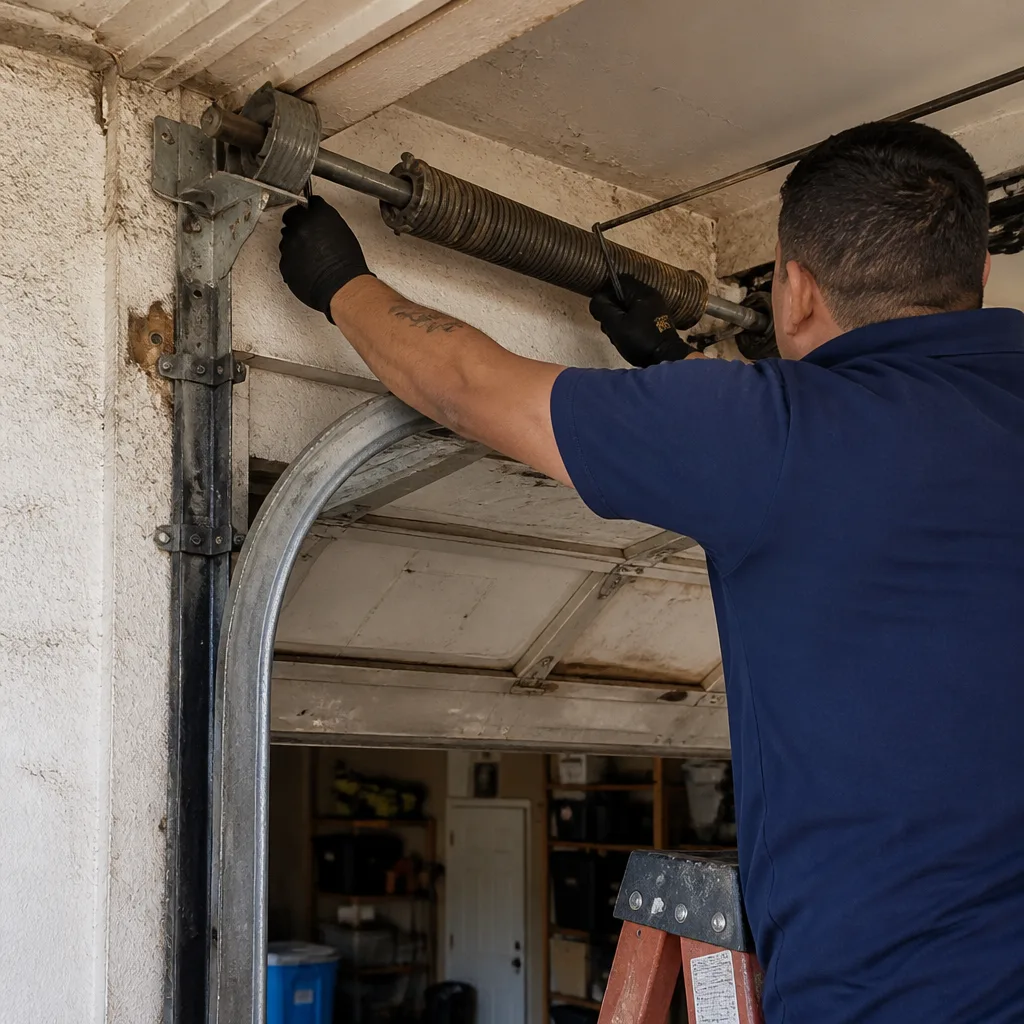 Before
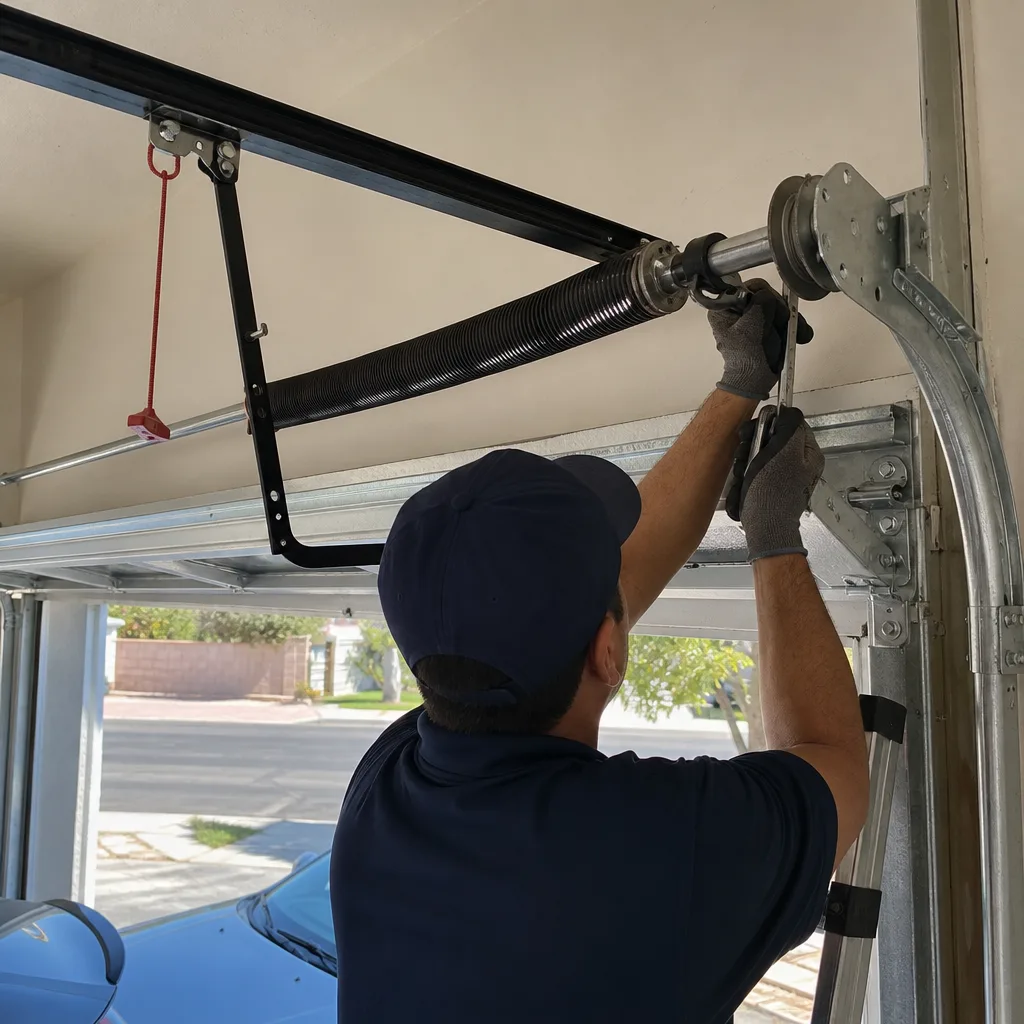 After
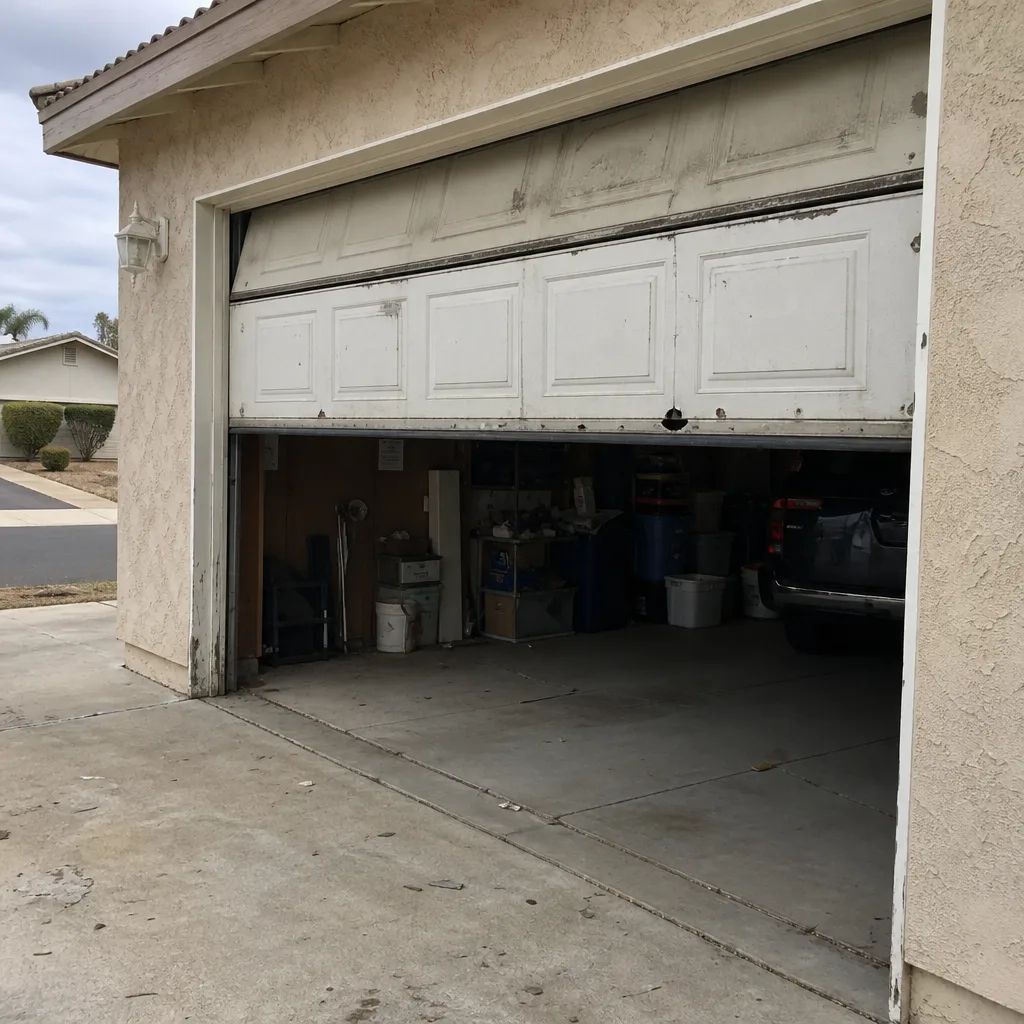 Before
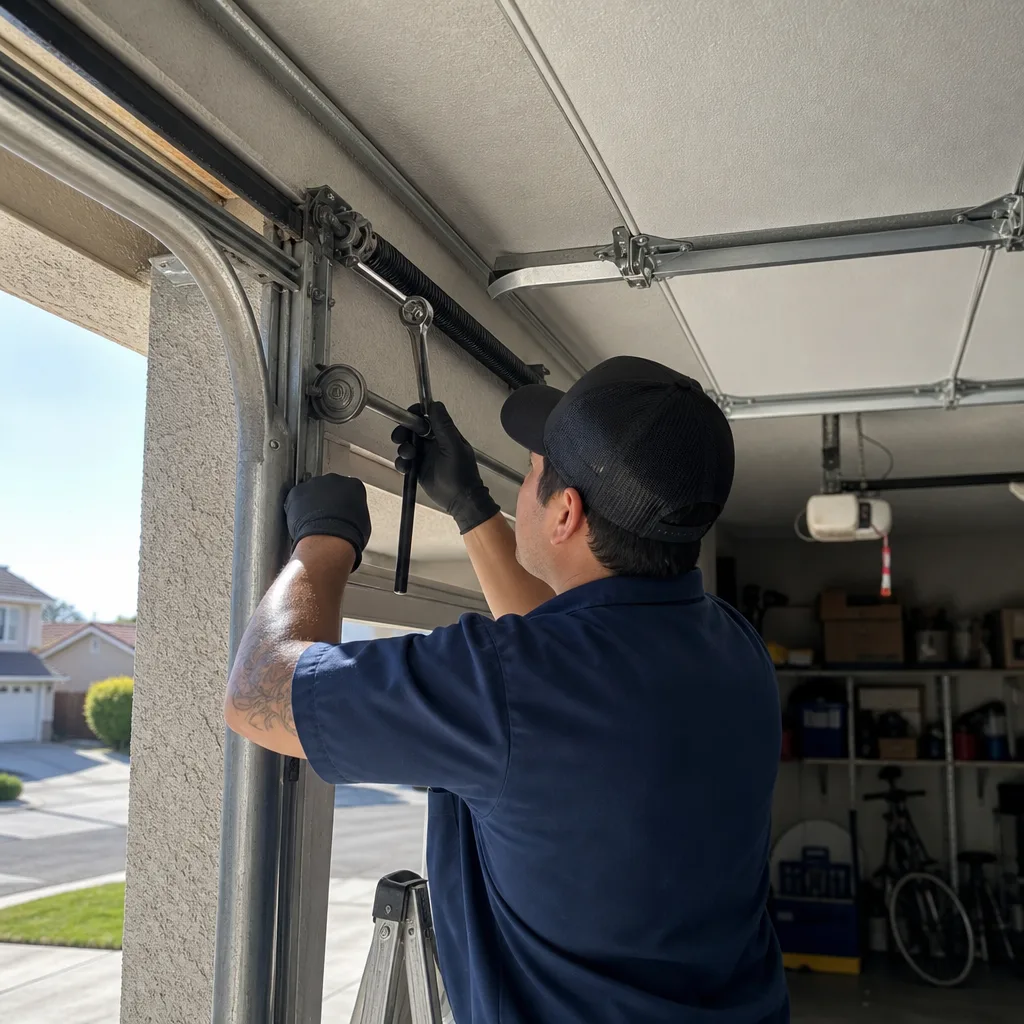 After
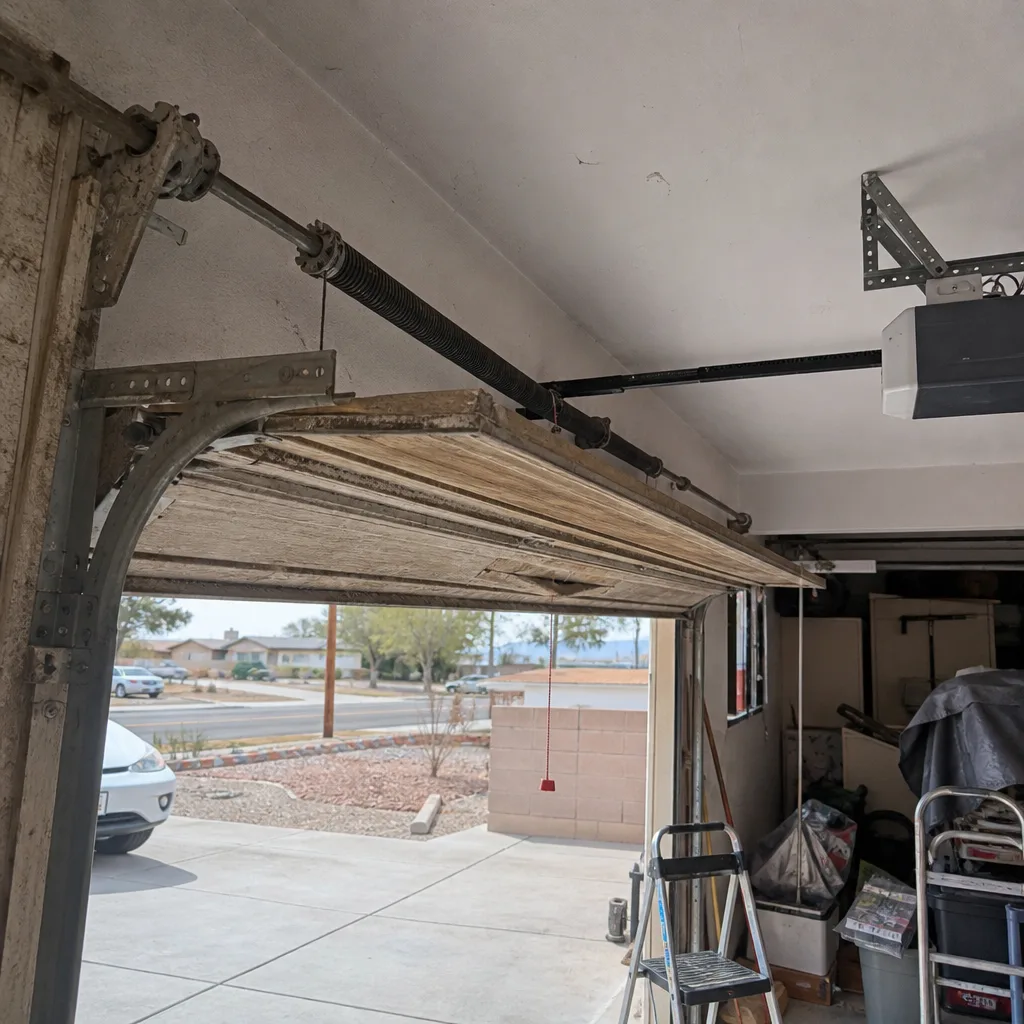 Before
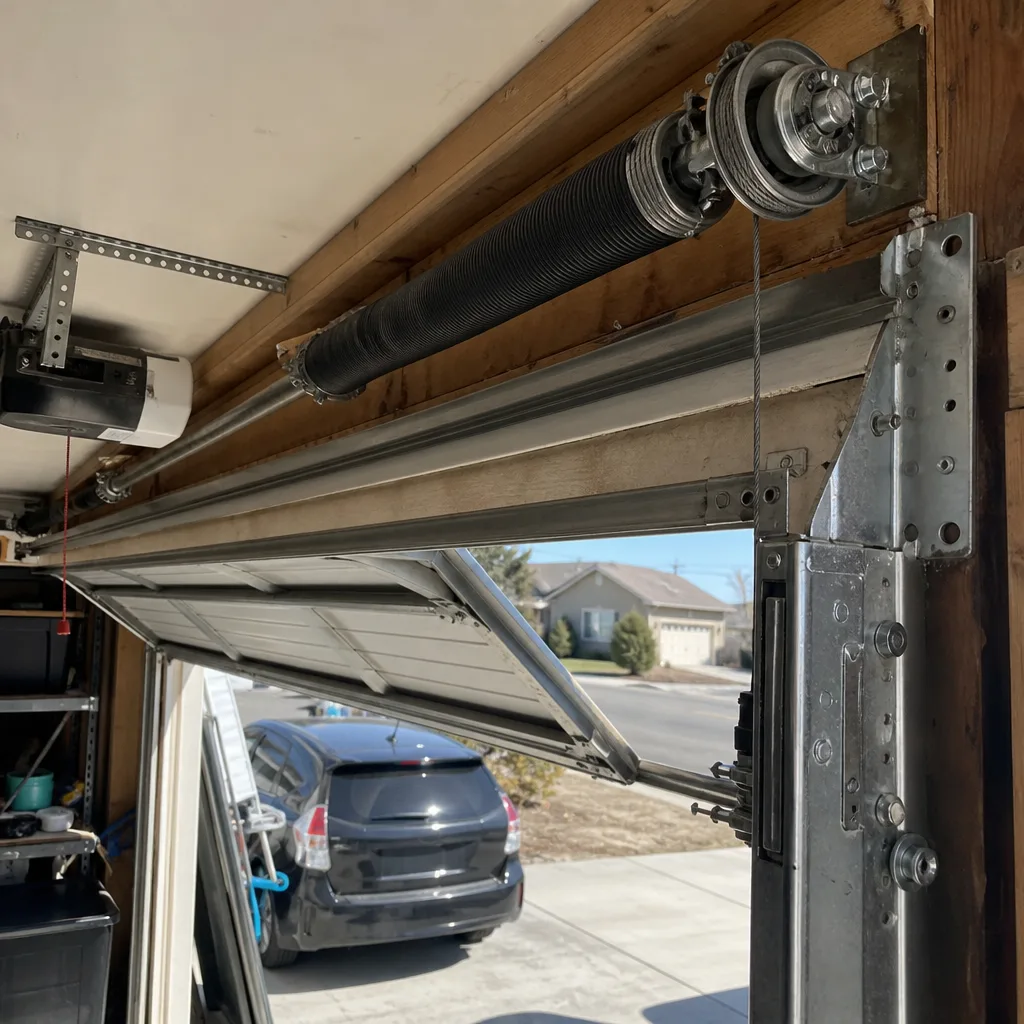 After
When to Call a Professional
Some garage door problems are fixable with a C-clamp and patience. Others are not. Call a professional when the spring is broken, when cables are frayed or off the drum, when the door is off its tracks, when the opener’s motor runs but the door doesn’t move, or when you’ve tried the manual release and the door still won’t budge. Any problem involving the spring or cables carries injury risk that outweighs the cost of a service call. Garage Door Service Hesperia offers free estimates in Hesperia, and we work on doors and openers from LiftMaster, Chamberlain, Genie, Clopay, Amarr, Wayne Dalton, Craftsman, and Raynor, so the odds are good we know your equipment. Call (833) 620-6388 and describe the problem using the guidance above.
If you need garage door service in Hesperia, a specialist who works exclusively on garage doors can diagnose and repair the issue faster than a general handyman who splits time across trades. We repair the brand you already have on the wall, not whatever brand we prefer to sell. That repair-first approach applies whether the problem is a broken spring, a dead opener, or a door that’s reached the end of its service life and needs garage door installation in Hesperia.
For opener problems specifically, the issue is often in the motor, logic board, or drive system, not the door itself. That’s where garage door opener repair in Hesperia matters: a technician who works on the opener every day, not someone who treats the opener as a mystery box. Whether it’s a Chamberlain that won’t respond, a LiftMaster that grinds, or a Craftsman that’s been working since the early 2000s and finally gave up, the fix starts with accurate diagnosis.
Frequently Asked Questions
Spring replacement in Hesperia typically runs $180 to $340 for a standard single spring, and $250 to $450 for a dual-spring system depending on the door size and spring type. Cable replacement typically runs $150 to $250. Opener repairs run $125 to $400 depending on whether the fix is a gear, logic board, or full motor replacement. All repairs should be quoted before work starts, so you know the price going in. Call (833) 620-6388 for an exact quote for your door.
Yes. Every automatic opener has a manual release cord, usually red, hanging from the trolley on the overhead rail. Pull it to disconnect the door from the opener, then lift or lower the door by hand. The door will be heavy, especially without a functioning spring, so use the two-person technique. When power returns, run the opener once to re-engage the trolley.
Pull the manual release cord, then lift the door with a second person using proper lifting technique. The door will weigh 150 to 250 pounds without the spring’s counterbalance. Move the car out, lower the door carefully, and call for spring replacement. Do not attempt to replace the spring yourself. Call (833) 620-6388 for emergency spring replacement in Hesperia.
No. A reputable Hesperia garage door company quotes the repair before starting work, and the price should not change unless additional damage is discovered after the work begins, in which case the technician should get your approval before addressing it. You should be told the price and agree to it before any work starts, including before a spring is removed or a new part is installed.
It’s worth considering if you rely on your garage door for daily vehicle access and Hesperia power outages are a recurring issue in your neighborhood. LiftMaster and Chamberlain both make battery backup openers, and they provide 20 to 50 cycles during an outage. If you lose power and don’t have a battery backup, you can still use the manual release procedure, but having the battery backup means not lifting a heavy door by hand at all.
A repair-first approach is the way to evaluate it. If the door’s panels are intact, the tracks are straight, and the issue is a spring, cable, roller, or opener component, repair is usually the right call. A new door makes sense when the panels are damaged beyond repair, the door is so old that parts are no longer available, or you want to upgrade for insulation or appearance reasons. A technician committed to repair before replacement will tell you which applies. Call (833) 620-6388 for an honest assessment in Hesperia.
The Bottom Line
A garage door emergency in Hesperia is rarely a “one thing went wrong” situation. It’s a broken spring at the worst possible moment, a power outage during a Santa Ana event, or a door that won’t close when you’re already late. Knowing the manual release procedure, understanding what a broken spring means for lifting, and having an emergency kit and a saved service number changes the outcome. Practice the release once, inspect your springs and cables twice a year, and know what to say when you call for help. The difference between a bad morning and a minor inconvenience is preparation that takes 15 minutes and costs almost nothing. When the emergency does happen, call (833) 620-6388 and describe the problem accurately. In Hesperia, a garage door specialist who knows the brand on your wall is the fastest way to get the door moving again.
Written by the team at Garage Door Service Hesperia, serving Hesperia since 2015.