
Last updated November 2, 2026
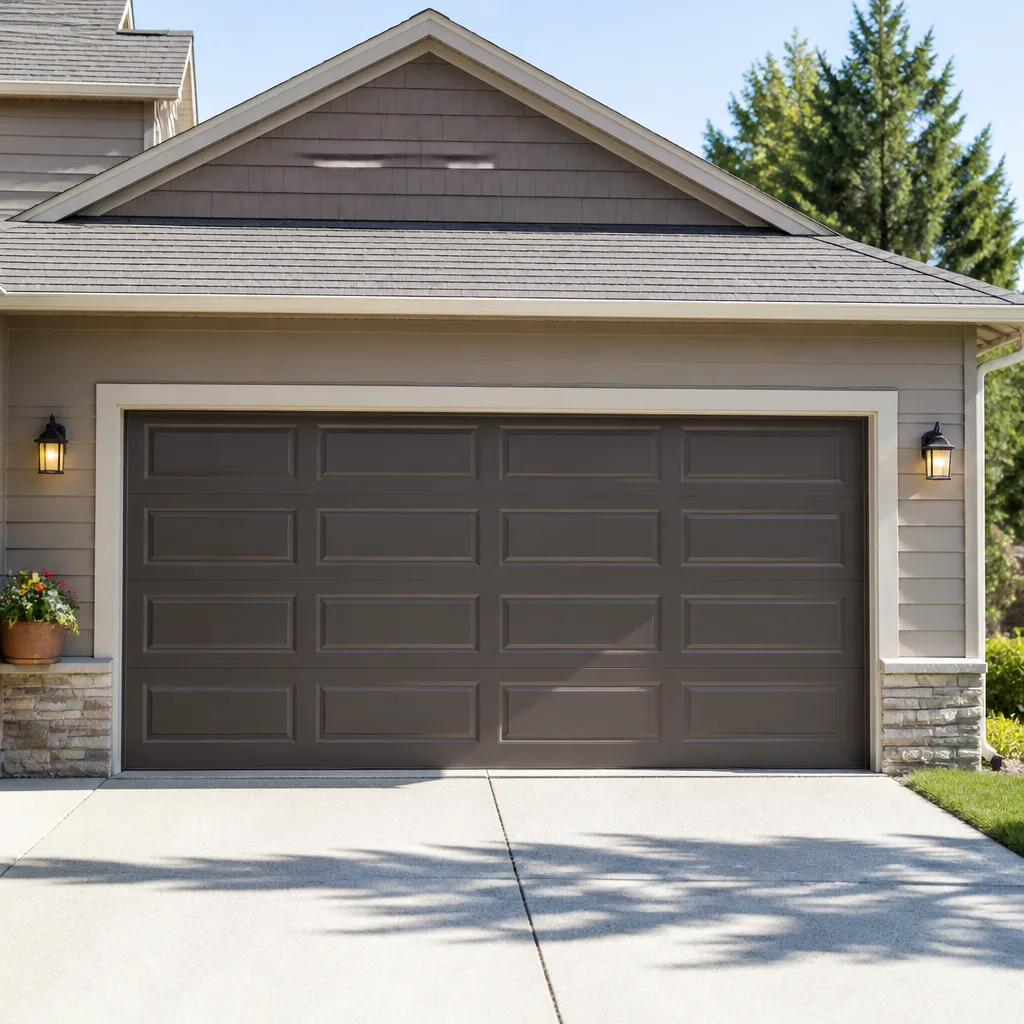 Raised-panel steel
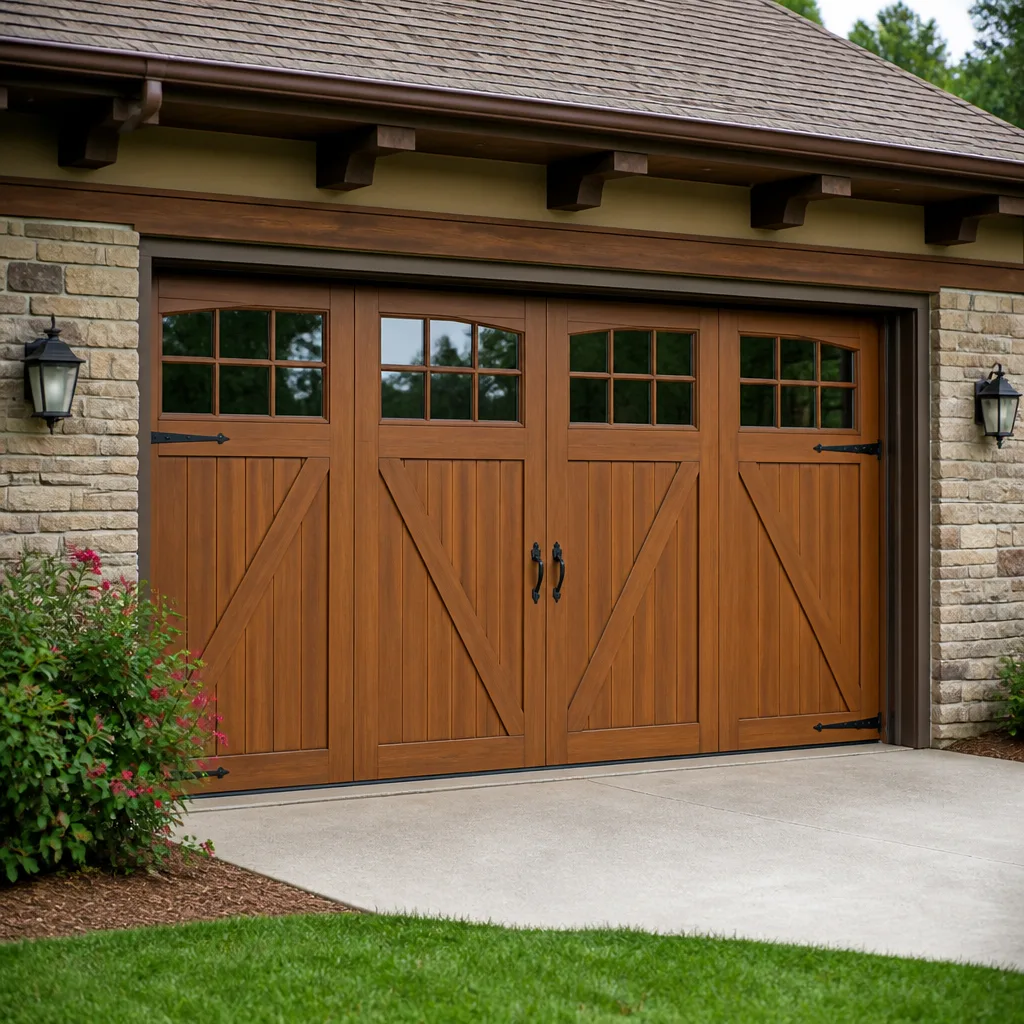 Carriage house
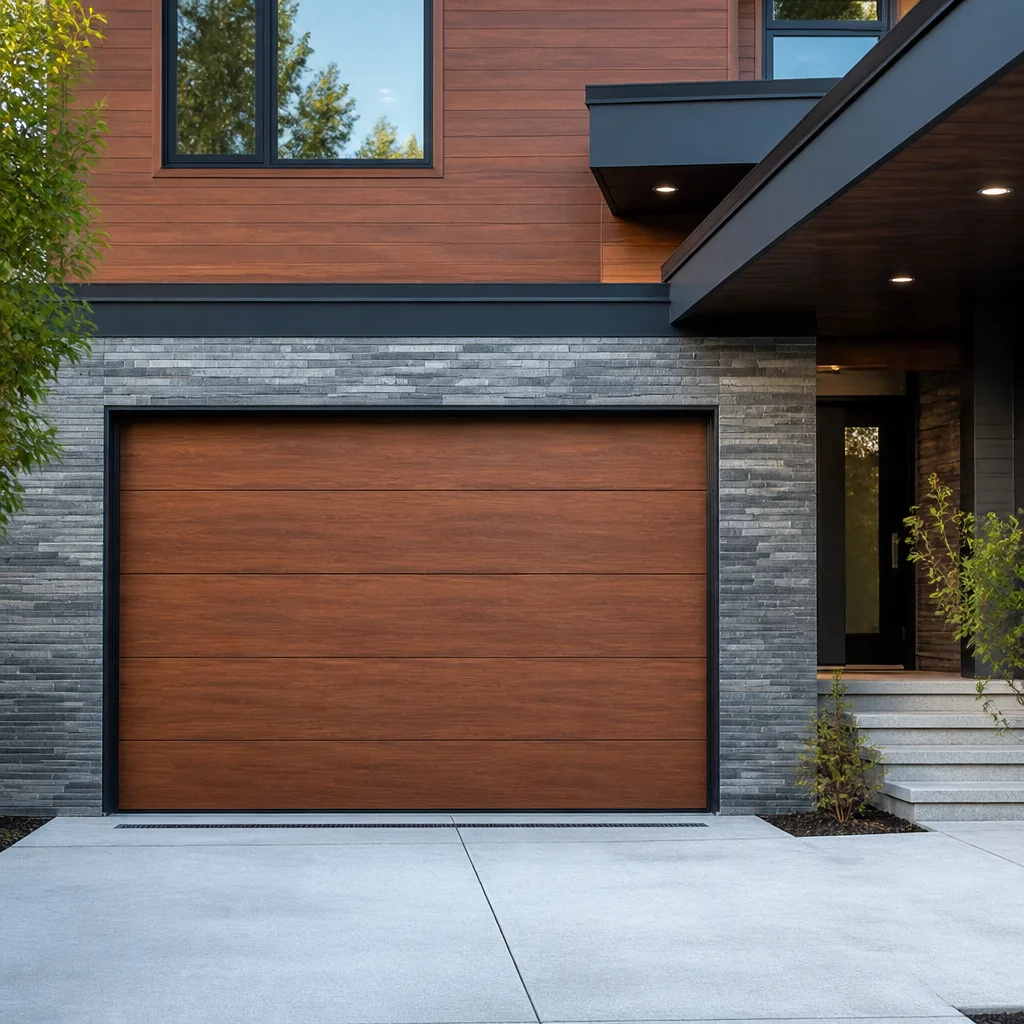 Modern flush
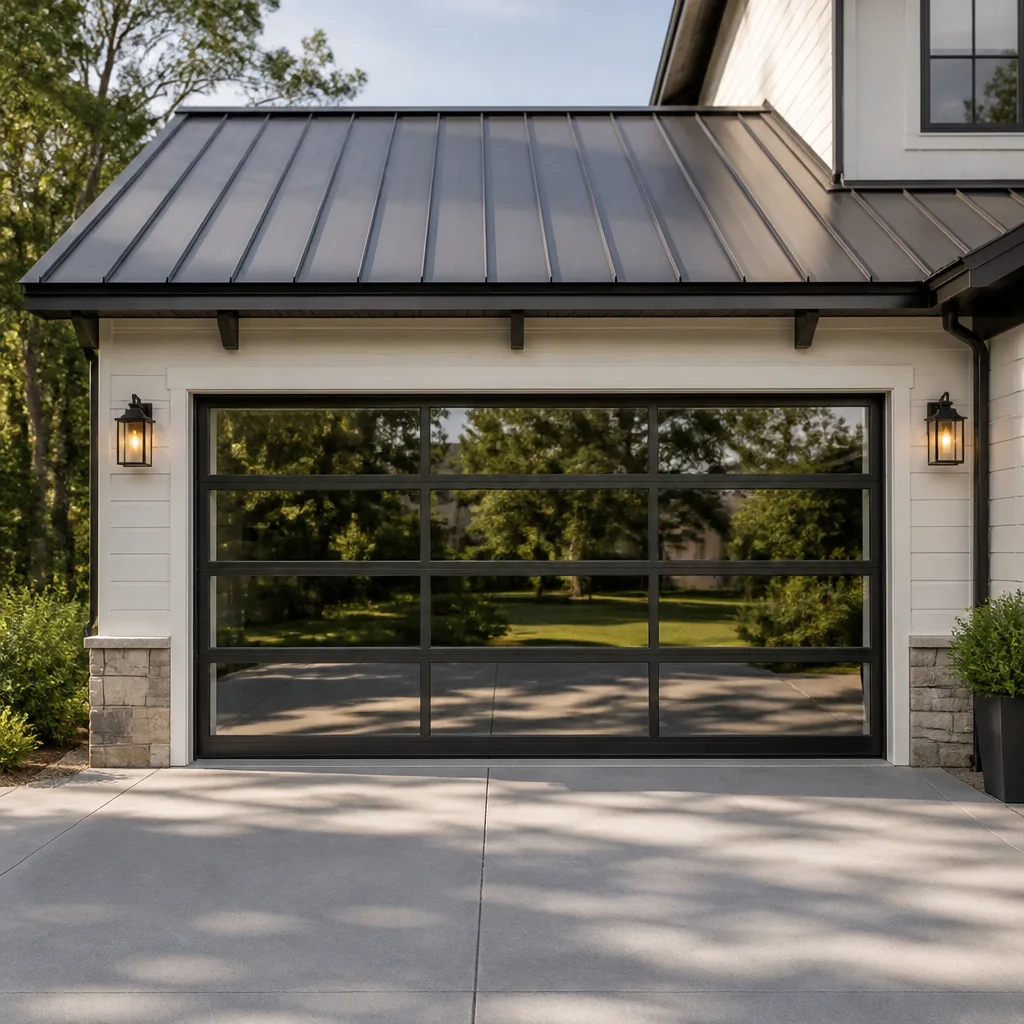 Full-view glass
 LiftMaster openers
 Chamberlain openers
Full 25-point door and opener safety check with every visit - springs, cables, rollers, tracks, and your LiftMaster or Chamberlain opener included
You get a price before we start. It does not change when the truck arrives.
Get your free estimateGarage Door Repair Troubleshooting: Common Problems and How to Fix Them
A garage door that won’t close is one of six different problems, and only one of them requires a technician. Homeowners who can’t tell the difference end up paying for service calls that a 30-second sensor wipe would have prevented. In Hesperia, where summer heat bakes opener logic boards and desert dust coats sensor lenses, misdiagnosis happens more than you’d think. This guide walks through the diagnostic logic technicians actually use, so you can describe the problem accurately, avoid the wrong fix, and know exactly when to pick up the phone.
Styles & brands we work with
- Raised-panel steel
- Carriage house
- Modern flush
- Full-view glass
- LiftMaster openers
- Chamberlain openers
Quick Answer
Garage door repair troubleshooting starts with identifying which subsystem failed: the opener, the springs, the tracks, the sensors, or the door panels themselves. For issues beyond DIY, explore our Garage Door Repair services. Most no-close problems trace to misaligned photo eyes or obstruction settings, while most no-open problems come from broken torsion springs or opener gear failure. You can safely test sensors, remotes, and track obstructions yourself; spring and cable work requires a trained technician because stored tension in a wound spring can cause serious injury.
Table of Contents
- Symptom-to-Cause Mapping: The 10 Most Common Failures
- How to Test Which Subsystem Failed: Opener, Springs, Tracks, or Sensors
- Garage Door Opener Error Codes: What LiftMaster, Chamberlain, and Genie Are Actually Telling You
- Which Troubleshooting Steps Are Safe to Do Yourself (And Which Aren’t)
- What Hesperia Homeowners Should Know About Climate and Garage Door Wear
- What to Have Ready Before You Call a Technician
- Brand-Specific Repair Notes: Wayne Dalton, Craftsman, Raynor, and LiftMaster
- Common Mistakes to Avoid
- When to Call a Professional
- Frequently Asked Questions
- The Bottom Line
Symptom-to-Cause Mapping: The 10 Most Common Failures
The symptom you notice rarely points directly at the broken part. A door that reverses before closing is almost never about the door itself. A door that makes a grinding sound is probably not the motor. Here is the mapping technicians carry in their heads, organized by what you experience first.
1. Door won’t open at all
Three causes account for most no-open calls. First, a broken torsion spring: when a spring snaps, you’ll usually hear a loud bang like a firecracker from inside the garage. The opener motor will run, but the door stays put or lifts an inch and stops. Second, opener gear failure: the motor spins, you hear a grinding or whirring, but nothing moves. Third, a power or logic board issue: no sound, no lights, no response from wall button or remote. Spring failure is the most common in Hesperia because temperature swings between hot days and cold desert nights fatigue spring steel faster than coastal climates.
2. Door won’t close
If the door opens fine but refuses to close, the problem lives in the safety system in most cases. Misaligned photo eyes are the top cause: a gentle bump from a trash can or a rake handle knocks one sensor out of alignment, and the opener interprets it as an obstruction. Dirty lenses do the same thing, especially in Hesperia where fine desert dust settles on everything. If both sensors are clean and aligned, check the close-force setting and the travel limits. In a smaller number of cases, a failing logic board or a stripped drive gear is the culprit.
3. Door reverses mid-travel
A door that starts closing, then reverses back up before touching the ground, is almost always a sensor problem and not a door problem. The photo eyes sit about six inches off the ground, and if the beam gets interrupted (by dust, a spider web, a leaf, or a misaligned lens), the opener reverses as a safety response. Less common causes include a close-force setting that is too sensitive, or a track obstruction that triggers the opener’s resistance detection.
4. Grinding or popping sounds
Grinding during operation points to one of three places. A worn drive gear inside a LiftMaster or Chamberlain opener produces a distinctive grinding sound while the motor runs but the door moves poorly or not at all. Loud popping or banging during movement usually means a torsion spring is binding or a roller is coming apart. A rhythmic scraping sound often comes from a hinge or roller that has lost lubrication or a track that has shifted out of alignment.
5. Door moves slowly
A door that crawls up or down is usually crying out for maintenance. Dry rollers, hinges, and springs create resistance the opener has to fight. On chain-drive openers, a loose chain causes jerky, slow movement. On screw-drive units, old grease thickens and slows travel. If the door moves slowly even when disconnected from the opener and operated by hand, the spring tension is wrong, and the door is too heavy for the opener.
6. Door opens partially, then stops
This symptom separates into two causes based on where the door stops. If it stops about a foot off the ground, a broken spring is likely: the opener can’t lift the full weight and gives up. If it stops at random heights, the travel limits or force settings have drifted, or the opener’s RPM sensor is failing. On Wayne Dalton doors with TorqueMaster springs, a partially opening door sometimes means the internal spring assembly has lost tension without making the loud bang typical of exposed torsion springs.
7. Remote works, wall button doesn’t (or vice versa)
When one control works and the other doesn’t, the opener itself is fine. A dead wall button usually means a broken wire at the button or a failed button circuit board. A dead remote means weak batteries, lost programming, or a failed receiver logic board. If the wall button works but every remote fails, the opener’s receiver may need replacement. On newer LiftMaster and Chamberlain units with Security+ 2.0, a lost remote usually requires reprogramming, which takes about 30 seconds once you know the button sequence.
8. Door drifts down after opening
If the door opens fully, then slowly slides down a few inches, the spring tension is too weak or the opener’s holding force is insufficient. This is a spring problem, not an opener problem. The springs counterbalance the door’s weight, and when they lose tension, the door wants to close on its own. This is a safety issue as much as a mechanical one.
9. Door slams when closing
A door that drops the last few inches instead of settling gently has a broken spring or a seriously out-of-balance door. The opener can lower the door but can’t control its weight, so gravity takes over. If you see this, stop using the door and call for service. Continued use bends tracks and damages hinges.
10. Door jerks or shakes during travel
Jerky movement usually traces to rollers, hinges, or track problems. Worn rollers with flat spots catch on the track. Loose track bolts allow the track to flex. A bent track section grabs the roller and releases it in a rhythm. On Craftsman and Raynor doors more than 15 years old, rusted hinges are a common Hesperia issue because the high desert’s low humidity doesn’t prevent rust once the factory coating wears off.
How to Test Which Subsystem Failed: Opener, Springs, Tracks, or Sensors
You can isolate the failed subsystem with tools already in your garage. Start with the emergency release handle, usually a red cord hanging from the opener rail. Pulling it disconnects the door from the opener carriage, which lets you separate the two biggest categories: door problems and opener problems.
Step 1: Disconnect the door
Pull the red emergency release cord while the door is closed. You’ll hear a click as the carriage disengages. Do not pull the cord while the door is open unless you’re prepared for the door to drop.
Step 2: Run the door by hand
Grab the door handle and lift. A properly balanced door rises smoothly, stays in place at chest height when you let go, and lowers gently. If the door feels heavy, won’t stay up, or slams down, the spring system is the problem, not the opener. In our experience in Hesperia, doors with broken springs get diagnosed as opener failures surprisingly often, because the homeowner hears the motor running and assumes the motor is the weak link.
Step 3: Reconnect and test the opener
Lift the door halfway and re-engage the carriage. Press the wall button. If the motor runs and the carriage moves but the door doesn’t, you have a broken drive gear or a disengaged carriage. If the motor makes no sound, check the outlet, the circuit breaker, and the opener’s fuse. If the motor hums but nothing moves, the capacitor or start winding may be failing.
Step 4: Test the safety sensors
With the door open, press the close button. Watch the sensor lights: each photo eye has a small LED, usually green on one side and amber on the other. If both lights are steady, the beam is aligned. If either light is off, blinking, or dim, you’ve found the problem. Wipe the lenses with a dry cloth, check the wiring at each sensor, and make sure the mounting brackets haven’t shifted. A sensor that points even 10 degrees off-center breaks the beam.
Step 5: Check the tracks and rollers
Look for gaps between the rollers and the track. Look for bent track sections, loose bolts, or debris wedged in the track radius at the top of the opening. In Hesperia, wind-driven grit and pebbles occasionally end up in the bottom track sections and create intermittent obstruction.
Garage Door Opener Error Codes: What LiftMaster, Chamberlain, and Genie Are Actually Telling You
Modern openers diagnose themselves and flash error codes through the learn button or the main light. Reading these codes takes 30 seconds and saves you from guessing. Here are the codes we see most often on service calls in Hesperia.
LiftMaster and Chamberlain error codes
- 1 flash: The safety sensors are misaligned, blocked, or disconnected. Clean the lenses and check the wiring.
- 2 flashes: The door is running into something, or the force setting is too sensitive. Check the track for debris.
- 3 flashes: The opener can’t detect the door’s travel limits. Reprogram the limits following the manual’s procedure.
- 4 flashes: The safety sensors have detected an obstruction, or there is a wiring short. Check the sensor wires where they exit the opener housing.
- 5 flashes: The motor has overheated. This happens often in Hesperia during summer when an opener runs multiple cycles in a closed, hot garage. Let it cool for 15 minutes.
- 6 flashes: The logic board has a fault. This usually requires board replacement or a new opener.
Genie error codes
- Red light blinking once, repeating: The door is hitting an obstruction or the force is set too high. Check track alignment.
- Red light blinking twice: The safety sensors (Safe-T-Beam) are blocked or misaligned. Align the eyes and check for damaged wiring.
- Red light blinking three times: The opener’s internal RPM sensor is failing, or the motor has an issue. This often requires a service call.
- Red light blinking four times: The travel limits are lost or corrupted. Reprogram the limits.
If your opener shows a code not listed here, the manual has the full table. But these accounts for the vast majority of what we see, and matching the code to the fix keeps you from replacing parts that are still good.
Which Troubleshooting Steps Are Safe to Do Yourself (And Which Aren’t)
Some troubleshooting steps you can handle this afternoon. Others create real injury risk and can void your warranty if performed incorrectly. Knowing the line between the two matters more than any single diagnostic trick.
Safe to do yourself
- Clean and align the photo eyes. Wipe the lenses with a dry cloth, gently rotate each sensor until the indicator lights are steady, and tighten the mounting wingnuts.
- Check the power source. Confirm the opener is plugged in, the outlet works, and the circuit breaker hasn’t tripped.
- Replace remote and keypad batteries. LiftMaster and Chamberlain remotes take a single 3V coin cell; Craftsman remotes vary by model year.
- Lubricate rollers, hinges, and the spring. Use a white lithium or silicone spray on metal rollers and hinges. Do not lubricate nylon rollers where the wheel meets the track.
- Visually inspect tracks, rollers, and cables. Look for bends, gaps, rust, and fraying. Do not touch the cables.
- Clear debris from the track path. Remove rocks, sticks, and built-up dirt from the bottom track sections.
Do not touch these
- Torsion springs. A wound torsion spring stores enough energy to break bones or kill. Testing or adjusting spring tension is never a DIY job. If you hear a loud bang and the door won’t open, the spring has snapped, and the fix involves winding new springs under precise tension.
- Extension spring cables. The cables running along the sides of the door carry spring tension. If a cable is frayed or has jumped off the pulley, the safe move is to leave the door alone and call a technician.
- Bottom bracket cables. These are the highest-tension cables on the entire door. Even with the door down, they can snap unpredictably.
- Track bolt loosening or removal. Removing the wrong bolt on a torsion-spring door can release spring tension. Do not loosen any bolt you don’t fully understand.
Warranty consideration: on most LiftMaster, Chamberlain, Genie, and Craftsman openers, tampering with the motor housing, logic board, or safety sensor wiring voids the warranty. Spring work on any door carries the same risk. If the door is under warranty, resist the urge to open the opener chassis.
What Hesperia Homeowners Should Know About Climate and Garage Door Wear
Hesperia’s high desert climate creates a specific set of garage door problems that homeowners in coastal California rarely encounter. Understanding these patterns helps you anticipate issues and describe symptoms when you call for service. For deeper reading, see our Garage Door Warning Signs: A Hesperia Homeowner’s Reference Guide.
Summer heat is the biggest factor. A closed, uninsulated garage in Hesperia can reach 130 degrees on a July afternoon. That heat bakes the opener’s logic board, shortens capacitor life, and accelerates the breakdown of lubricant on screw-drive openers. Opener motor overheating is a regular summer call for us. The fix often starts with ventilation: leaving the garage door cracked during the hottest hours has side effects we don’t recommend, but adding a vent or insulating the door reduces the load on the opener.
Dust is the second factor. Fine desert dust coats sensor lenses, accumulates on the drive rail, and mixes with lubricant to form a paste that slows door travel. Sensors that work fine in spring suddenly start false-triggering in wind season because a dust film breaks the photo eye beam. Cleaning the lenses monthly during windy months prevents most of these calls.
Temperature swings stress springs. Hesperia’s daytime-to-nighttime temperature spread can exceed 30 degrees. Torsion springs expand and contract with each cycle, and over years, the metal fatigues. Most springs rated for 10,000 cycles fail earlier in the high desert than they would in a milder climate. If your springs are more than seven years old and the door feels heavier, you’re on borrowed time.
Wind also matters. Hesperia gets strong seasonal gusts along Highway 395 and the open desert flats. A door that shudders in wind but runs fine on calm days often has loose track bolts, and a door that bangs in wind may need a strut added for reinforcement. None of these are problems in the coastal cities, so they get misdiagnosed when you talk to someone unfamiliar with the area.
What to Have Ready Before You Call a Technician
Ten minutes of prep before calling Garage Door Repair in Hesperia makes the service visit faster and the phone quote more accurate. Here is what a technician needs to know.
- The exact symptom, in sequence. Does the door open but not close? Does the motor run but the door not move? What sound does it make, and when did it start? Write down the sequence if your memory is fuzzy.
- The opener brand and model. LiftMaster, Chamberlain, Genie, Craftsman, Raynor, or Wayne Dalton. The model number sits on a sticker on the opener’s side or back, usually near the light bulb. Model number, not just brand, because parts differ between model years even within a brand.
- The door brand if visible. Look for a stamp or label near the bottom panel or on the end stiles. Knowing it’s a Clopay versus a Wayne Dalton changes which replacement panels and spring ratings apply.
- Which error code is flashing. Count the flashes before you call, because the code resets when the opener loses power.
- Whether you can move the door by hand. Pull the red release cord and try lifting. Whether the door is heavy or balanced tells the technician more than a phone description of the noise.
- Photos. Take a picture of the spring assembly above the door, the opener unit, and anything that looks obviously bent, rusted, or disconnected. A clear photo often turns a two-visit job into one.
This list is not busywork. A technician who arrives knowing the brand, the symptom, and the spring type brings the right parts on the first truck roll. A technician who arrives blind sometimes has to make a second trip after ordering a part, and that second trip adds days to a door you already can’t open.
Brand-Specific Repair Notes: Wayne Dalton, Craftsman, Raynor, and LiftMaster
Each manufacturer has quirks that change the repair approach. Here are the ones that matter for the brands we see most often in Hesperia garages.
Wayne Dalton
Wayne Dalton doors often use a TorqueMaster spring system, which hides the spring inside a tube above the door instead of exposing it on the shaft. This design is quieter and safer, but it fails differently: you won’t hear the loud bang of a snapping torsion spring, and the door simply loses lift strength gradually. If your Wayne Dalton door has been opening slower over months, the internal spring assembly is likely losing tension. The fix requires removing the end caps and replacing the internal spring cartridge, which is a technician job with specific torque settings. If you’re selecting a pro, read How to Hire a Garage Door Contractor in Hesperia: A Step-by-Step Guide.
Craftsman
Craftsman openers are ubiquitous in Hesperia, especially in homes built between 1995 and 2015. The most common failure we see is the drive gear: a plastic gear inside the opener that strips over time, producing a grinding noise while the motor runs. The gear is replaceable, and the repair usually costs less than a new opener. Craftsman doors themselves are often rebranded Chamberlain or LiftMaster products, which means parts are widely available, but model-year differences matter more than with other brands.
Raynor
Raynor doors are less common than the big-box brands, but we service enough of them to know their weak points. Raynor’s residential doors often use extension springs on a longer pulley system than other brands, and the pulleys wear out before the springs do. A squealing Raynor door is usually a pulley bearing failing, not the spring. Because replacement Raynor parts are harder to source than the major brands, brand-specific diagnostic knowledge prevents the common trap of replacing a Raynor door when only a pulley set needs replacing.
LiftMaster
LiftMaster is the most-installed opener brand in the Hesperia market, and its failure modes are well documented. The most common is the RPM sensor: a small internal component that tells the opener how fast the motor is turning, and when it fails, the opener travels erratically or stops mid-cycle. The second is the logic board, which fails more often in the high desert heat than anywhere else we see. When a LiftMaster logic board fails, the symptom is often random: the light flashes, the door reverses for no reason, and error codes change between attempts. Board replacement is straightforward on most LiftMaster models, and at Garage Door Opener Repair in Hesperia we handle the board, gear, and sensor replacements for the full LiftMaster product line.
Common Mistakes to Avoid
- Assuming the opener is the problem when the door won’t open. Broken springs cause more no-open calls than opener failures. If the motor runs but the door doesn’t move, check the spring before replacing the opener.
- Spraying WD-40 on everything. WD-40 is a solvent, not a lubricant. It strips existing grease and leaves metal dry. Use white lithium grease on metal rollers and hinges, and a silicone spray on nylon parts.
- Ignoring a door that is slightly out of balance. A door that drifts down a few inches after opening is a spring wearing out. Ignoring it turns a $200 spring replacement into a $600 opener replacement when the extra weight burns out the motor.
- Tightening or loosening spring hardware without training. This is the most dangerous mistake in the entire trade. Hesperia homeowners have been seriously hurt attempting DIY spring adjustments. No amount of YouTube video replaces trained hands on a wound spring.
- Disconnecting the emergency release while the door is open. If the spring is broken and you pull the release cord with the door up, the door falls with full force. Only pull the release when the door is closed, or when you have physically supported the door first.
- Replacing the opener when the door itself is the problem. A heavy, warped, or misaligned door burns through openers. Installing a new opener on a bad door just means you’ll replace the opener again in three years. Repair the door first, then decide on the opener.
- Waiting until the door completely fails before calling. A door that makes new noises, moves slower than before, or rattles in wind is sending warning signals. A $50 roller replacement now beats a $400 track replacement after a broken roller bends the rail.
When to Call a Professional
You’ve cleaned the sensors, checked the breaker, replaced the remote battery, and pulled the release cord to test the door by hand. If the door still won’t operate correctly, or if you discovered a broken spring, a frayed cable, or a stripped gear during your checks, the next step is a service call. Spring and cable work carries real risk of severe injury, and opener board or gear repairs require brand-specific parts and calibration. Hesperia homeowners who want the door running today are better served by a call than by another afternoon of trial and error with parts from the hardware store. Garage Door Service Hesperia home offers free estimates in Hesperia – call (833) 620-6388 and describe the symptom. A technician who works only on garage doors diagnoses the problem faster than a general handyman who sees one garage door a month.
Frequently Asked Questions
Your garage door reverses because the photo eye safety sensors are misaligned, dirty, or blocked, or because the close-force setting is too sensitive. Clean the sensor lenses, make sure both lights are steady, and clear any objects from the beam path. If the problem continues, your opener’s force adjustment or logic board may need attention. Call (833) 620-6388 for a free estimate if a sensor cleaning doesn’t fix it.
Torsion spring replacement in Hesperia typically runs between $180 and $350 for a standard two-spring setup, depending on the door weight and spring rating. Extension spring replacement generally costs less. The price is quoted and agreed before any work starts, so there are no surprises at the end. For an exact quote on your door, call (833) 620-6388 and have the door model and spring type ready.
Yes. A grinding sound with no door movement almost always means a stripped drive gear inside the opener, and the gear is replaceable in most LiftMaster, Chamberlain, Craftsman, and Genie models. The repair usually costs less than a new opener, especially on units less than 10 years old. We diagnose the exact failure before recommending a repair or replacement at Garage Door Opener Repair in Hesperia.
A standard torsion spring rated for 10,000 cycles lasts about 7 to 10 years in Hesperia, depending on how often the door cycles each day. High-cycle springs rated for 20,000 cycles typically last twice as long. Temperature swings between hot desert days and cold nights accelerate spring fatigue, so Hesperia springs often fail sooner than identical springs in coastal climates. If your springs are past the seven-year mark, proactive replacement is cheaper than an emergency call.
No. The price is quoted and agreed before any work starts, and it does not change after the technician arrives unless you approve additional work beyond the original scope. You’ll know the cost before the repair begins. Call (833) 620-6388 with your symptom and door model, and we’ll give you an accurate quote over the phone in most cases.
Our trucks are stocked with the most common springs, gears, sensors, rollers, and cables for the brands we service, including LiftMaster, Chamberlain, Genie, Clopay, Amarr, Wayne Dalton, Craftsman, and Raynor. Most repair visits are completed in one trip. For less common parts, we order from our supplier network and schedule the return visit immediately, which is why sharing the door and opener model before the visit matters.
You can, but you’ll spend several hours aligning the opener, programming the travel limits, and pairing the remotes, and you’ll need a second set of hands for the rail assembly. Many homeowners in Hesperia find that Garage Door Installation in Hesperia costs less than they expected once the trip to the hardware store, the returned opener, and the weekend afternoon are factored in. We install openers for the same brands we repair, and the programming is done correctly the first time.
The Bottom Line
Garage door troubleshooting is a process of elimination, and the elimination should follow the hierarchy of likely failures: sensors first, springs second, opener third, tracks fourth. Hesperia’s heat, dust, wind, and temperature swings make each of these failures more common than in milder climates, and knowing the local patterns helps you describe symptoms accurately. The safety line is non-negotiable: torsion springs and cables are technician work, and anything involving the opener’s motor or logic board is best left to someone who works on that specific brand every day. When in doubt, call before the small problem becomes a stuck door at 7 a.m. on a workday. Browse more guides & resources to stay ahead of common failures.
Written by the team at Garage Door Service Hesperia, serving Hesperia since 2015.
See the difference
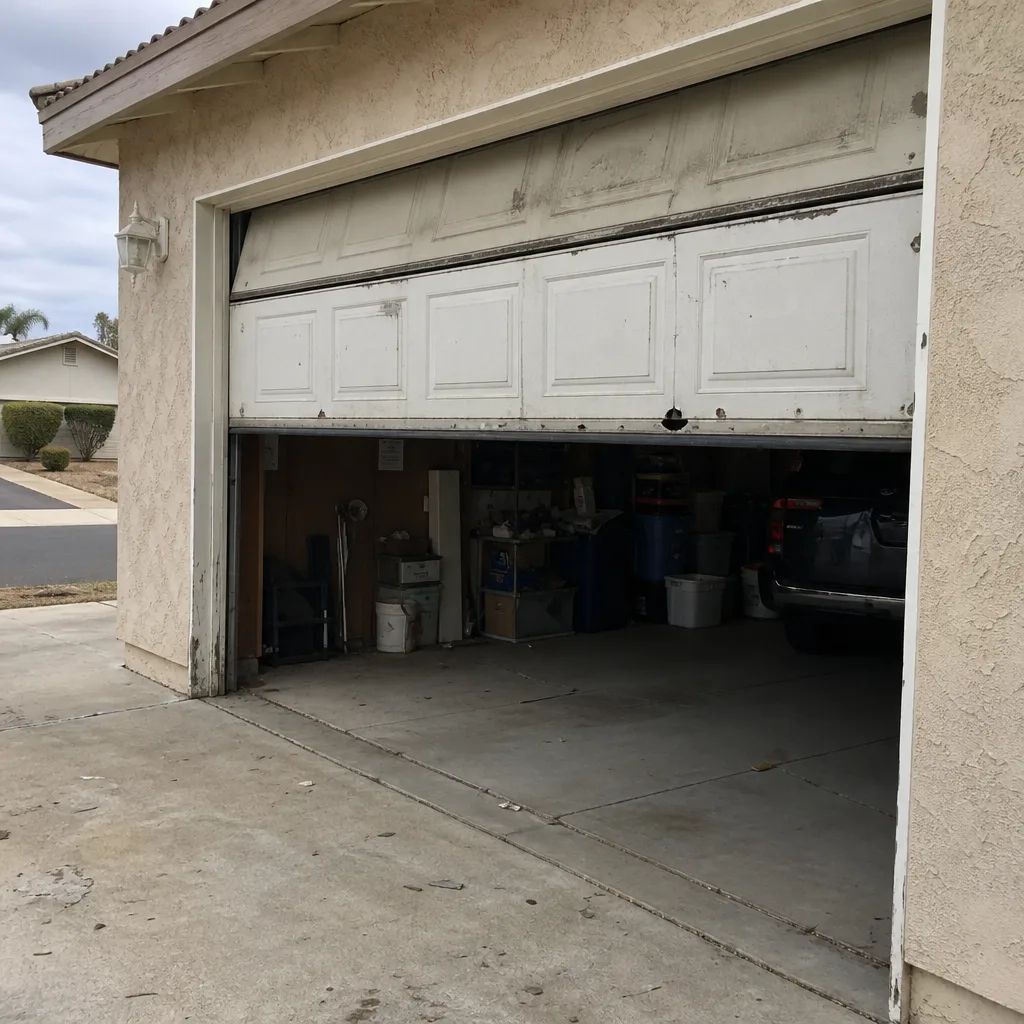
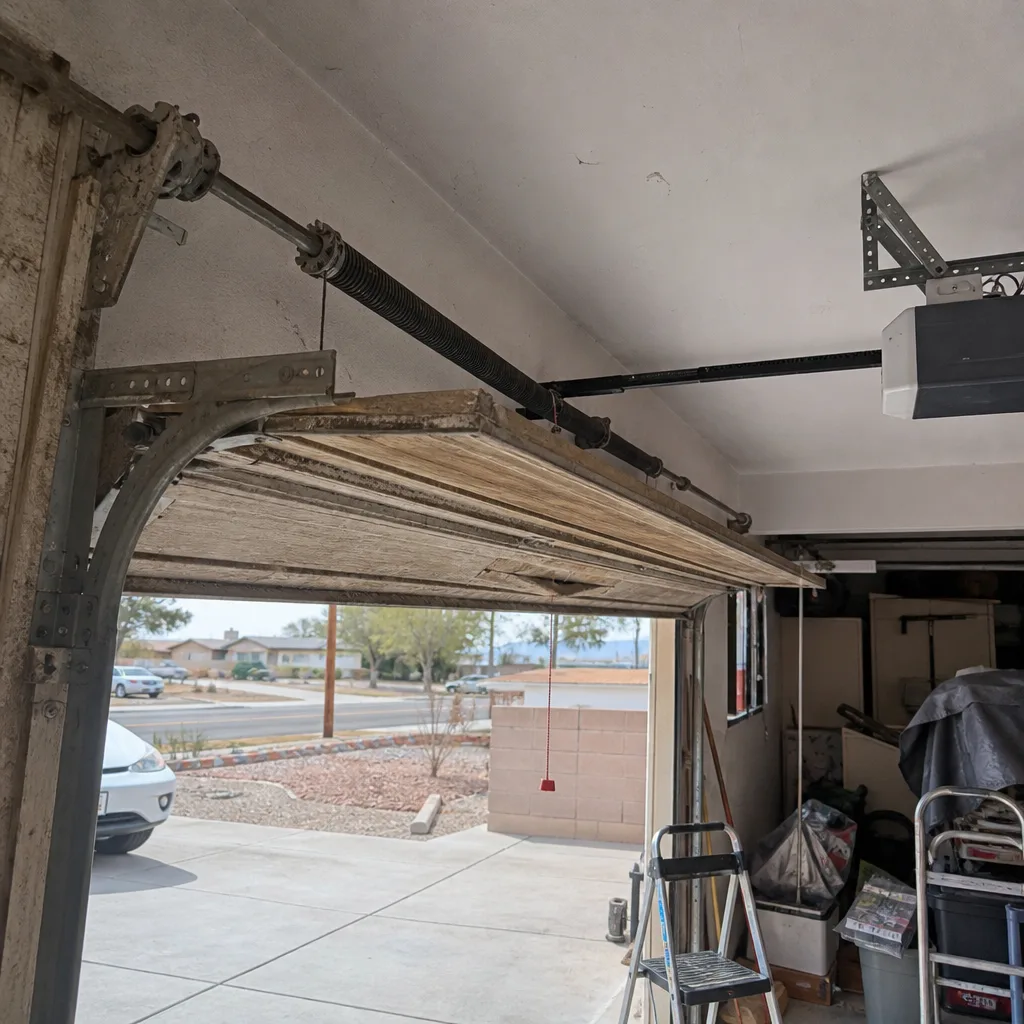
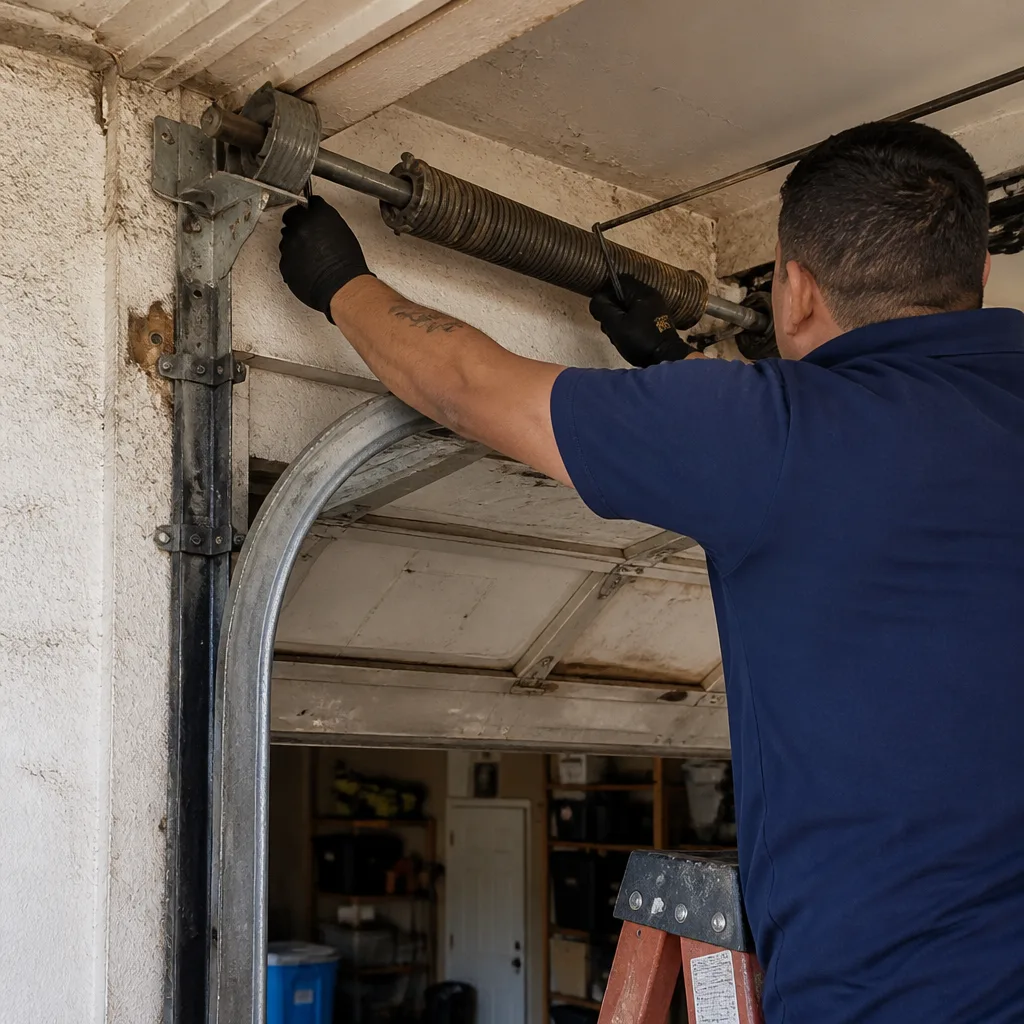 Before
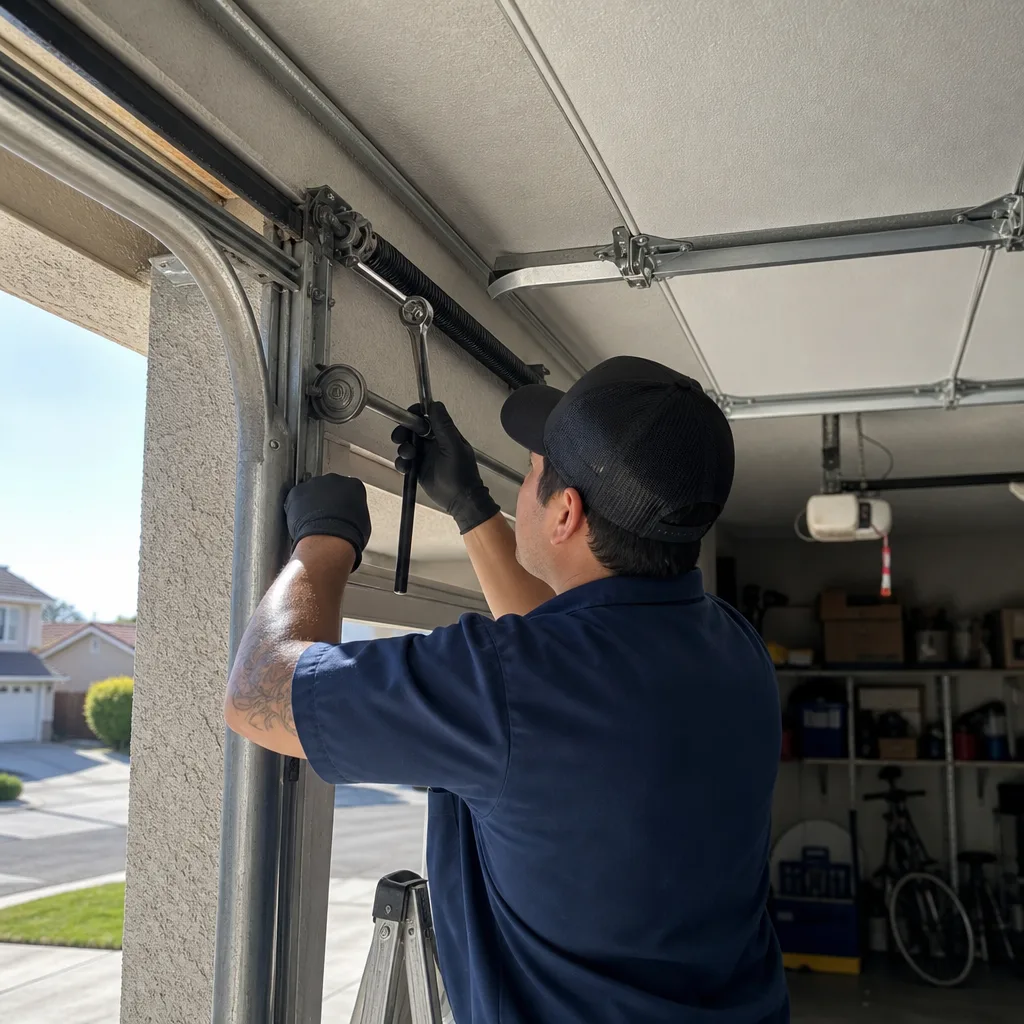
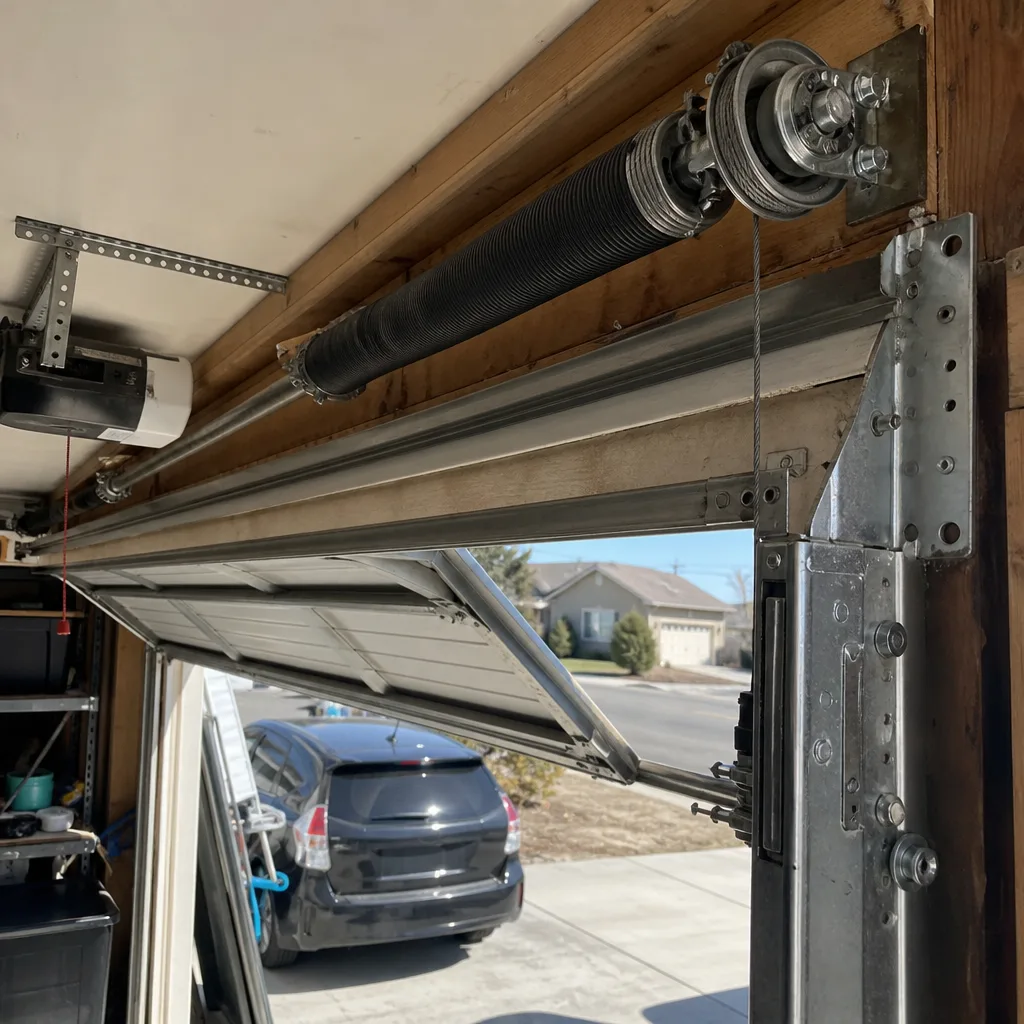
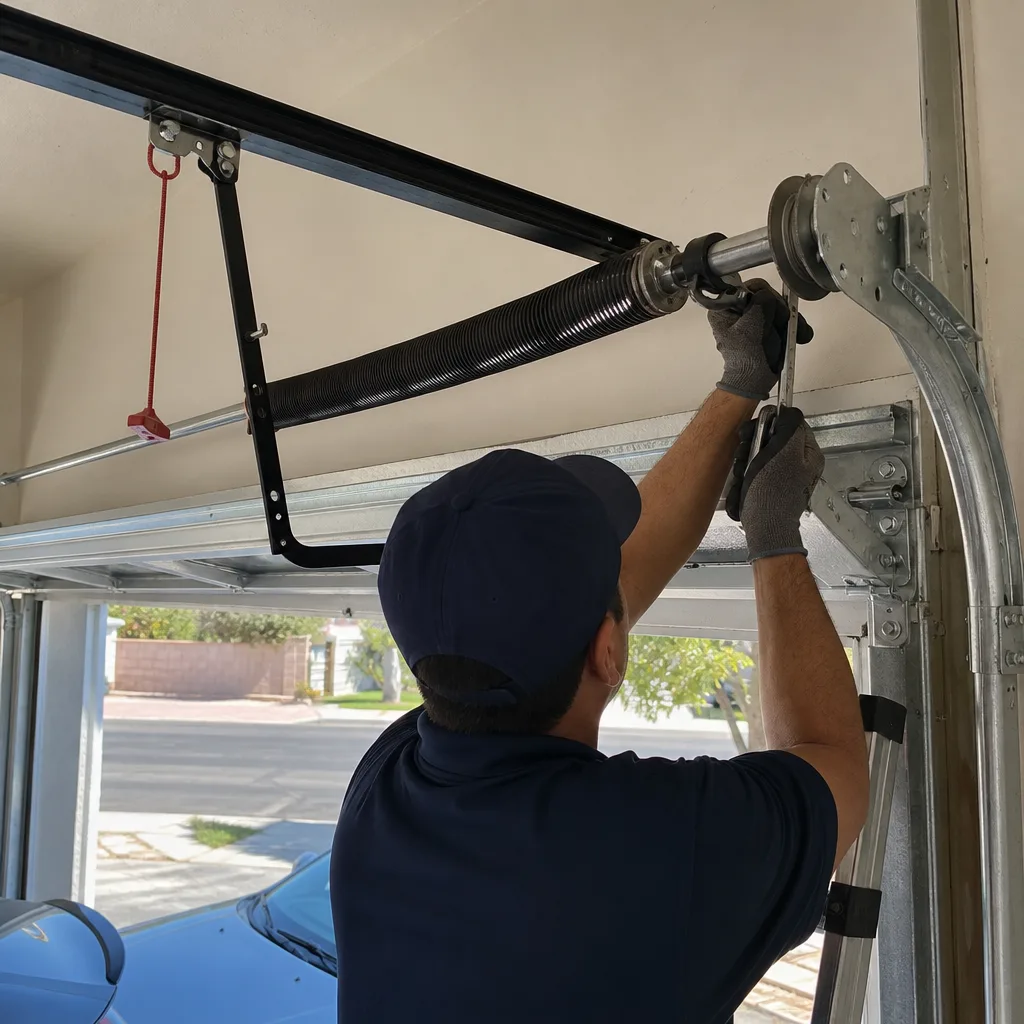 After
 Before
 After
 Before
 After