
Last updated November 3, 2026
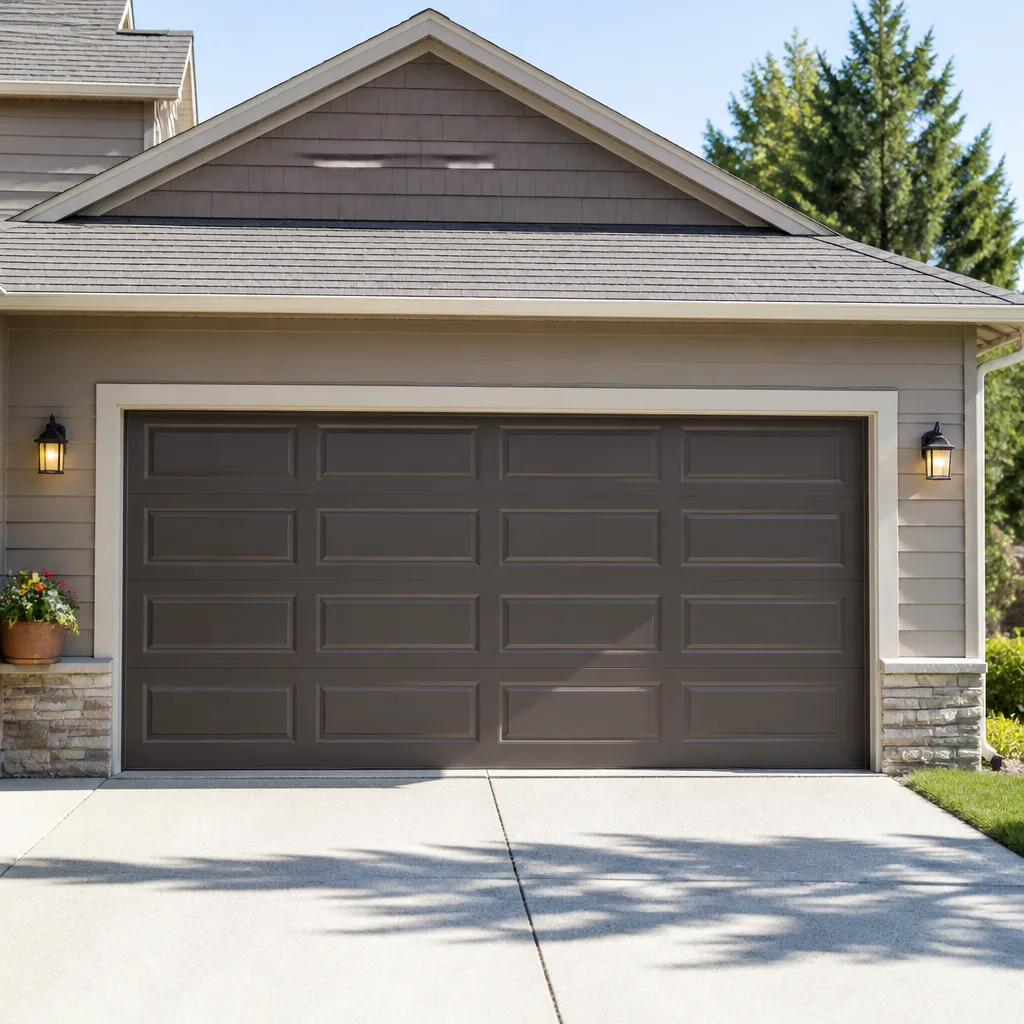 Raised-panel steel
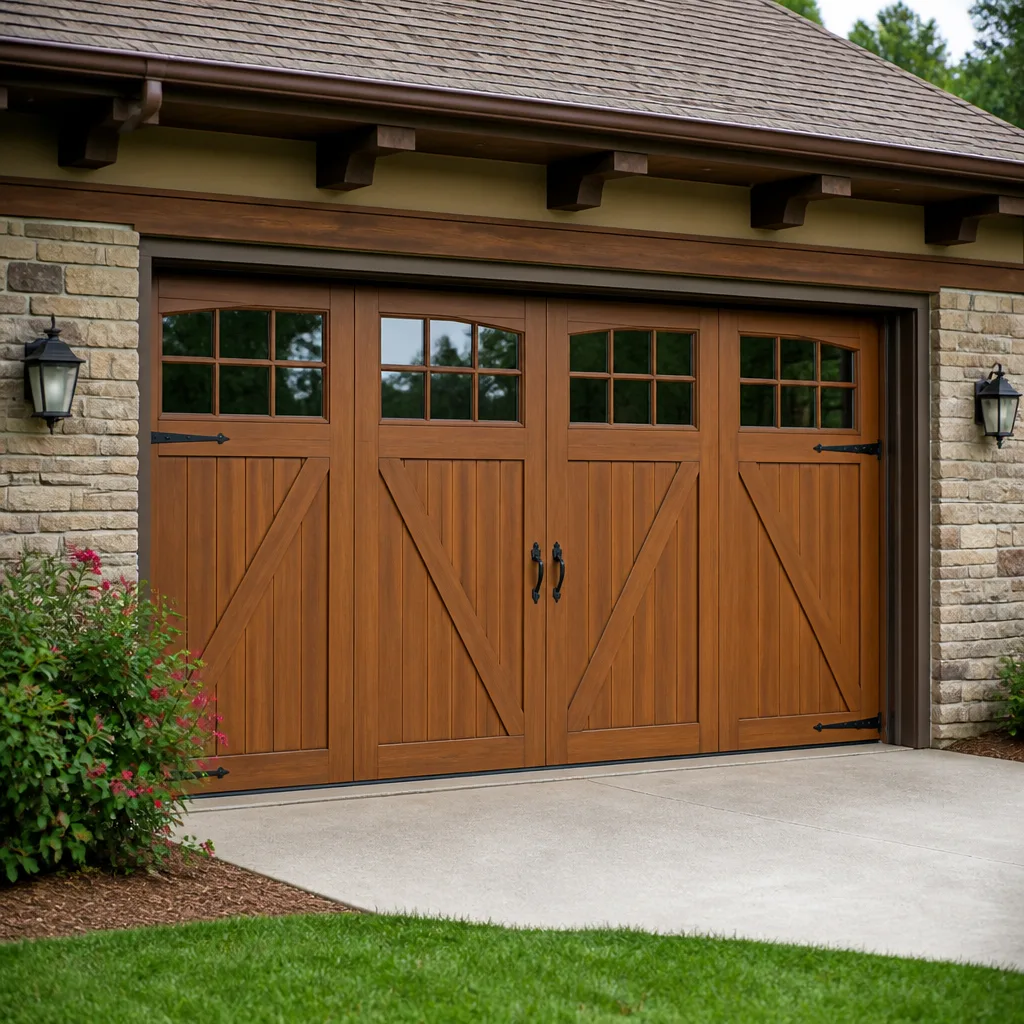 Carriage house
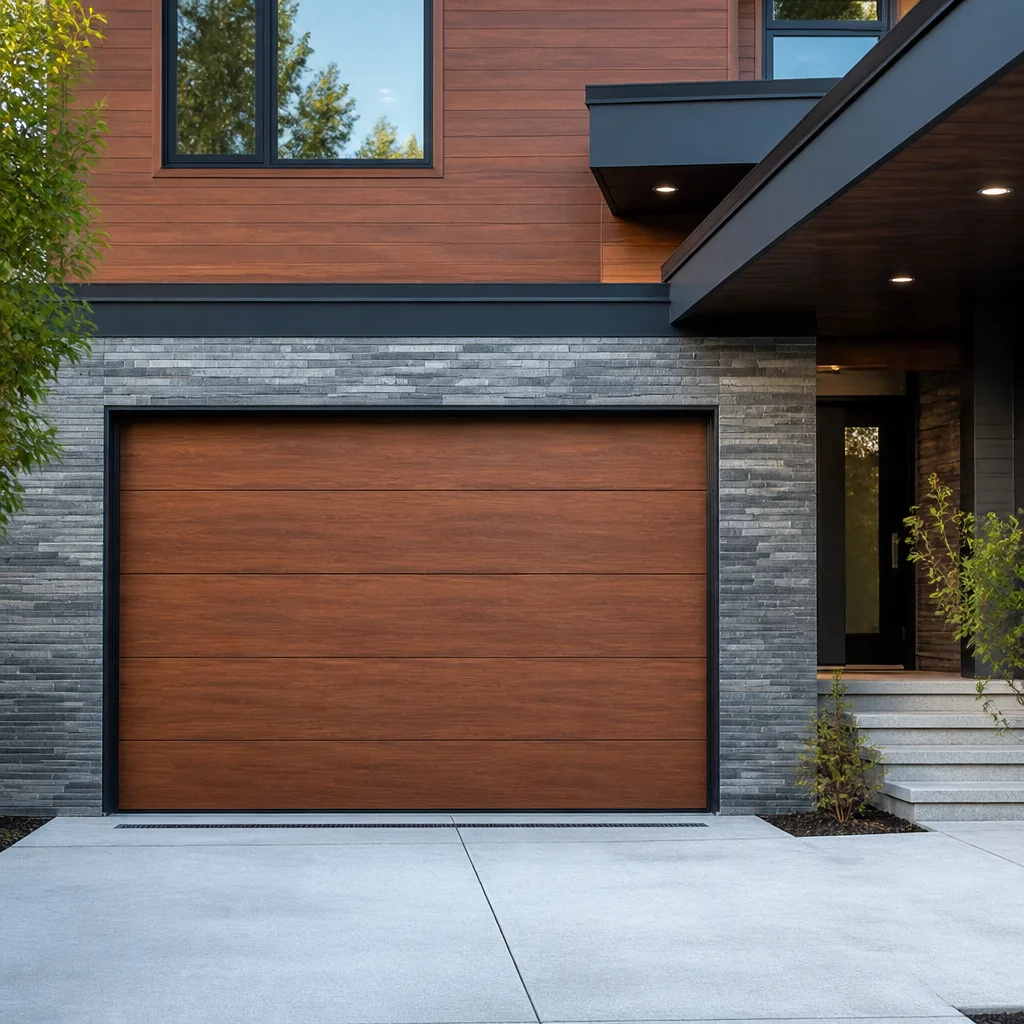 Modern flush
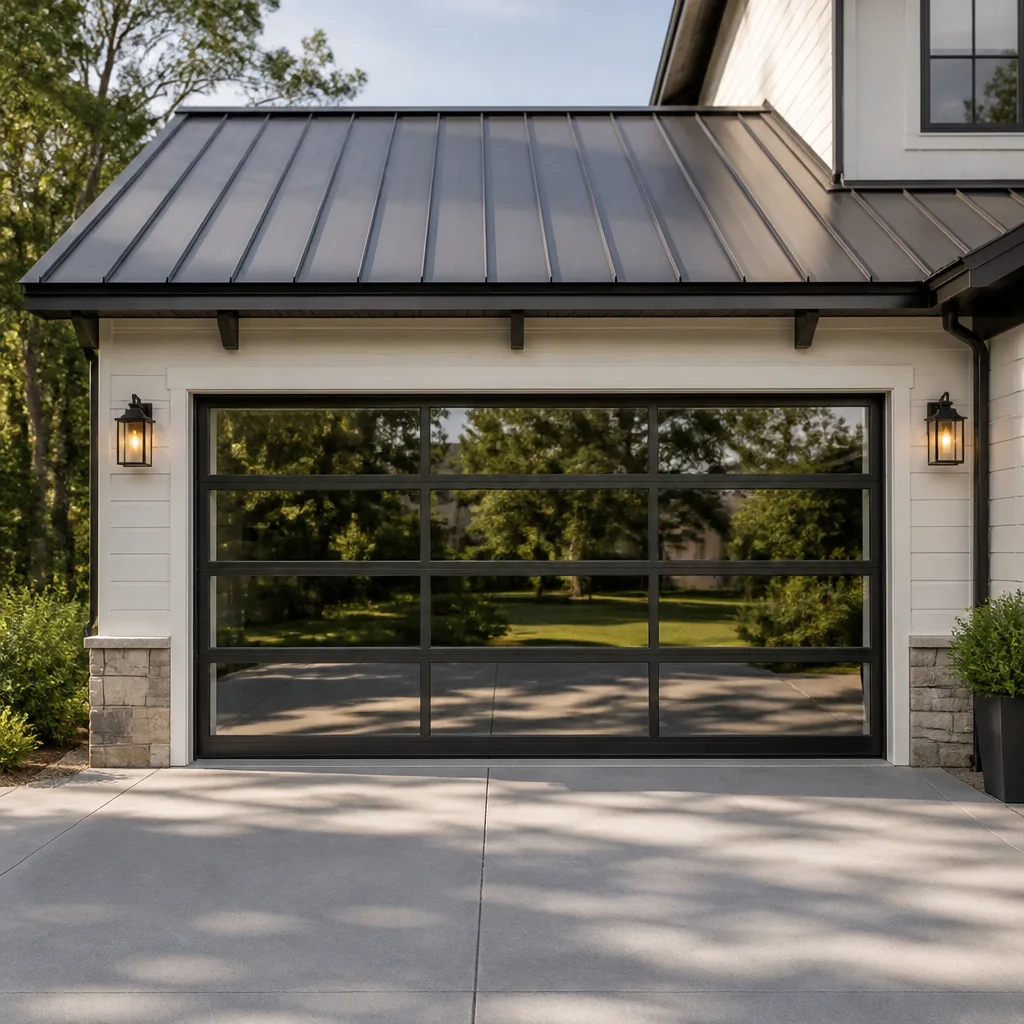 Full-view glass
 LiftMaster openers
 Chamberlain openers
Full 25-point door and opener safety check with every visit - springs, cables, rollers, tracks, and your LiftMaster or Chamberlain opener included
You get a price before we start. It does not change when the truck arrives.
Get your free estimateThe Complete Garage Door Repair Guide for Hesperia Homeowners
Hesperia’s daily temperature swings can exceed 40°F between dawn and mid-afternoon. That kind of thermal stress cycles your torsion spring thousands of extra times per year compared to coastal climates, cutting its effective lifespan before the cycle count printed on the box says it should fail. Most garage door problems we see in Hesperia trace back to a handful of root causes the High Desert accelerates, and this guide will teach you how to spot them, prioritize them, and decide what genuinely needs a technician’s hands.
Styles & brands we work with
- Raised-panel steel
- Carriage house
- Modern flush
- Full-view glass
- LiftMaster openers
- Chamberlain openers
Quick Answer
Our Garage Door Repair services in Hesperia typically involve diagnosing one of five component failures: torsion springs, extension springs, cables, rollers, or track misalignment. Most repairs run between $125 and $350 depending on the part, and a door that won’t open is usually a spring or opener problem rather than a panel issue. If your door is stuck, noisy, or sagging on one side, call (833) 620-6388 for a free estimate before the problem compounds.
Table of Contents
- Why Hesperia’s Climate Changes the Repair Math
- Repair Priority Decision Tree: Safety, Function, Cosmetics
- Part-by-Part Breakdown: What Fails, Why, and What to Do
- Why Symptom-Only Repairs Lead to Repeat Calls
- Garage Door Opener Problems: Beyond the Obvious
- What a Legitimate Hesperia Specialist Should Inspect and Quote
- Common Mistakes to Avoid
- When to Call a Professional
- Frequently Asked Questions
- The Bottom Line
Why Hesperia’s Climate Changes the Repair Math
Manufacturer lifespan estimates for garage door components assume a mild, stable climate. Hesperia does not offer that. The Mojave Desert throws three specific stressors at your door system that a coastal or mountain home never experiences.
First, UV exposure. Doors facing south or west in Hesperia take direct, unfiltered sunlight for hours daily. That radiation breaks down the polymers in weatherstripping, causing it to crack and lose its seal within two to three years instead of five to seven. It also fades and embrittles steel panel coatings faster, particularly on darker colors that absorb more heat.
Second, temperature swings. Metal expands when hot and contracts when cold. A torsion spring wound to 130 pounds of tension at 2 p.m. behaves differently at 5 a.m. when the temperature has dropped 35 degrees. Those daily cycles stress the spring at a rate manufacturers don’t account for in their 10,000-cycle ratings. In our experience, a spring rated for 10,000 cycles in Hesperia often fails closer to 7,000 to 8,000 cycles, which for a door opened four times a day translates to roughly 5 to 6 years instead of 7 to 8.
Third, wind-driven dust. Fine Mojave grit works its way into roller bearings, track channels, and opener drive rails. That dust acts as an abrasive, accelerating wear on nylon rollers and causing metal-on-metal grinding in tracks that were properly lubricated a month earlier.
What does this mean for you? Maintenance intervals that work elsewhere are too long for Hesperia. We recommend lubricating moving parts every four to six months instead of the typical annual schedule, and inspecting weatherstripping each spring before the summer heat hits.
Repair Priority Decision Tree: Safety, Function, Cosmetics
When something looks or sounds wrong with your garage door, the first question is not “what’s broken?” It’s “how urgent is this?” For DIY vs Professional Garage Door: The Hesperia Homeowner’s Decision Guide, start here. Here’s the framework we use with Hesperia homeowners to sort repairs into three tiers.
Tier 1: Fix Today – Safety Risk
- Broken torsion spring. The door may still open with the opener straining, but that spring is holding 130 to 160 pounds of tension. A snapped spring can release that energy unpredictably. Door should stay closed until repaired.
- Frayed or snapped cable. Cables work with the springs to counterbalance the door’s weight. A frayed cable that lets go mid-cycle drops the door fast, which is a crushing hazard.
- Door off its tracks or visibly crooked when moving. This means a roller has left the track or a cable has lost tension unevenly. Continuing to operate the door can cause it to fall out of the opening entirely.
- Opener reversing inconsistently or safety sensors not working. If the auto-reverse function fails, the door becomes a hazard to kids, pets, and cars.
Tier 2: Schedule This Week – Function Degrading
- Noisy operation (grinding, squealing, popping). This indicates worn rollers, dry bearings, or a track alignment issue that will only get worse. It’s not urgent, but it’s not going to fix itself.
- Door moves slowly or hesitates. Often a spring losing tension, an opener motor wearing out, or track resistance building. Early intervention prevents a full failure later.
- Sagging on one side when open. A balance issue that strains the opener and accelerates uneven wear on cables and hinges.
- Weatherstripping gaps or cracks. Dust, heat, and pests are getting in. In Hesperia, a failed bottom seal means wind-blown sand on everything in the garage.
Tier 3: Monitor or Address When Convenient – Cosmetic
- Faded paint or surface rust. Purely visual. Touch up with matching paint to prevent rust from spreading.
- Minor dents from a car bump or soccer ball. Cosmetic unless the dent affects panel reinforcement or track clearance.
- Noisy hinges that quiet down after lubrication. A one-time squeak that disappears with spray lubricant is not a repair priority.
The point of this framework is to help you avoid two mistakes: panicking over a cosmetic issue and ignoring a safety one. When in doubt, call a specialist and describe exactly what you’re seeing and hearing. A good technician will ask the right follow-up questions before ever scheduling a truck roll.
Part-by-Part Breakdown: What Fails, Why, and What to Do
Every component on your garage door has a job and a failure pattern, as covered in The Complete Guide to Garage Door in Hesperia. Here’s what to expect from each one in Hesperia’s climate, and where the honest DIY line sits.
Torsion Springs
What they do: Counterbalance the door’s entire weight, making it liftable by hand or by opener. The average Hesperia door weighs 150 to 300 pounds depending on size and material.
Failure pattern: Metal fatigue from daily thermal cycling. You’ll typically hear a loud bang from inside the garage, like a firecracker or car backfire. The door will feel extremely heavy if you try to lift it manually, or it won’t move at all.
DIY line: Do not touch this. Torsion springs are under extreme tension, and the winding and unwinding process requires specialized bars, precise turn counts, and a clear understanding of spring math. A mistake here can cause severe injury. Always call a professional for spring replacement.
Extension Springs
What they do: Perform the same counterbalance function on older or lighter doors, mounted along the horizontal tracks above the door opening.
Failure pattern: These stretch over time, losing tension gradually rather than snapping suddenly. Your door will feel heavier to lift and the opener will strain before the spring finally breaks.
DIY line: Replacement requires releasing the old spring’s tension while the door is supported. The safety cable that runs through these springs is there for a reason. This is another professional job.
Cables
What they do: Connect the bottom of the door to the spring system, transferring lifting force and keeping the door stable as it moves.
Failure pattern: Fraying from abrasion against the drum, often accelerated by dust and grit in Hesperia. You’ll see individual wire strands separating before a full snap.
DIY line: Inspection is fine. Replacement is not. Cables are tied to spring tension, and a cable that comes off the drum while you’re working on it creates a very dangerous unbalanced load.
Rollers
What they do: Guide the door up and down the tracks. Nylon rollers run quieter and last longer than steel rollers, which is why most newer doors use them.
Failure pattern: Nylon wheels crack or wear down from heat and grit; steel rollers rust and the ball bearings seize. A seized roller drags along the track instead of rolling, causing jerky door movement and track wear.
DIY line: Replacing a roller that sits in a hinged bracket is manageable for a confident DIYer with the door in the locked-open position. But bottom rollers attach to the cable system, and those are not DIY. Call if you’re unsure which type you have.
Tracks
What they do: Guide the entire door assembly. Vertical tracks run up the wall; horizontal tracks carry the door into the garage ceiling.
Failure pattern: Misalignment from repeated door movement, accidental bumps from cars or ladders, or structural settling of the garage itself. A misaligned track makes the door bind, jerk, or come off its rollers.
DIY line: Minor track adjustments with a level and a wrench are possible, but improper adjustment creates a binding condition that can launch a roller out of the track. This is one where experience matters more than tools.
Panels
What they do: Form the door’s face, provide insulation in some models, and give the door its structural rigidity when closed.
Failure pattern: Dents from impacts, rust from exposed metal, and, in Hesperia specifically, UV damage to the coating or glaze on Amarr and Clopay doors left unshaded.
DIY line: A single damaged panel on a sectional door can sometimes be replaced without buying a whole door, depending on the model and age. Color-matching is the challenge. This is a judgment call, and a Garage Door Repair in Hesperia specialist can tell you whether a panel swap or a full door replacement makes more financial sense.
Weatherstripping and Seals
What they do: Seal the gaps around the door to keep dust, heat, cold, and pests out of your garage.
Failure pattern: Cracking and flattening from UV exposure and heat. Bottom seals also tear from abrasion against the concrete threshold.
DIY line: Replacing the bottom seal on most doors is straightforward and takes about 30 minutes with a utility knife and replacement seal from the hardware store. You’ll get better results picking up a seal rated for high UV exposure, which matters more in Hesperia than elsewhere.
Why Symptom-Only Repairs Lead to Repeat Calls
Here’s a scenario we see frequently in Hesperia. A homeowner hears a squealing noise from their door. They spray lubricant on the rollers. The noise quiets down for two weeks, then comes back louder. They spray again. This cycle repeats until the roller seizes completely and carves a groove into the track.
The squeal was never the problem. The squeal was a symptom of a roller bearing wearing out, which was itself a symptom of dust intrusion, which was a symptom of a weatherstrip that failed two summers ago and let Mojave grit into the track area. Fixing the squeal without fixing the seal means the new roller will wear out the same way.
This is the difference between a repair and a diagnosis, and you’ll find more guides & resources on our blog. A repair addresses what’s broken right now. A diagnosis addresses why it broke and what will break next if nothing changes. We approach every service call from the diagnosis side, because the repair that fixes the symptom but ignores the root cause is just a down payment on a repeat service call.
Other common root-cause chains we see in Hesperia:
- Opener motor burning out repeatedly → the real issue is a spring that lost tension, forcing the opener to lift the door’s full weight.
- Door repeatedly coming off track → the real issue is a cable drum that’s worn unevenly, not the track itself.
- Constant clicking or binding → usually a chain or belt tension issue combined with a track that was knocked out of alignment by a car bumper months ago.
When someone calls us about a repeat problem, the first thing we do is look for what was missed the first time, not just replace the same part again.
Garage Door Opener Problems: Beyond the Obvious
Garage door openers are the most misunderstood component in the system. Most homeowners think of them as simple motors, but a modern opener is a control system with a logic board, safety sensors, force settings, and a drive mechanism that needs to work in sync with the door’s balance. At Garage Door Service Hesperia home, we repair the opener itself, not just the door panels around it.
Here are the opener problems we see most often in Hesperia, and what they actually mean.
The Opener Runs But the Door Doesn’t Move
This is usually the drive gear inside the opener housing. On older Genie and Craftsman models, these plastic gears wear down and eventually strip, especially when the door is poorly balanced and the opener works harder on every cycle. The motor spins, but the stripped gear can’t transfer power to the drive chain or belt. This is a replaceable part, not a reason to buy a new opener.
The Door Reverses Immediately After Touching the Ground
Two possible causes. The first is a travel limit setting that needs adjustment. The second is a safety sensor issue where the sensor thinks something is in the way because of dust on the lens or a misaligned beam. In Hesperia, wind-blown dust coating the sensor lenses is a year-round culprit. Wiping the lenses with a dry cloth fixes this more often than you’d expect.
The Opener Makes a Grinding Noise
Grinding almost always means the drive gear is chewing itself up. Continuing to run the opener in this state turns a $150 gear replacement into a full opener replacement. If you hear grinding, stop using the opener and call for Garage Door Opener Repair in Hesperia.
The Remote Works Intermittently
Before replacing the remote, check the antenna on the opener motor. It’s usually a thin wire hanging from the back of the unit. In Hesperia’s dry air, static buildup and signal interference from nearby power lines can degrade range. If the wall button works reliably but the remote doesn’t, it’s usually the remote battery, the antenna, or a frequency issue, not the logic board.
Opener Runs But the Door Moves Jerkily
This typically points back to the door itself: unbalanced springs, worn rollers, or a track issue. The opener is fighting the door, and the jerkiness is the door binding against the track. Fixing the door balance often fixes what looked like an opener problem.
The key question is whether to repair or replace the opener. If the motor, gear, or logic board is the problem and the unit is under 10 years old, repair usually makes sense. If the door itself has balance issues and the opener has been overworking for years, replacement may be the honest answer. A technician who tries to sell you a new opener before checking the door balance is skipping a step.
What a Legitimate Hesperia Specialist Should Inspect and Quote
When you call a garage door company in Hesperia, you should know what a thorough service visit looks like. Here’s the checklist we work through on every repair call, and it’s what you should expect from anyone you hire.
- Door balance test. With the opener disconnected, the door should lift manually with one hand and stay in place at the halfway point. If it drifts up or down, the springs are out of proper tension.
- Spring inspection. Checking for gaps in the coil, rust, uneven spacing, and signs of fatigue. The technician should tell you the spring’s approximate cycle count remaining if they can estimate it.
- Cable and drum inspection. Looking for frayed strands, loose winding, and uneven drum wear. These are the parts that hurt people when they fail.
- Roller and hinge inspection. Each roller should spin freely without wobble. Each hinge should be tight with no hairline cracks.
- Track alignment check. Tracks should be straight, parallel, and properly spaced for the roller size. A technician with a level matters here.
- Opener force setting verification. The opener should reverse with minimal resistance. Many openers are set too high by previous owners, which means they won’t reverse when they should.
- Safety sensor alignment. Both sensors should be lit and aligned, with the auto-reverse function tested twice during the visit.
- Weatherstripping assessment. Bottom seal, side seals, and top seal condition, with specific notes about UV damage and where dust is getting in.
After the inspection, you should get a written quote that breaks out parts and labor, with a clear explanation of what’s urgent, what’s advisable but not critical, and what can wait. The price should be quoted and agreed before any work starts. If someone hands you a verbal “we’ll see what it costs when we’re done,” that’s your cue to get a second opinion.
When it comes to brand-specific work, the technician should know the quirks of what you have installed. A Wayne Dalton door uses a different spring and cable configuration than a Clopay or Amarr door, and the repair approach changes accordingly. That’s why we work on the brand you already have rather than pushing a replacement with a different manufacturer’s hardware.
Common Mistakes to Avoid
- Ignoring a noisy door because it still opens. The noise is your early warning system. A roller that’s been grinding for two months is a track replacement waiting to happen, and that’s a more expensive repair than the roller swap would have been.
- Using WD-40 on garage door parts. WD-40 is a solvent, not a lubricant. It strips the existing lubricant off and leaves the parts drier than before. Use a lithium-based or silicone-based garage door lubricant instead, and only on the hinge pins, roller bearings, and spring.
- Trying to adjust or replace a torsion spring yourself. This is the one repair where the injury risk is highest and the margin for error is smallest. The winding bars alone require a specific diameter and length, and the turn count math is unforgiving. Even experienced handymen call someone for this.
- Operating the door after a cable snaps. A snapped cable leaves the door loaded unevenly. The next cycle can pull the door off its tracks or send the remaining cable whipping free. Close the door manually if you must, but don’t use the opener.
- Skipping the balance check when the opener is replaced. A new opener on an unbalanced door is a short-lived opener. The door should be balanced first, which may mean spring work before the opener goes in.
- Forgetting about the weatherstrip until it’s visibly gone. In Hesperia, a failed bottom seal is not just an energy leak. It’s an open invitation for dust, scorpions, and 100-degree air. Replace it before the summer heat arrives.
- Choosing a repair company based on price alone. A cheap repair that misses the root cause costs more in the long run than a correctly diagnosed repair at a fair price. Ask what’s included in the inspection, not just what the service call costs.
When to Call a Professional
Any issue involving torsion springs, extension springs, cables, or a door off its tracks is a professional job, full stop. These components hold enough tension to cause serious injury, and the tools and techniques for handling them safely are not common homeowner knowledge. Beyond safety-critical failures, call a specialist when a problem keeps recurring after a DIY fix, when the door is visibly unbalanced, when the opener is making sounds it hasn’t made before, or when you’re simply not sure what’s wrong. Garage doors are all we do at Garage Door Service Hesperia, and we work on the brand you already have. For a repair first approach and a free estimate in Hesperia, call (833) 620-6388 and we’ll help you sort out what’s actually wrong.
Frequently Asked Questions
Garage door repair in Hesperia typically runs between $125 and $350 for most component fixes like roller replacement, cable repair, track adjustment, or hinge replacement. Torsion spring replacement, which is one of the most common repairs, often falls in the $200 to $350 range depending on the spring size and door weight. The price is always quoted and agreed before any work starts, so there are no surprises on the invoice. Call (833) 620-6388 for an exact quote on your specific door.
In most cases, yes. Common repairs like spring replacement, roller swaps, and track adjustments are done in a single visit because our technicians carry a broad parts inventory covering LiftMaster, Chamberlain, Genie, Clopay, Amarr, Wayne Dalton, Craftsman, and Raynor hardware. If a specific part for an older or less common model needs to be ordered, we’ll tell you that up front. Call (833) 620-6388 and describe what you’re seeing, and we can usually give you a clear answer on timing before we arrive.
No. The quote you get from us is the price you pay, agreed before any work starts. If we find an additional issue during the repair, we stop, explain what we found, and quote the additional work separately. You approve it or you don’t. There’s no situation where we complete work and hand you a larger invoice than what was discussed.
We carry the most commonly needed parts for the eight brands we service: LiftMaster, Chamberlain, Genie, Clopay, Amarr, Wayne Dalton, Craftsman, and Raynor. That includes torsion springs in common sizes, extension springs, cables, rollers, hinges, sensors, and opener gears. For older door models or less common configurations, we may need to order a specific component, but we’ll tell you that during the diagnosis, not after.
In Hesperia’s climate, we recommend a professional inspection and tune-up every 12 to 18 months, with DIY lubrication every 4 to 6 months between visits. The heat, UV exposure, and dust load in the High Desert mean parts wear faster here than the manufacturer’s general guidelines assume. Annual catch-ups help you replace a $20 roller before it becomes a $200 track repair.
Sometimes. If your door is a current or recent model from a manufacturer like Clopay, Amarr, or Wayne Dalton, replacement panels are often available, and swapping one panel is significantly less expensive than replacing the full door. The challenge is color matching, especially on doors that have faded in Hesperia’s sun. We’ll tell you honestly whether a panel replacement makes sense or whether a full door replacement is the better long-term value. Call (833) 620-6388 and we can assess your specific door.
The Bottom Line
Garage doors in Hesperia work harder than the same doors in milder climates. The daily temperature cycling, relentless UV, and airborne grit mean your springs, rollers, seals, and cables will wear out faster than the national averages suggest. That’s not a reason to replace your door more often; it’s a reason to inspect and maintain it more deliberately. Learn to distinguish safety-critical failures from cosmetic issues. Fix root causes, not just symptoms. Know which repairs are genuinely DIY and which ones need a specialist. And when a repair does need a professional hand, work with someone who diagnoses before they quote, and quotes before they touch. If you’re in Hesperia and your door is acting up, call (833) 620-6388 for a free estimate.
Written by the team at Garage Door Service Hesperia, serving Hesperia since 2015.
See the difference
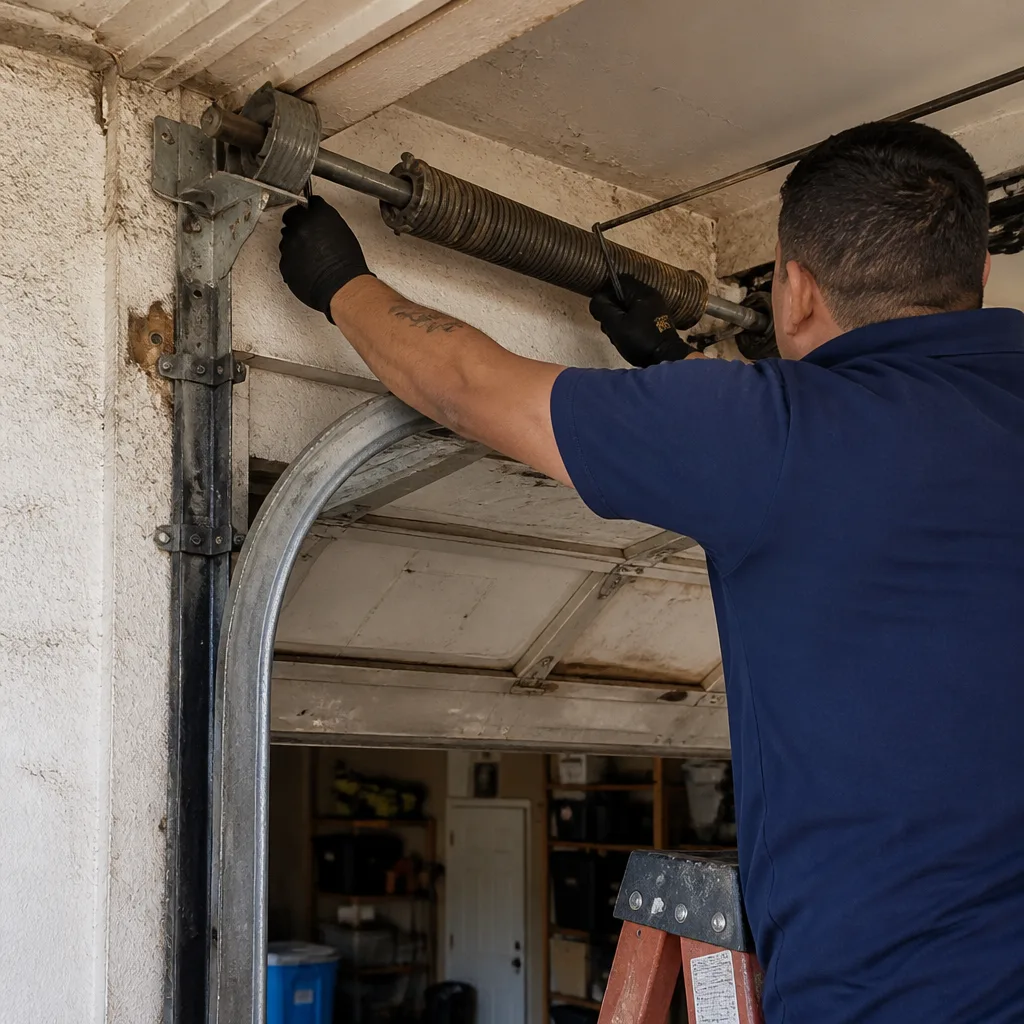 Before
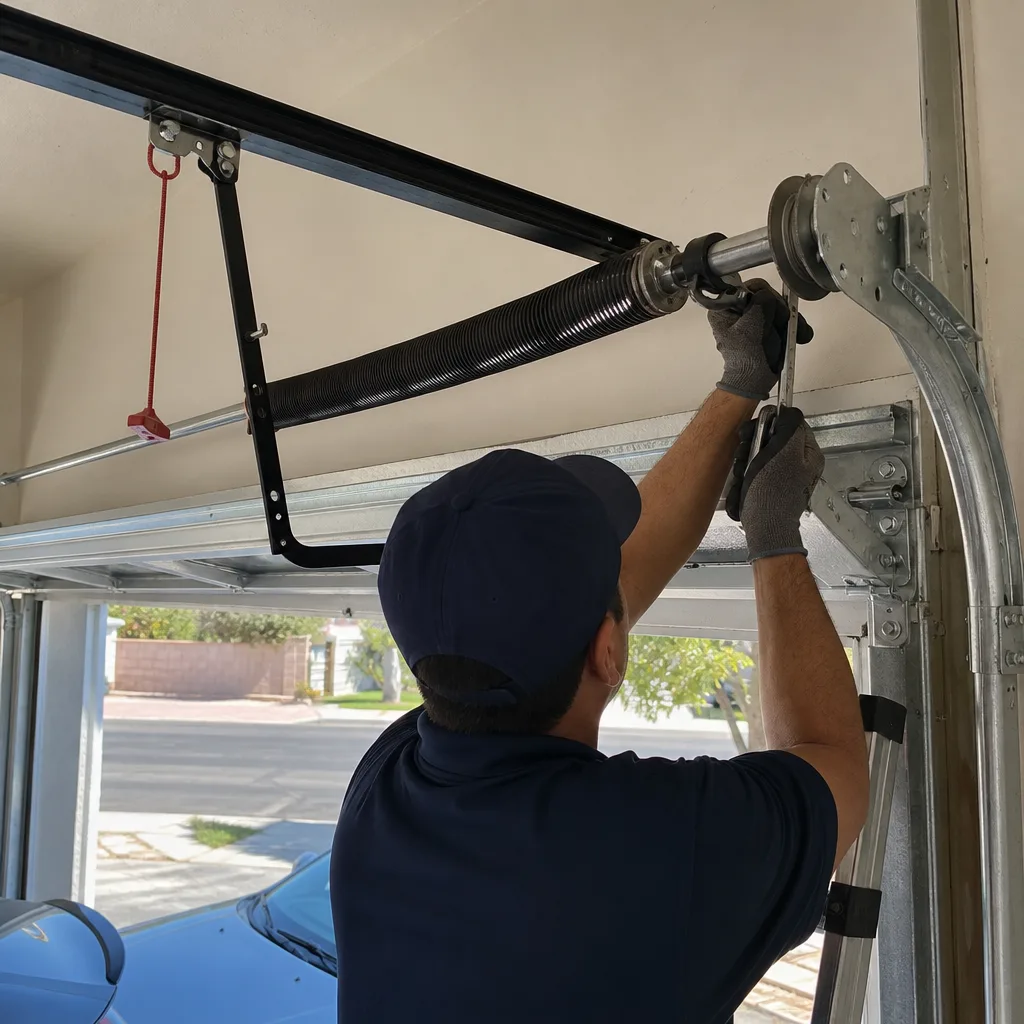 After
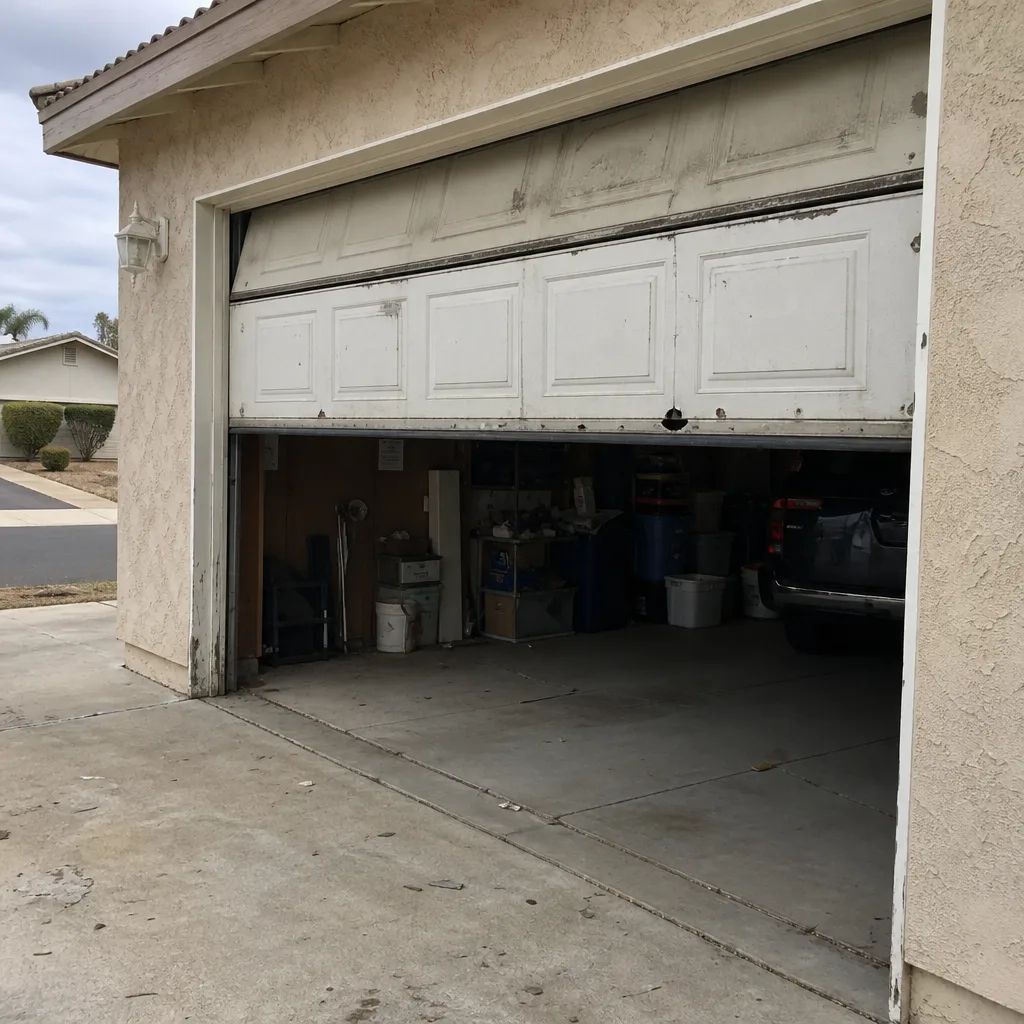 Before
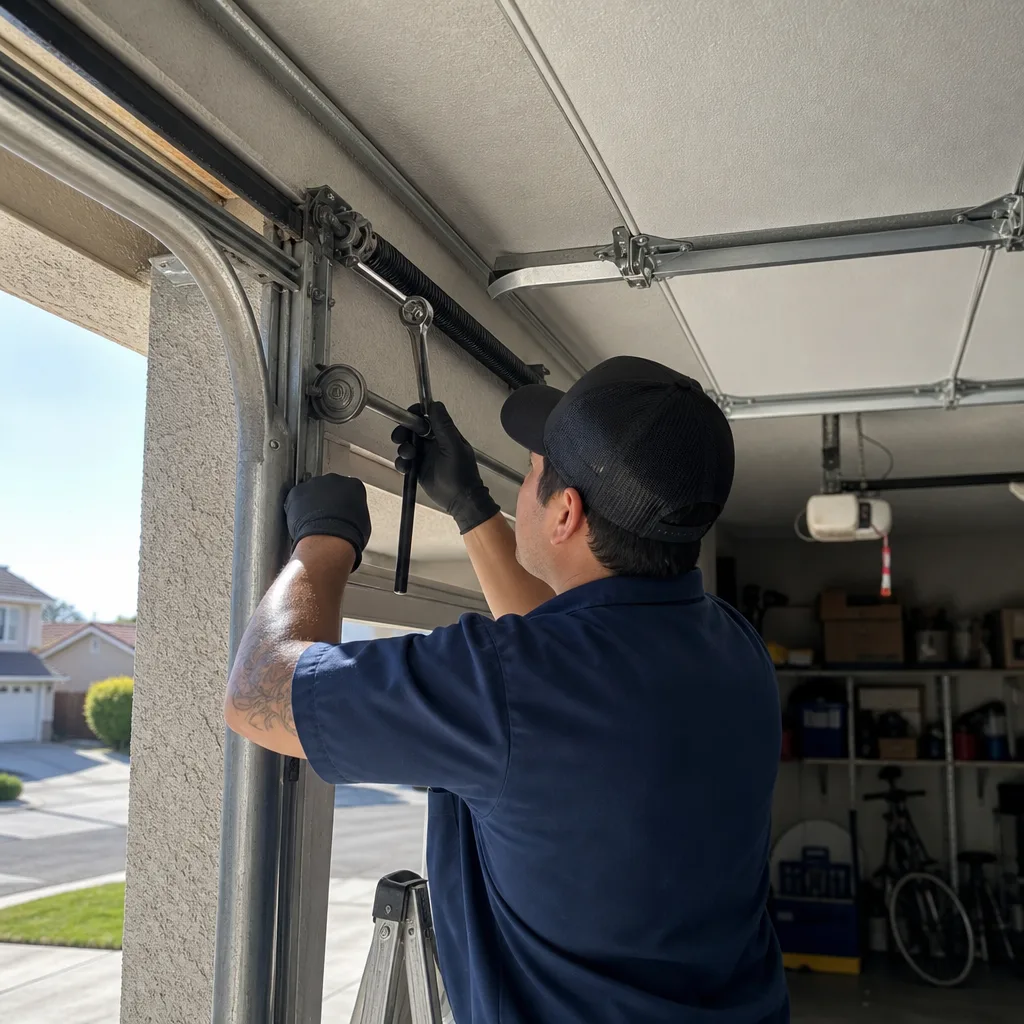 After
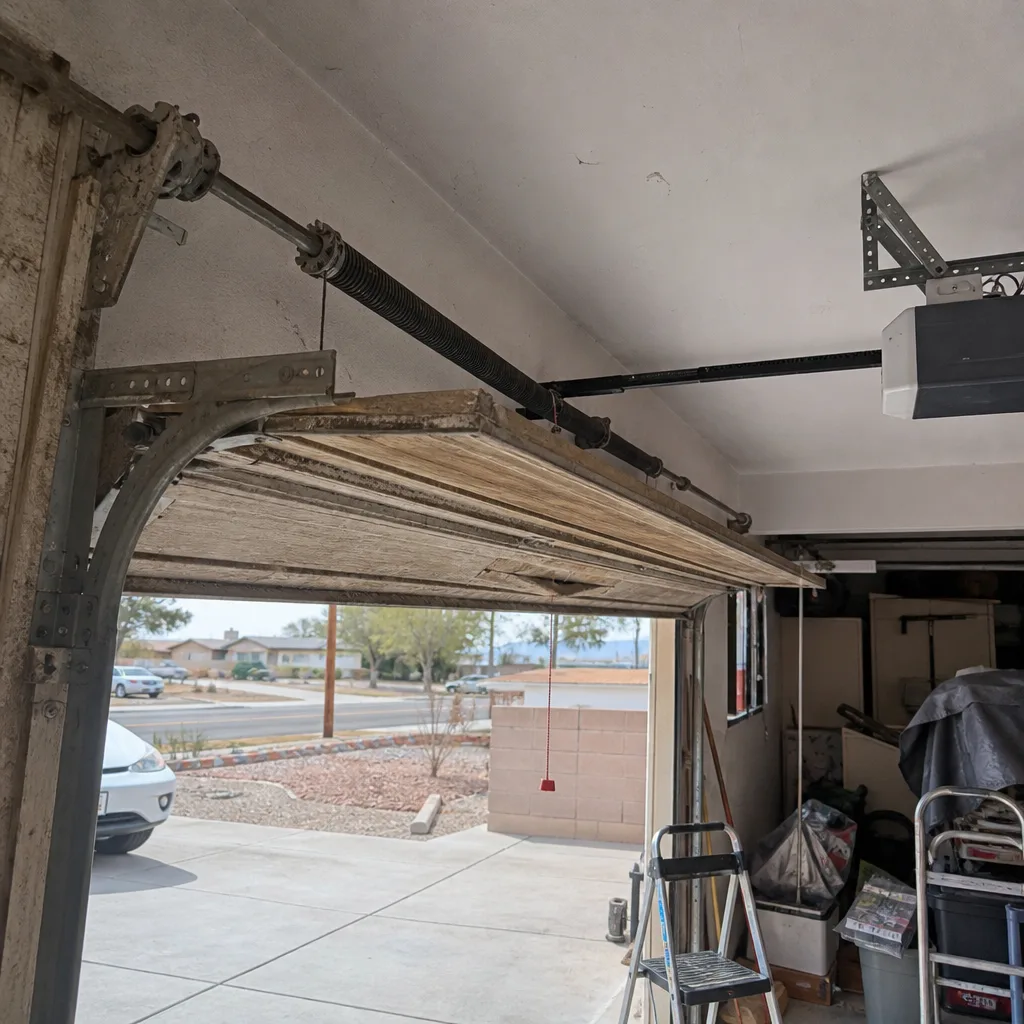 Before
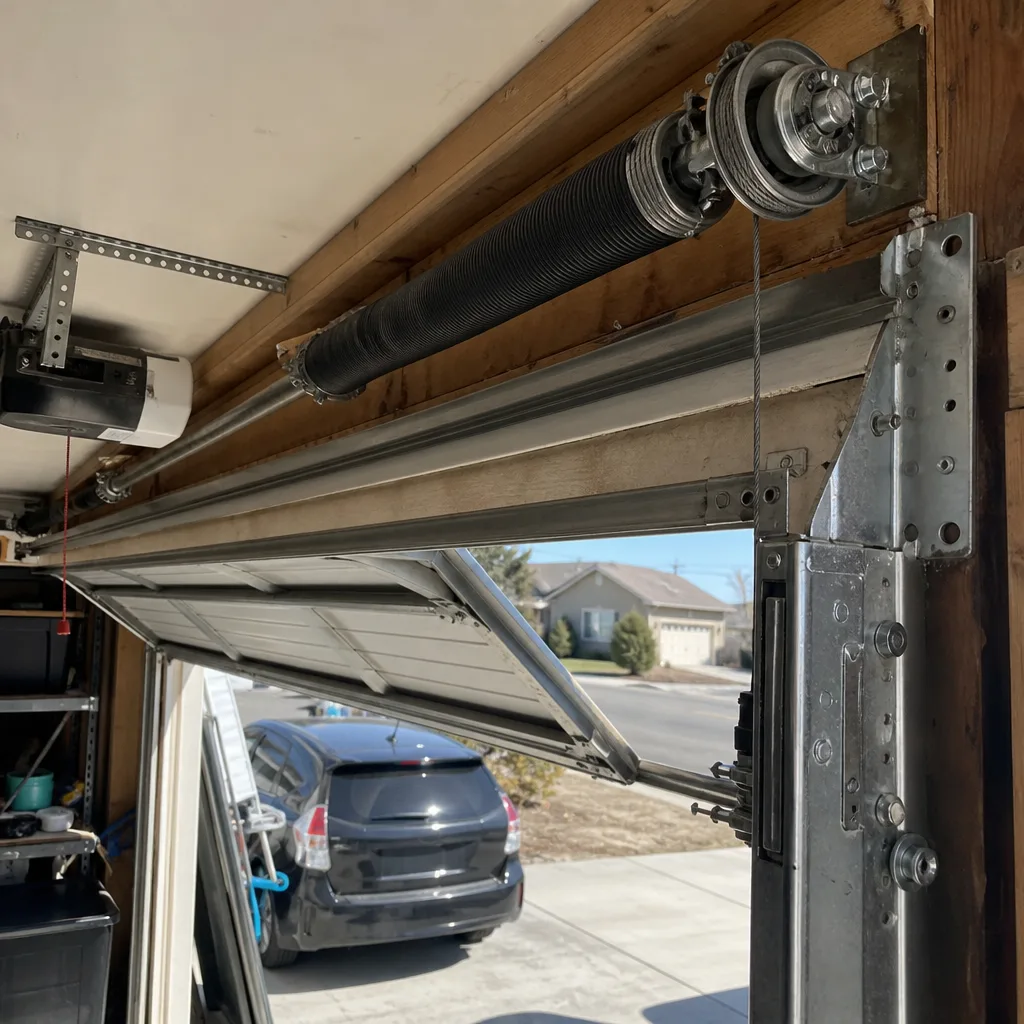 After