
Last updated November 2, 2026
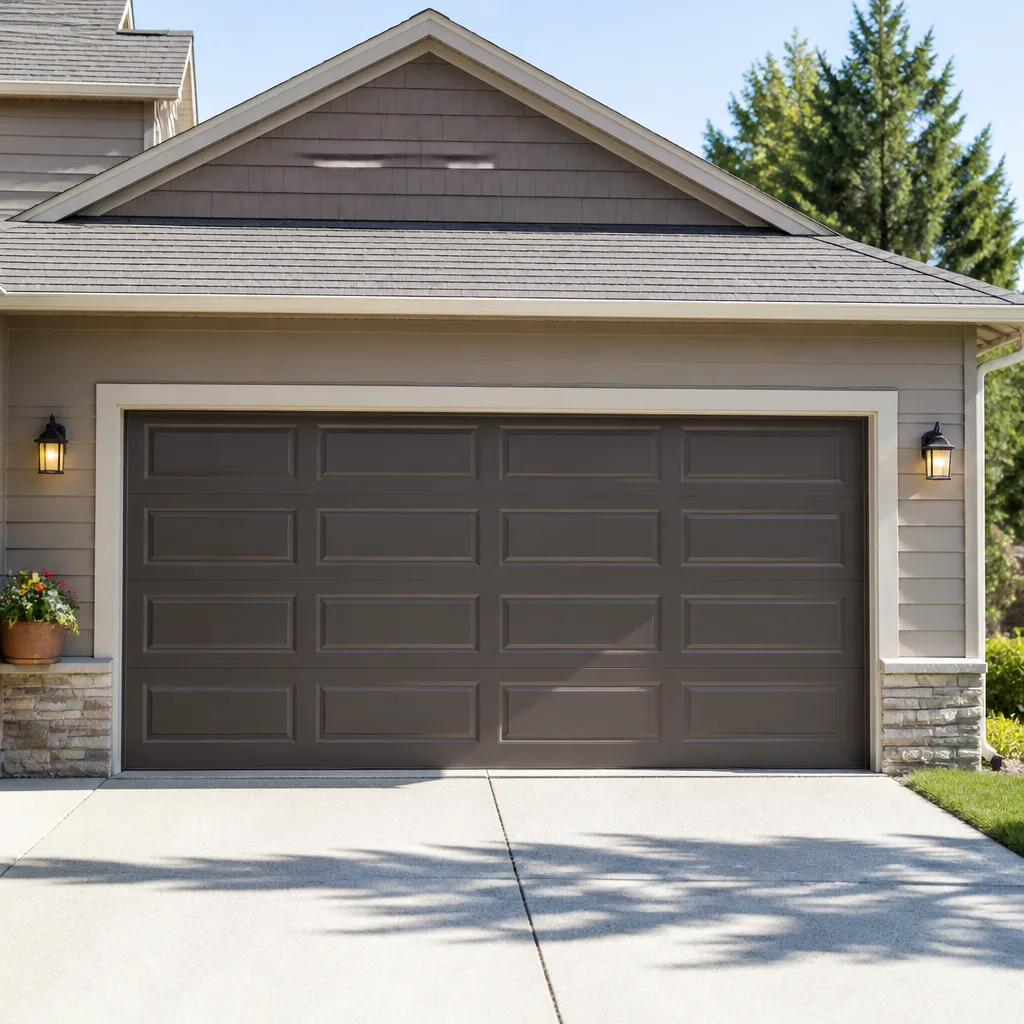 Raised-panel steel
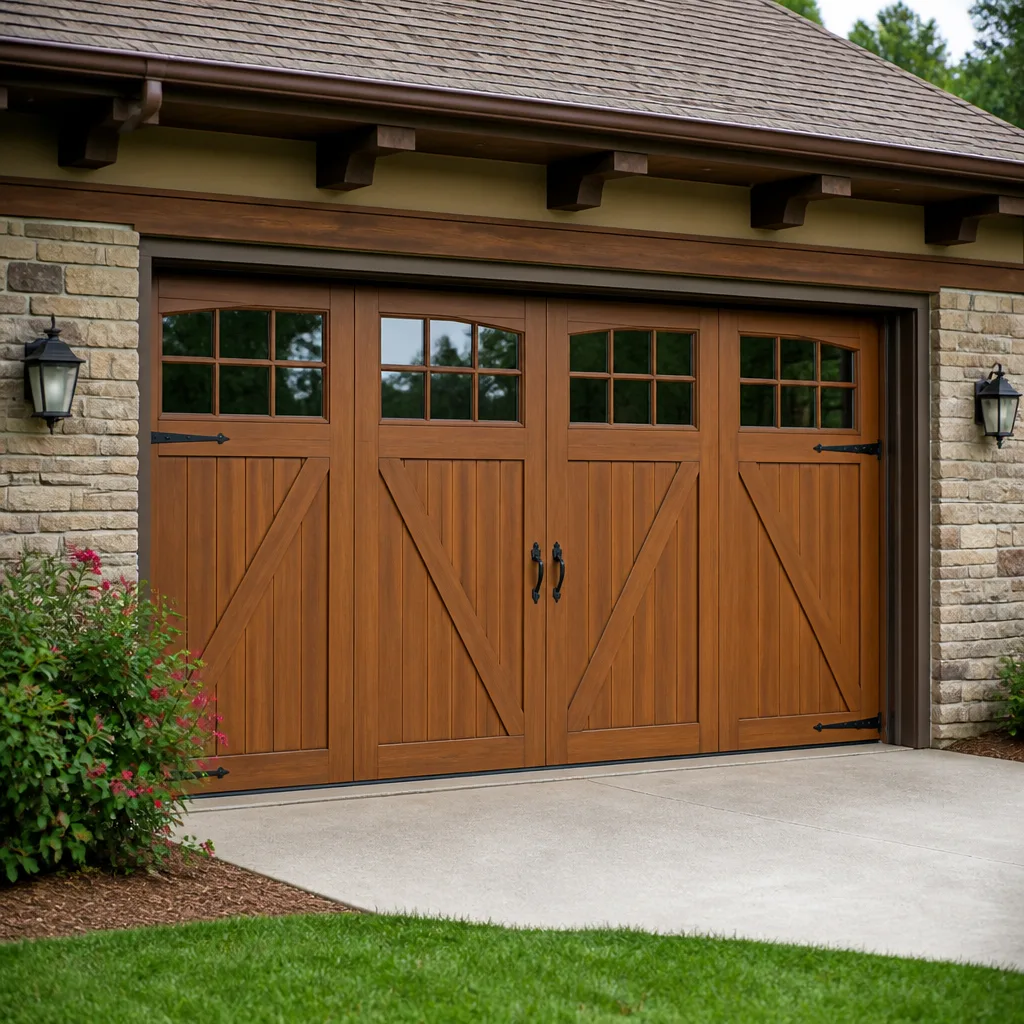 Carriage house
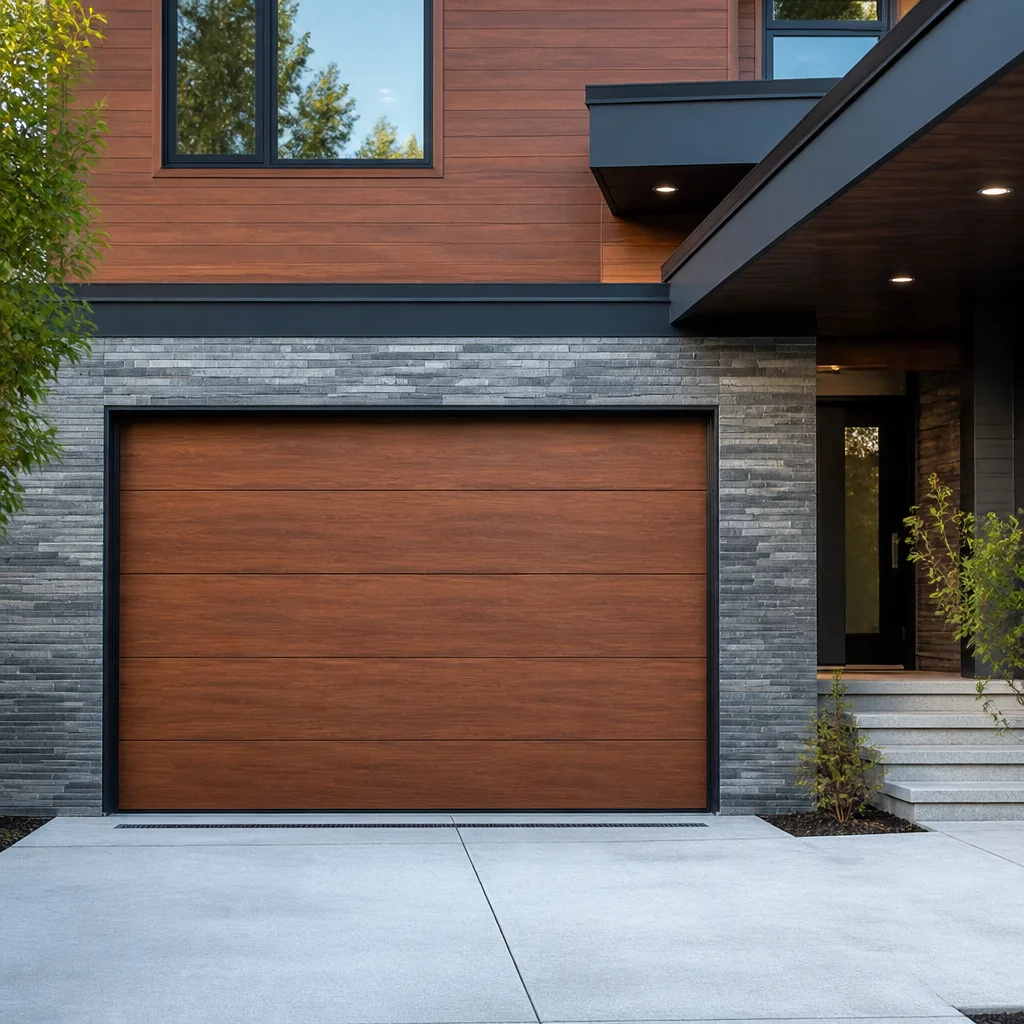 Modern flush
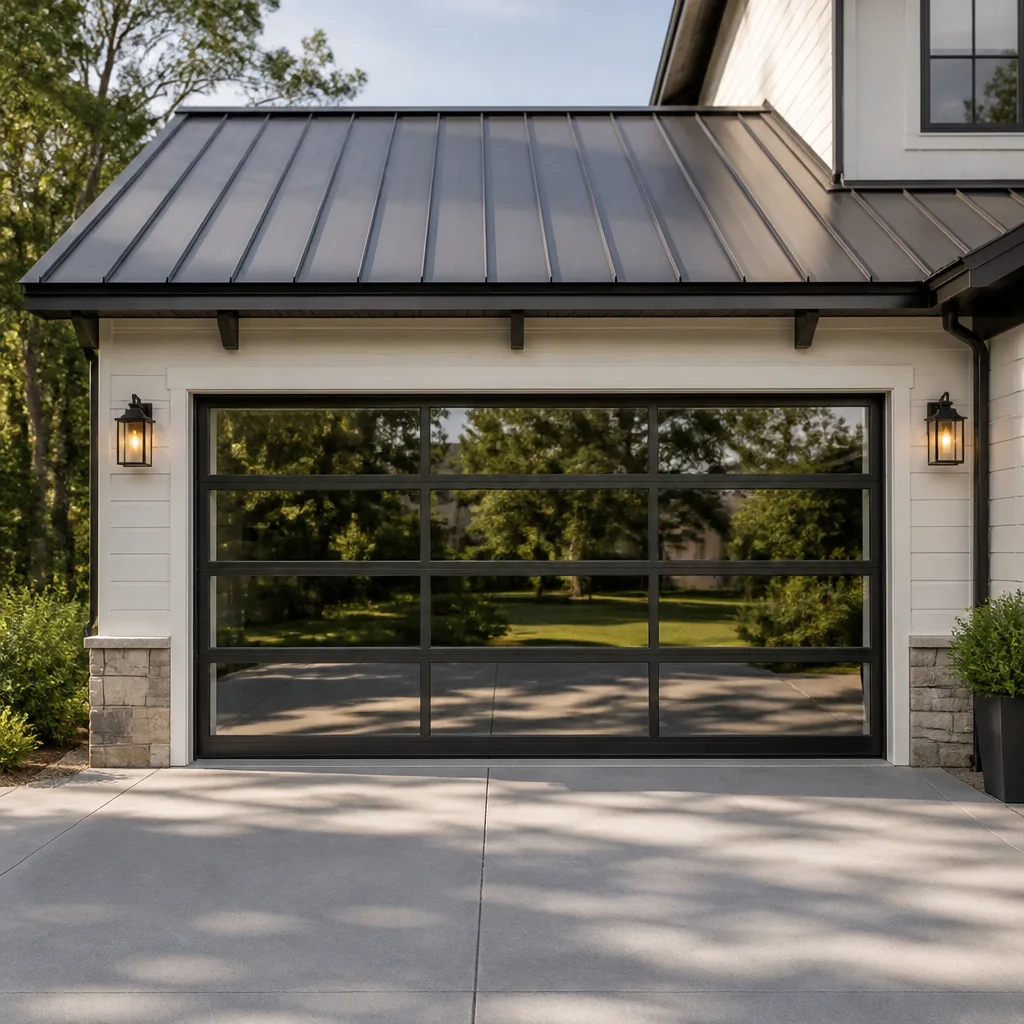 Full-view glass
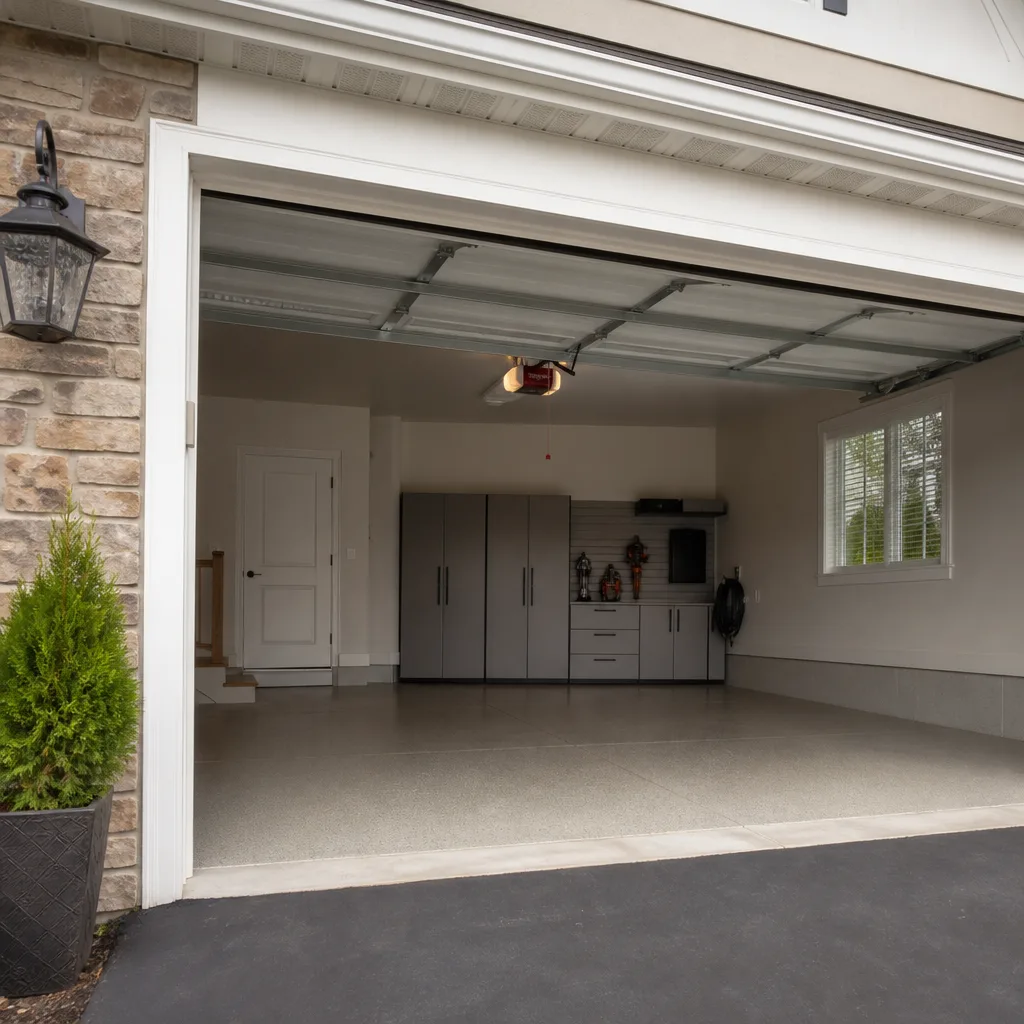 LiftMaster openers
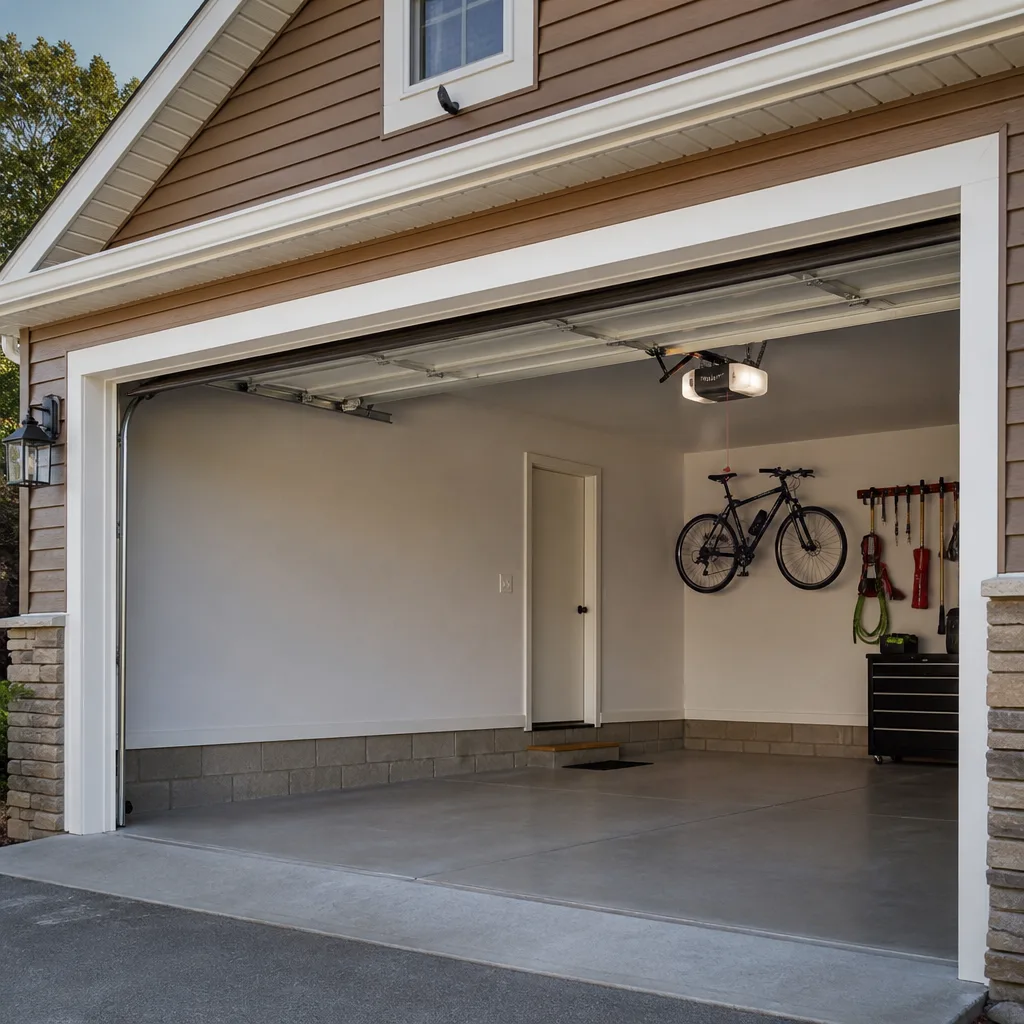 Chamberlain openers
Full 25-point door and opener safety check with every visit - springs, cables, rollers, tracks, and your LiftMaster or Chamberlain opener included
You get a price before we start. It does not change when the truck arrives.
Get your free estimateChoosing the Right Garage Door Brand: A Buyer’s Guide for Hesperia
Walk through any Hesperia neighborhood at 5:30 on a summer morning and you’ll see it: garage doors already open, cars backing out into the cool air before the sun clears the San Bernardino Mountains. Your garage door is probably the most-used moving object attached to your home, cycling open and closed anywhere from 1,000 to 1,500 times a year. Yet most homeowners in the High Desert put more research into choosing a water heater than into selecting the door that covers the largest span on their house. This guide is built on fifteen years of wrench time in Hesperia’s specific environment – extreme UV exposure, 100-degree summer days, 30-degree winter nights, and wind that pushes fine desert dust into every track and bearing. What matters in choosing a door brand here isn’t what looks good in a catalog. It’s what survives the climate and what you can get serviced quickly when a spring snaps.
By the time you finish reading, you’ll know exactly how to evaluate a garage door brand for Hesperia’s conditions: which manufacturers build hardware that holds up, which openers earn their price on the bench, and how to avoid buying a door you’ll struggle to repair for the next fifteen years. Brands named specifically include Clopay, Amarr, Wayne Dalton, CHI for doors; LiftMaster, Chamberlain, Genie, and Craftsman for openers. We’ll also address the parts availability factor that most national buying guides ignore entirely.
Styles & brands we work with
- Raised-panel steel
- Carriage house
- Modern flush
- Full-view glass
- LiftMaster openers
- Chamberlain openers
Quick Answer
The best garage door brand for a Hesperia home is the one you can have repaired locally, with parts in stock or available same-week in the Inland Empire. From a pure product standpoint, Clopay and Amarr currently offer the strongest combination of high-desert UV resistance, insulation options, and consistent hardware quality; for openers, LiftMaster outperforms the rest in long-term reliability. But the real answer starts with parts availability and local service distribution, not showroom appeal. A door brand with spotty Inland Empire support becomes a liability the first time you can’t open it.
Table of Contents
- Steel Gauge and Insulation: The Hesperia Climate Factor
- Door Manufacturer Breakdown: Clopay, Amarr, Wayne Dalton, CHI
- Opener Brand Evaluation: LiftMaster, Chamberlain, Genie, Craftsman
- The Parts Availability Factor: Why Local Distribution Outranks Brand Prestige
- Matching Door Brand and Opener Brand Without the Upsell
- Finish Warranty Language: Reading What’s Not in the Brochure
- Common Mistakes to Avoid
- When to Call a Professional
- Frequently Asked Questions
- The Bottom Line
Steel Gauge and Insulation: The Hesperia Climate Factor
The garage door brand a Hesperia homeowner sees advertised nationally may have the nearest authorized service network 60 miles away. That means your warranty is technically valid but practically worthless when you need same-day repair. This is the problem we solve at Garage Door Service Hesperia because we stock and service doors from multiple manufacturers, not just one brand with a single distribution channel. Your door choice in this climate isn’t a one-time aesthetic decision. It’s an ongoing ownership calculation.
Let’s get specific about what Hesperia’s environment does to a garage door. The High Desert sees summer temperatures climb past 100 degrees routinely, with direct sun exposure hitting the south-facing and west-facing elevations hardest. At the same time, overnight lows in winter drop below freezing. That’s a temperature swing of 60 to 70 degrees in a single day during fall and spring. Steel expands and contracts with those swings. Vinyl seals harden. Paint fades. Hardware loosens.
So what should you actually look for in a steel door for Hesperia?
- Steel gauge: Lower numbers mean thicker steel. Look for 25 to 27 gauge for residential doors in this climate. 24 gauge is heavier-duty and worth the upgrade if you park a work truck inside and want impact resistance. Cheap doors use 28 to 29 gauge, which will dent when a kid’s bicycle handlebar drifts into it.
- Insulation R-value: This isn’t just about keeping a workspace comfortable. Insulated steel doors hold their alignment better through temperature swings. R-10 to R-12 is a good target for Hesperia if your garage shares a wall with living space or you use it as a workshop. A non-insulated door on a south-facing elevation will radiate heat into the garage all afternoon, pushing heat into adjoining rooms and forcing your AC to work harder.
- Thermal breaks: A thermal break between the inner and outer steel skin matters more in the desert than most people realize. Without one, the outside skin runs 130 degrees in August while the inside skin runs 90, and the two are fighting each other through the attachment points. Doors with thermal breaks stay flatter and quieter over time.
- Hardware corrosion resistance: High desert humidity is much lower than coastal California, so rust isn’t usually the dominant failure mode. But your door still needs to stay lubricated and balanced because fine dust and grit accumulate in tracks and hinges faster than people expect. A door with zinc-coated or stainless hinges will run quieter and last longer than one with powder-coated steel hardware.
Notice what we haven’t discussed: color, window placement, and decorative hardware. Those are decisions you can make from a brochure after you’ve selected a door with the right structural properties. Hesperia’s sun is the great equalizer. It will fade cheap finish, warp thin steel, and bake flexibility out of vinyl seals. Buying a door built for Minnesota winters or Seattle drizzle is like planting a coastal fern in the Mojave. The sooner you address the structural requirements, the longer any door lasts.
Door Manufacturer Breakdown: Clopay, Amarr, Wayne Dalton, CHI
Here’s the honest breakdown of the four door manufacturers you’re most likely to encounter in Hesperia. Each has strengths, and each has weaknesses in high-desert applications. None of them builds a universally perfect door, and anyone who tells you otherwise is selling you a commission.
Clopay
Clopay builds one of the strongest all-around residential lines, and in our direct experience working on doors across Hesperia, they handle the desert environment well. Their steel doors come in gauges running from 27 down to 24, with insulation options up to R-18.3 on models like the Gallery series. What matters most for Hesperia is their finish system. Clopay’s higher-end coatings hold up longer under direct UV exposure than most competitors, and their urethane-insulated models stay square in the heat. The tradeoff: Clopay parts don’t sit on every supply house shelf, and their proprietary hardware sometimes means you’re waiting for a shipment. That’s fine if the door is healthy. It’s less fine when a spring breaks on a Friday afternoon and the door is stuck open.
Amarr
Amarr is the quiet workhorse of the industry. Their hardware is unremarkable but consistent, their steel gauges are honest, and their distribution network is one of the strongest in Southern California. That last point matters more for garage door repair in Hesperia than any catalog spec. When a section gets dented or a hinge shears, Amarr’s Inland Empire parts availability is excellent – an advantage you only appreciate at the exact moment you need a replacement section handed to you. Their finish warranty is straightforward, and their insulated models carry the same performance characteristics as Clopay’s mid-tier. The weak spot: Amarr’s decorative hardware and carriage-house line are decent but not exceptional, and their wind-load options for desert microburst conditions are more limited than some specialty builders.
Wayne Dalton
Wayne Dalton deserves careful evaluation before you commit. Their TorqueMaster spring system, used on many of their lower-cost lines, is a fundamentally different design from the standard torsion spring. From a service perspective, it’s a mixed bag. The enclosed spring is safer for a homeowner to be around, but replacement parts are less universally stocked, and some legacy TorqueMaster designs require proprietary tools. In Hesperia, where spring replacement is the single most common repair we perform, knowing whether your door uses a standard torsion spring or a TorqueMaster system matters before you buy. Their steel door line includes solid mid-range options, but the proprietary hardware angle means you should ask the dealer specifically about parts access for the model you’re considering.
CHI
CHI builds a genuinely heavy-duty door for the money. Their steel thickness is generally at the upper end of residential spec, their hardware is beefier than average, and their powder-coat finish process produces a consistent coating that stands up to UV. In Hesperia’s environment, CHI doors tend to run smoothly and stay true for a long time. The downsides are narrower selection on the carriage-house and decorative end, and a slightly sparser parts network than Amarr or Clopay at the retail level. If you’re someone who wants the door equivalent of a truck from the 2000s – simple, durable, slightly utilitarian – CHI fits that profile well.
The comparison in one table
- Clopay: Strongest finish durability, wide insulation range, good all-around performance. Watch for proprietary hardware and parts lead times.
- Amarr: Excellent Inland Empire parts availability, honest gauges, consistent hardware. Decor options are fine but not exceptional.
- Wayne Dalton: Solid mid-range steel doors. Proprietary TorqueMaster spring system can complicate later repairs.
- CHI: Heavy-duty construction and excellent powder-coat finish. Slightly narrower decor options and retail parts network.
Opener Brand Evaluation: LiftMaster, Chamberlain, Genie, Craftsman
Your opener is the motor that does the heavy lifting, and in Hesperia it’s doing that lifting at 6 a.m. when it’s 35 degrees and at 4 p.m. when it’s 105. The thermal load on the motor, gear system, and control board is significant. Here’s how each major opener brand stacks up in real-world reliability rather than spec-sheet marketing.
LiftMaster
LiftMaster has earned its position as the default professional-install choice by being consistently boring – which is exactly what you want from an opener. Their belt-drive and chain-drive units use metal gears in the drive train (unlike several competitors that have moved to nylon or composite gears), their logic boards handle thermal variation well, and their MyQ platform is reliable enough to be genuinely useful. In our service call pattern across Hesperia, LiftMaster units trail service frequency for most competitors. The tradeoff: you generally can’t buy a pro-line LiftMaster at a big-box store, which means installation goes through a professional channel. For most homeowners, that’s not a downside – it’s how you get the version with the stronger rail and the better gearbox.
Chamberlain
Chamberlain is LiftMaster’s consumer-facing sibling, sharing much of the same engineering DNA but sold through retail channels. The units are good, with belt drives that run quiet and MyQ connectivity. The weak points show up in the retail versions: some models use nylon gears that wear more quickly under heavy thermal cycling, and the packaging-driven cost reduction means slightly lighter components. If a Chamberlain unit is professionally installed and maintained, it will serve well. Many of the garage door opener repair in Hesperia calls we run are on Chamberlain units that were self-installed or installed by a handyman without the rail aligned properly. The opener itself is fine. The installation quality variable is real.
Genie
Genie’s core line is a solid, straightforward opener with fewer frills. Their belt-drive units run smoothly and their screw-drive models continue to be a good match for heavier doors – though screw drives require more consistent lubrication, which matters in a desert environment where the grease dries out faster. The weak point historically was the older circuit board’s sensitivity to heat, which would show up in Hesperia garages that hit 120 degrees in the afternoon. Current production boards are improved. Parts access for Genie in the Inland Empire is acceptable but not as deep as LiftMaster or Chamberlain.
Craftsman
Craftsman openers are best understood as licensed versions of Chamberlain’s platform, built to Sears’ cost targets and sold under the Craftsman brand. The DNA is shared, but components are frequently a step down in materials and the logic board versions are sometimes one revision behind their Chamberlain cousins. If you have one and it works, keep it maintained and it will keep going. If you’re replacing a Craftsman, price is the leading argument – and it’s a weak one when the installation labor is the same cost whether the opener was $180 or $320.
The Parts Availability Factor: Why Local Distribution Outranks Brand Prestige
Every garage door will need parts eventually. Springs have a finite cycle life, rollers wear, cables fray, hinges fatigue, and openers eventually eat a gear. When that happens, the only question that matters is: how long am I waiting for parts?
In Hesperia, that answer depends on which brands’ components sit in Inland Empire supply houses and which have to be drop-shipped from a regional warehouse 100 miles away. The difference is between a same-day repair and a three-day wait with a door that won’t close and a garage full of tools and bikes sitting exposed to the street.
This is the argument that most national buying guides miss entirely. A door doesn’t exist in isolation from the ecosystem that services it. You can buy a beautifully engineered door from a boutique manufacturer with a great warranty, and then discover that the only authorized tech for that brand is based in Orange County, which means a two-hour drive surcharge on every future service call. The warranty language is intact. The practical value is near zero.
Our recommendation at garage door installation in Hesperia is to choose from brands that have robust parts distribution through multiple channels in the Inland Empire. Amarr and Clopay lead that list. CHI and Wayne Dalton are workable with slightly longer lead times on specific components. The boutique brands with thin Southern California networks are riskier choices for a door you’ll own for fifteen years. It’s better to buy a very good door you can always get parts for than an excellent door that bricks your garage for a week when something fails.
The brand prestige calculation works in reverse from normal assumptions. The door sitting in Hesperia that has the best long-term service record isn’t necessarily the one with the most impressive engineering story. It’s the one that shares components with a big product ecosystem and whose parts sit on shelves within twenty miles of the High Desert. Amarr’s ecosystem, in particular, is large enough that parts availability is genuinely excellent across the Inland Empire.
Matching Door Brand and Opener Brand Without the Upsell
Here’s a cleanly stated principle the industry rarely tells you: your garage door and your garage door opener do not have to come from the same manufacturer. In many cases they shouldn’t. A Clopay door running on a LiftMaster opener is a completely standard, perfectly serviceable combination that we see all over Hesperia. A Wayne Dalton door running on a Chamberlain opener is equally normal. The opener needs to be matched to the door’s weight, balance, and size – not to the logo printed on the panel.
When you’re told you need a “matching system” – that the opener should be the same brand as the door, or that both should be replaced simultaneously because they’re somehow interdependent – that’s an upsell, not a technical necessity. Doors and openers are separate systems that interface through a simple attachment. The door moves on its own hinges and rollers. The opener applies force to the door through a carriage and arm. If either component is working properly, it doesn’t become incompatible because the other component came from a different factory.
So how do you actually match them correctly? Here’s the process, in order:
- Weigh the door, not the brand name. A 16×7-foot uninsulated steel door weighs under 200 pounds. The same dimensions in a double-layer insulated door might weigh 250. A triple-layer, R-18 door can run over 300. The opener’s horsepower and rail class have to be sized for the actual weight plus a safety margin.
- Check the spring balance before hanging an opener on any door. An opener is designed to move a balanced door. If the springs or cables are weak, the opener works harder than rated, shortens its own life, and frequently fails the gearbox. Balancing the door is the responsibility of whoever installs it.
- Match horsepower to workload, not to marketing tier. A light single-car door runs fine on a 1/2 HP belt-drive. A heavy double door with insulation wants a 3/4 HP or better. The lab spec matters less than the real-world duty cycle of opening and closing in the heat.
- Use a professional installer who can verify rail alignment and limit settings. A misaligned rail makes a door run with drag, which is the single most common cause of early opener failures we see in Hesperia.
If you’re replacing only the door, keep the old opener if it’s in serviceable condition and rated for the new door’s weight. If you’re replacing only the opener, keep the door if the panels, springs, and rollers are sound. Treat every component as separately serviceable until someone demonstrates otherwise with specific measurements. That’s not brand loyalty. That’s engineering.
Finish Warranty Language: Reading What’s Not in the Brochure
Your garage door in Hesperia is going to take a beating from the sun. This is unavoidable. The question is whether the manufacturer backs the finish against that specific failure, and the warranty language tells you a lot if you read it carefully.
The key phrase to look for is “UV fade coverage” or the equivalent. A typical residential steel door carries a limited lifetime warranty on the steel structure and a much shorter warranty on the paint finish – often one to five years. Some manufacturers explicitly exclude fading from the finish warranty, because fading is a cosmetic issue rather than a structural failure. Others cover fading on a pro-rated basis for a set number of years. Still others run different finish warranties on different lines: premium doors get a longer finish warranty, entry-level doors don’t.
But here’s what matters more than any printed warranty: how the finish actually performs in comparable desert installations. In Hesperia, we see doors that still look acceptable after ten years and doors that look washed out after three, often from the same brand but different product lines. The variable is usually the coating process, not the brand name. Look for specific coating language: “two-coat baked-on polyester,” “powder-coat,” or “factory-applied polyurethane topcoat.” Vague words like “premium finish” or “durable coating” without a specific process named are exactly as meaningful as they sound.
Practical advice: if you’re comparing two doors and one has a specific finish build called out with ten-year fade coverage and the other has an unnamed “standard finish” with a one-year cosmetic warranty, take the first one. Hesperia’s UV index in the summer months is consistently extreme enough that finish degradation is the leading cosmetic failure mode, well ahead of dents and scratches. This is not a problem you can fix after the fact with a can of exterior latex. It’s a replacement or professional repaint job.
Common Mistakes to Avoid
- Buying based on showroom appearance before checking parts access. The most beautiful door in the catalog is a liability if every future repair means waiting a week for components. Check parts availability for the specific model in the Inland Empire before you sign.
- Accepting a proprietary spring system without understanding the replacement cycle. A standard torsion spring is replaceable by any trained professional using widely stocked parts. A proprietary system like Wayne Dalton’s TorqueMaster may require specific tools and less widely available components. Know which you’re getting.
- Assuming the opener and door must be the same brand. This is an upsell disguised as technical advice. A LiftMaster opener runs a Clopay door perfectly well. Size the opener to the door’s weight, not to its paint color.
- Skipping insulation on a south-facing or west-facing garage. In Hesperia, an uninsulated steel door becomes a radiator in August. The garage heats up, the house takes the thermal load, and the door’s internal steel skin bakes. Insulation isn’t a luxury option here – it’s the difference between a door that lasts and one that fatigues.
- Reading only the structural warranty and ignoring the finish warranty. Hesperia’s UV exposure means the finish is the first thing to fail. A door with a one-year cosmetic warranty and a “premium finish” description will look tired in three years. Look for specific coating language and longer fade coverage.
- Hiring a generalist handyman for opener installation. A misaligned opener rail creates drag that eats gears and shortens the opener’s life. The installation quality variable is frequently larger than the brand difference between two competing openers.
When to Call a Professional
Springs are the line we draw firmly: a residential torsion spring is under enough stored tension to cause serious injury if handled incorrectly. If your door is heavy to lift, sits unevenly, or you hear a loud snap from the spring area when it lets go, stop using the door and call a professional. Cables are in the same category – a frayed cable under load is a projectile waiting to happen. Opener work on the electrical side has similar boundaries: if the issue is the logic board, capacitor, or motor, a professional should handle it. The good news is that in Hesperia, Garage Door Service Hesperia offers free estimates, which means you can get an expert assessment before committing to any work. Call (833) 620-6388 and we’ll tell you exactly what’s wrong and what it takes to fix it.
Frequently Asked Questions
The best garage door brand for Hesperia is one with strong Inland Empire parts availability and honest high-desert performance. From a product standpoint, Clopay and Amarr currently offer the strongest combination of finish durability, insulation options, and consistent hardware quality for this climate, with CHI as a solid heavy-duty alternative. Parts access matters more than brand prestige, because every door eventually needs service.
LiftMaster has the best long-term reliability record we see in Hesperia, primarily because their drive train uses metal gears rather than composite ones, which handles thermal cycling better. Chamberlain is a solid second, with some models using nylon gears that wear faster under heavy heat. Genie’s current production is dependable, and Craftsman is a cost-target version of Chamberlain’s platform. Call us at (833) 620-6388 for an exact recommendation based on your door’s weight and your garage’s exposure.
Garage door replacement in Hesperia typically runs from $1,200 to $4,500 depending on size, insulation level, and finish grade. A basic single-car uninsulated steel door starts around $1,200 to $1,500 installed. A double-car, insulated door with a better finish lands in the $2,500 to $4,500 range. Prices vary by model and opener integration, and we quote the full price before any work begins.
Yes, in most cases. Your existing opener can be reused if it’s in serviceable condition, rated for the new door’s weight, and properly aligned after the swap. The new door and the old opener don’t need to come from the same brand. We inspect the opener’s gear, rail, and logic board as part of any door installation in Hesperia and advise honestly whether keeping it makes sense.
Insulation matters a lot in Hesperia, even if you don’t heat or cool the garage. In August, an uninsulated south-facing steel door radiates heat into the garage all afternoon, raising temperatures by 20 to 30 degrees inside. That heat load transfers into living space through shared walls. Insulated doors also hold alignment better through Hesperia’s wide day-night temperature swings, because the insulated core resists thermal expansion and contraction.
Yes. We work on doors and openers from all eight of the most widely installed manufacturers: LiftMaster, Chamberlain, Genie, Clopay, Amarr, Wayne Dalton, Craftsman, and Raynor. Our garage door repair in Hesperia service is brand-matched, meaning we know the specific quirks of each manufacturer’s hardware and we use the right part for your specific model rather than a generic fix.
The Bottom Line
The right garage door for a Hesperia home is a structural decision first and an aesthetic decision second. Buy a door built for the High Desert’s UV exposure and temperature swings, from a manufacturer whose parts are available in the Inland Empire, with a finish warranty that specifically covers fading. Match the opener to the door’s weight, not to the same logo. And when something fails, reach a repair professional who knows the particular brand installed on your house, rather than someone who sells one product line. Garage doors are all we do at Garage Door Service Hesperia – from opener repair through full installation – and we’d rather fix your existing door than sell you a new one. Call (833) 620-6388 for a free estimate on any garage door work in Hesperia.
Written by the team at Garage Door Service Hesperia, serving Hesperia since 2015.
See the difference
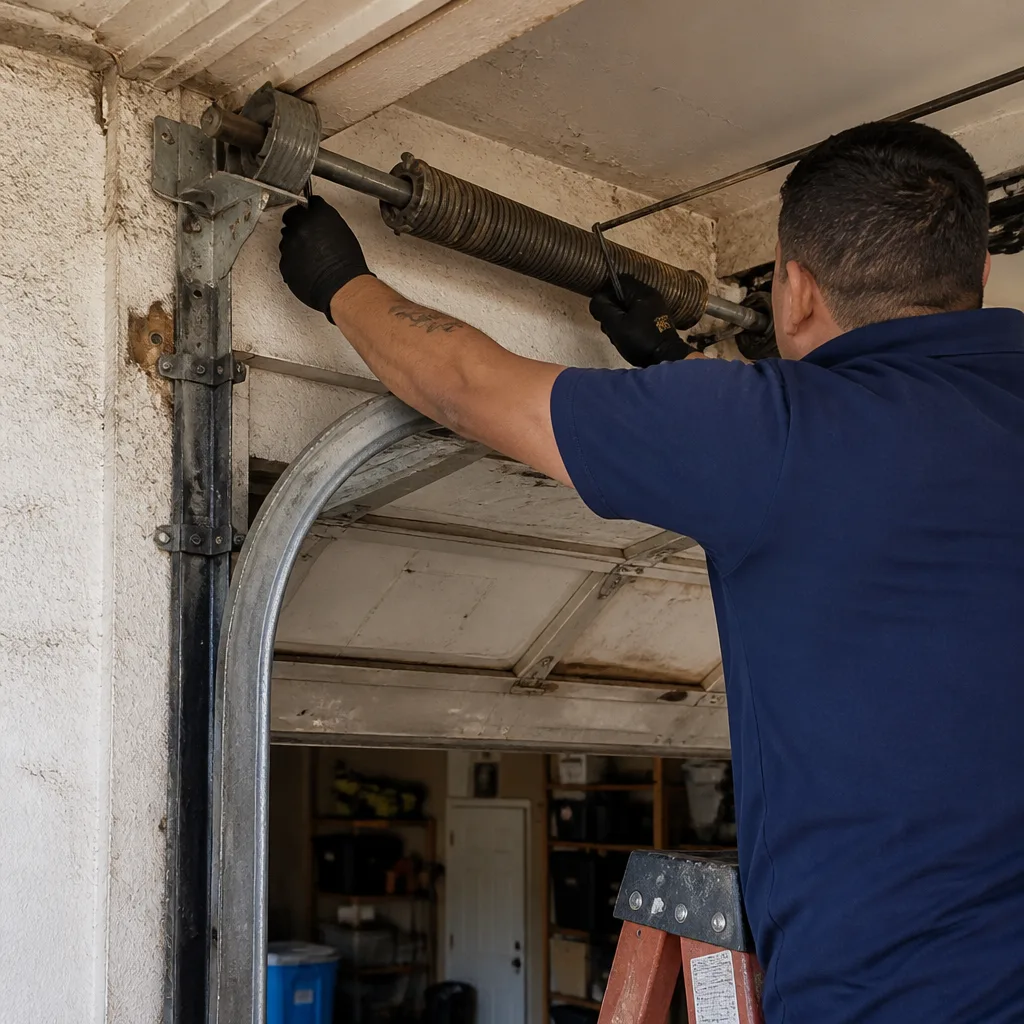 Before
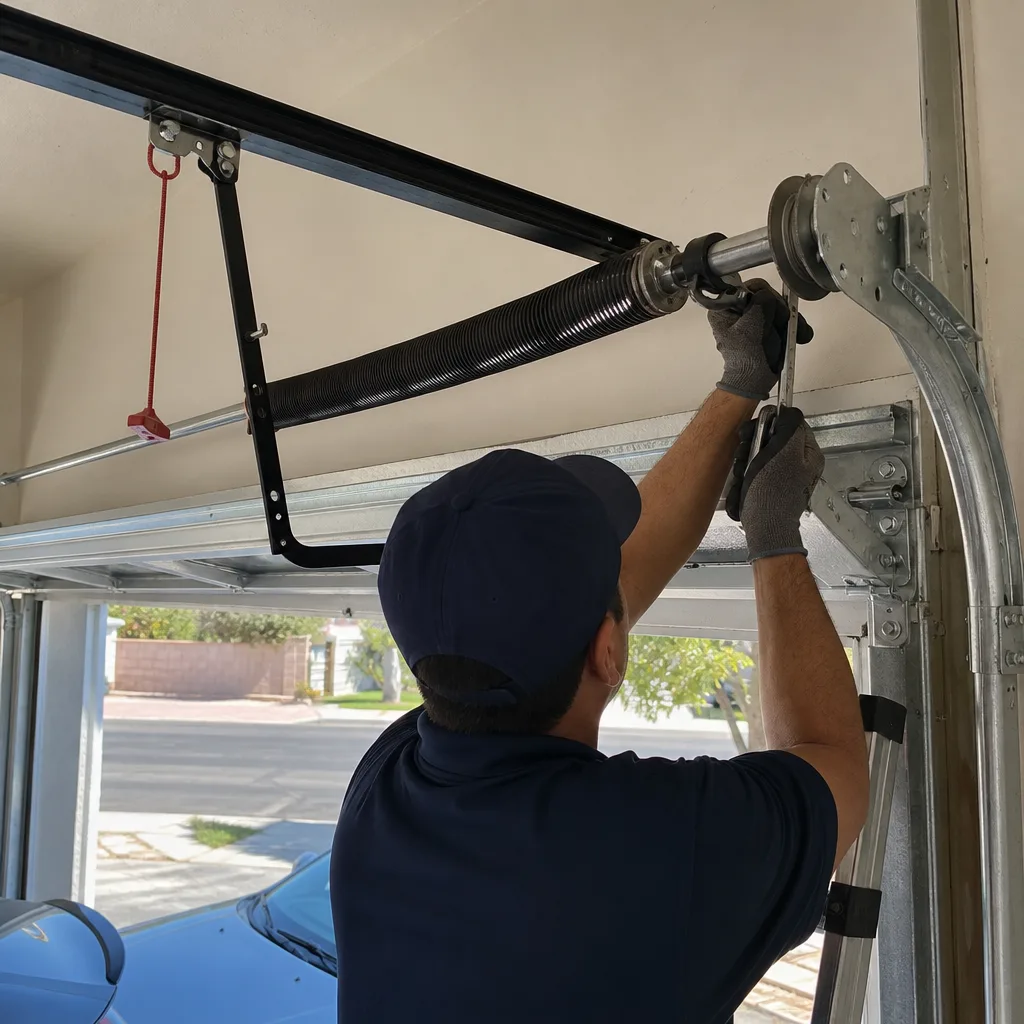 After
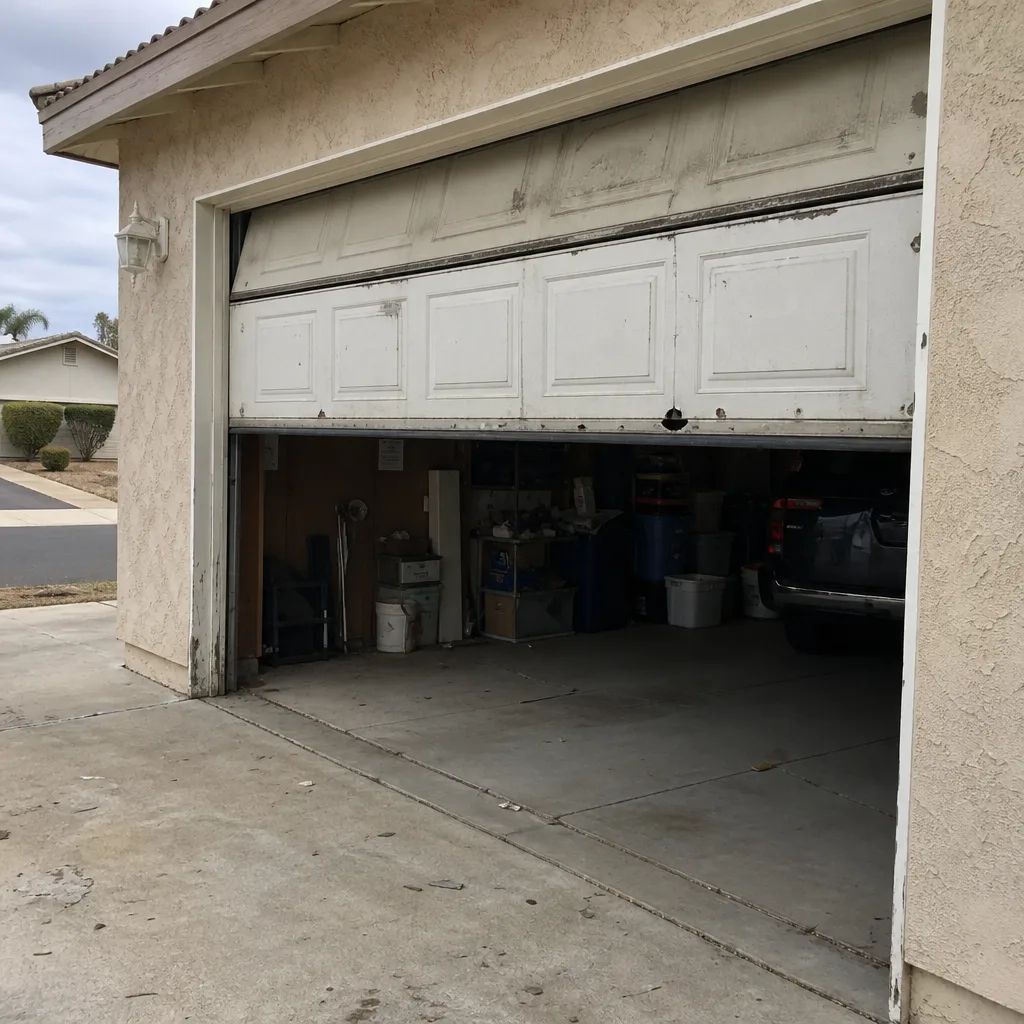 Before
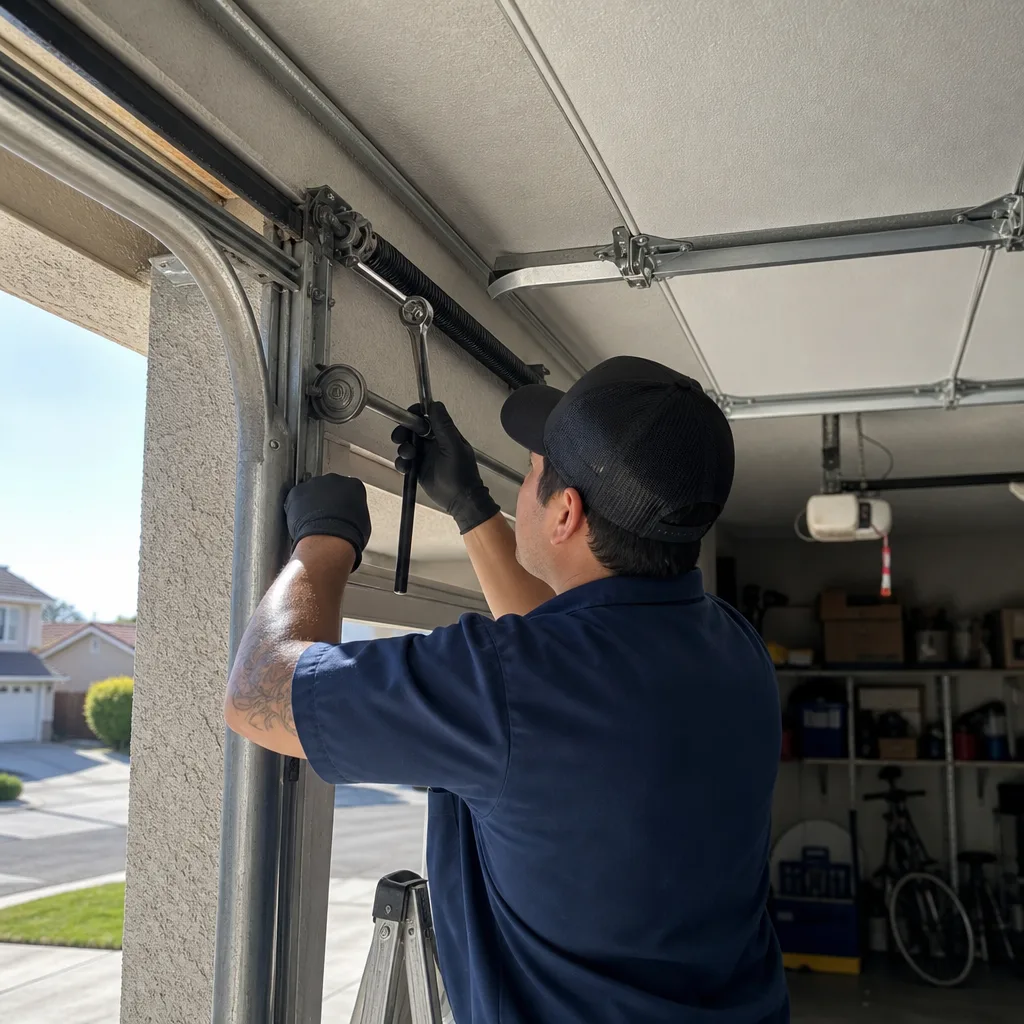 After
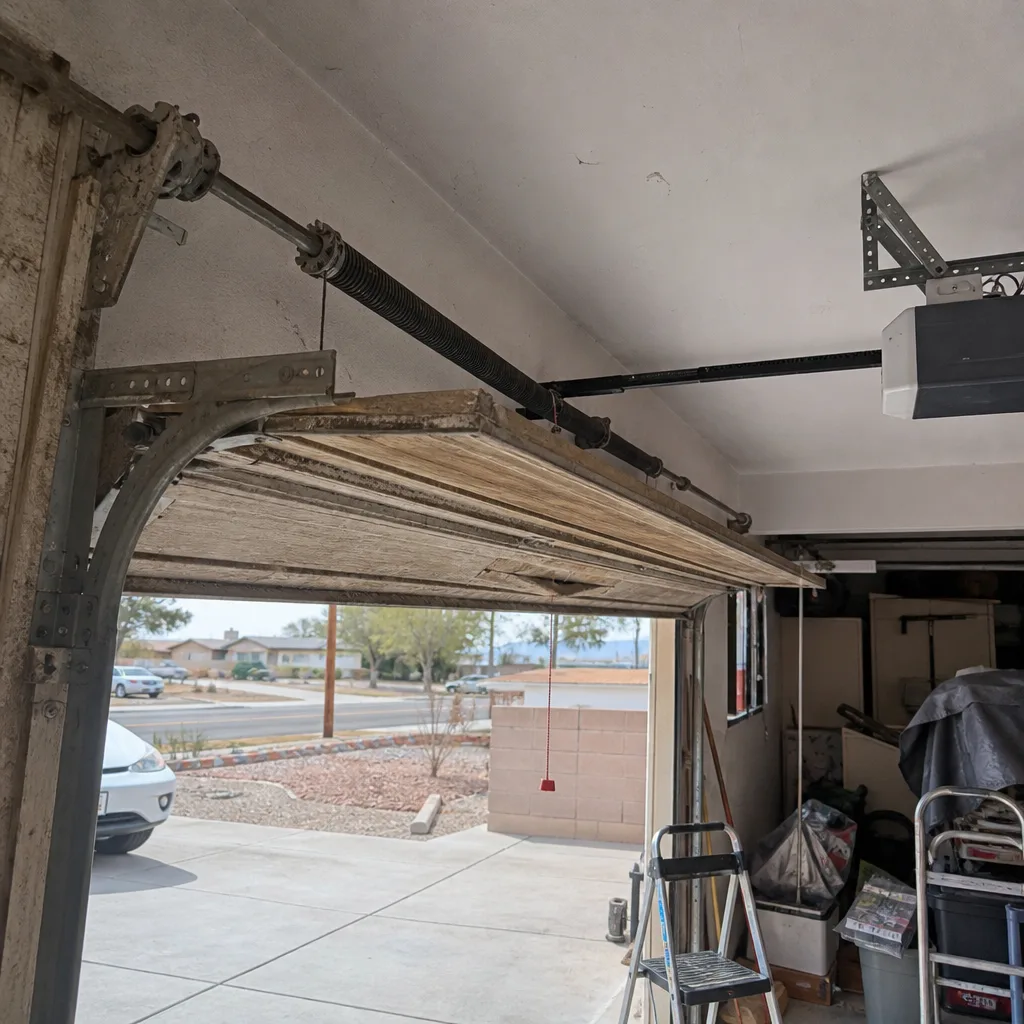 Before
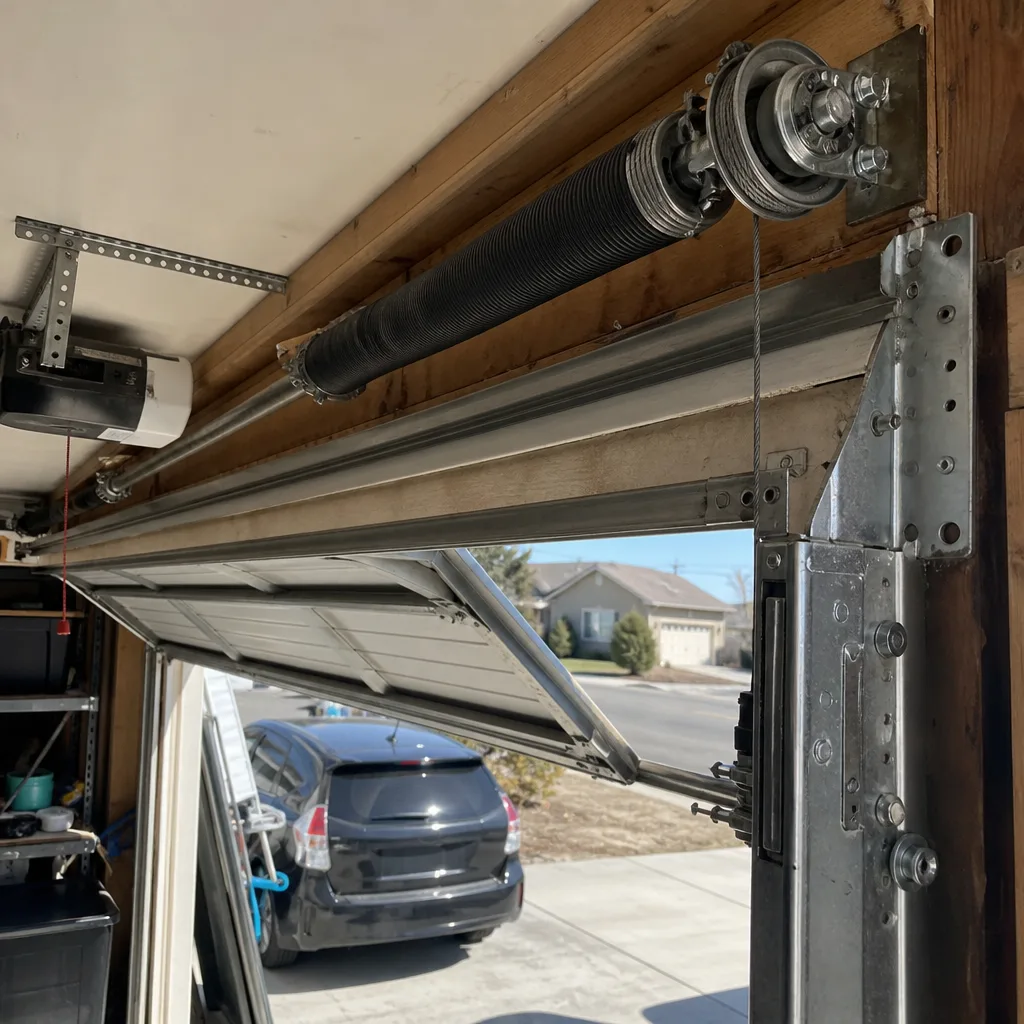 After